
Best Casino in Tasmania: Wrest Point and Country Club Guide
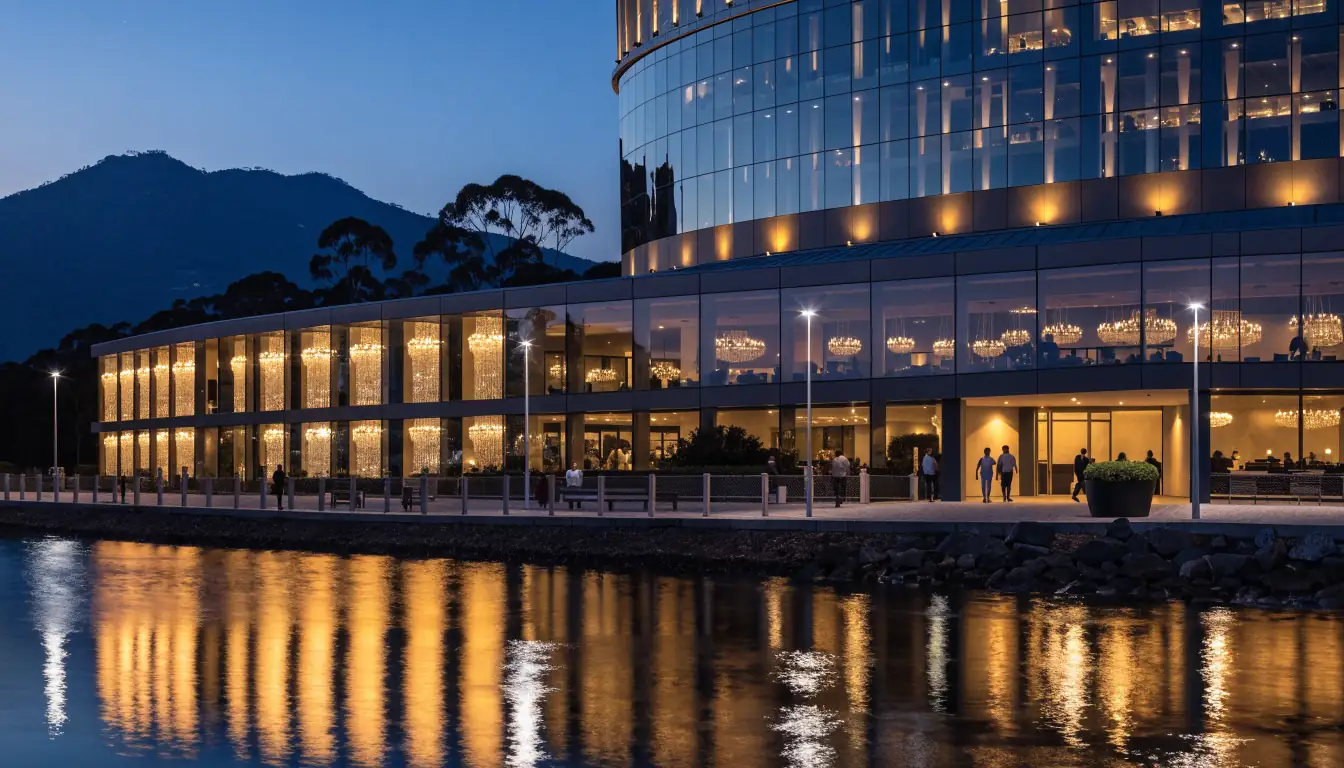
Table of Contents
- Casino‑Integrated Hotels in Tasmania
- Poker Rooms and Gaming Facilities
- Parking, Access and Visitor Logistics
- Nearby Accommodation Options
- Contact Points: Bars, Events and Customer Service
- Dining Buffets, Restaurants and Employment Opportunities
- Operating Hours, Licensing and Regulatory Framework
- On‑Site Restaurants and Culinary Experiences
- Wellness Facilities: Spa and Relaxation Services
- Food Courts and Outdoor Pools
Casino‑Integrated Hotels in Tasmania
Tasmania’s two casino complexes — Wrest Point in Hobart and the Country Club in Launceston — both operate hotel accommodation on the same property as the gaming floor, which changes the practical calculus for anyone travelling specifically to gamble. There is no transfer, no taxi fare, no walk through weather between a room and a table. That convenience has a price attached to it, and it is worth pricing out before assuming it is the better option.
The appeal is structural rather than cosmetic. A guest staying in a casino-integrated hotel avoids the two costs that erode a gambling budget without anyone noticing: transport and time. Every dollar not spent getting to the floor is a dollar still available at the table, and every hour not spent commuting is an hour available to actually play — or to stop playing and go to bed, which matters just as much. Given that 38% of Australian adults who gambled in 2022 did so at least weekly, the difference between a five-minute lift ride and a twenty-minute drive adds up across a long weekend in a way it would not across a single visit.
Before picking a casino to play at from Tasmania, it helps to know exactly what’s on offer in terms of licensing, welcome bonuses, and deposit requirements, so you can choose a site that genuinely fits your needs.
License: Curacao eGaming OGL/2024/923/0383 (Antillephone N.V.) · Bonus: up to A$2,000 + 100 free spins across 2 deposits · Min. deposit: A$30 Licensed under Curacao eGaming, this operator offers a welcome package worth up to A$2,000 plus 100 free spins spread across two deposits, with a modest A$30 minimum deposit.
License: Curacao Gaming Authority (Jumpman Gaming Ltd) · Bonus: up to A$6,600 + up to 250 free spins across 4 deposits Operated by Jumpman Gaming Ltd under a Curacao Gaming Authority license, it presents a substantial welcome offer of up to A$6,600 and up to 250 free spins across four deposits.
License: Curacao · Bonus: up to A$2,000 Holding a Curacao license, this casino offers a welcome bonus of up to A$2,000 for new players.
License: Curacao eGaming (Hollycorn N.V., since 2017) · Bonus: 225% up to A$1,540 + 600 free spins across 4 deposits, 20x wagering · Min. deposit: A$20-30 (depends on the offer) Backed by Hollycorn N.V. and licensed since 2017 under Curacao eGaming, it provides a 225% bonus up to A$1,540 plus 600 free spins across four deposits, with 20x wagering and a low entry deposit of A$20-30.
License: Curacao eGaming (Dama N.V.) · Bonus: up to A$10,000 + 180 free spins, 40x wagering Operated by Dama N.V. under a Curacao eGaming license, this casino stands out with a bonus of up to A$10,000 plus 180 free spins, subject to 40x wagering.
License: Tobique Gaming Commission · Bonus: up to A$8,000 + 400 free spins across 4 deposits · Payout speed: crypto ~10-15 minutes, fiat 1-5 days · Min. deposit: A$30 Licensed by the Tobique Gaming Commission, it offers up to A$8,000 plus 400 free spins over four deposits, with fast crypto payouts of around 10-15 minutes and fiat withdrawals within 1-5 days; minimum deposit is A$30.
License: Curacao, operated by Dama N.V. · Bonus: 325% up to 5.25 BTC + 250 free spins across 4 deposits Run by Dama N.V. under a Curacao license, this casino’s welcome package includes a 325% match up to 5.25 BTC and 250 free spins across four deposits, appealing to crypto players.
License: Curacao (operating since 2017) · Bonus: 250% up to A$2,000 + 50 free spins on the first of six deposits · Min. deposit: A$20 Operating under a Curacao license since 2017, it offers a 250% bonus up to A$2,000 plus 50 free spins on the first of six deposits, with an accessible A$20 minimum deposit.
Bonus: 240% up to A$4,100 + 300 free spins This casino offers a 240% bonus up to A$4,100 along with 300 free spins for new players.
License: Curacao · Bonus: up to A$10,000 multi-stage + 500 free spins · Min. deposit: A$20 (POLi) Licensed in Curacao, it features a multi-stage welcome bonus reaching up to A$10,000 plus 500 free spins, with a low A$20 minimum deposit available via POLi.
What integrated hotels typically include
Rooms attached to the casino floor are priced and marketed as part of the resort package rather than as standalone accommodation, which means the room rate often reflects proximity as much as it reflects square metreage or view. Guests should expect:
- Direct internal access to the gaming floor — no outdoor crossing, no separate security check, generally a lift or corridor connection.
- Room service aligned with casino hours — food and beverage availability tends to extend later than a standard hotel, matching the operating pattern of the floor below.
- Package deals bundling accommodation with dining or entertainment credits — these are worth reading in full, since the value depends entirely on whether the credit matches what a guest would spend anyway.
- Loyalty program crossover — points earned at the tables sometimes apply to room rates or upgrades, though the exact mechanics vary by property and should be confirmed at check-in rather than assumed from marketing material.
None of this is unique to Tasmania. What is worth noting locally is the scale: neither Wrest Point nor the Country Club is a Las Vegas-sized resort with dozens of room categories. The room stock is comparatively small, which means availability tightens quickly around long weekends, race carnivals, or televised sporting calendars — the same periods when, nationally, gambling activity clusters given that 72.8% of Australian adults reported gambling in the previous year.
Weighing convenience against cost
The honest comparison is not "casino hotel versus no hotel" but "casino hotel versus a room five minutes away by car." The integrated option removes friction; it does not remove cost, and in many cases it adds a premium for the address alone. A guest who intends to spend most of the visit on the gaming floor recovers that premium in convenience. A guest who plans to split time between the casino and the wider city — MONA, the waterfront, day trips — may find that the premium buys very little, since they were never going to spend all their waking hours in the building anyway.
Free credit is not free; it is built into the room rate and can increase your overall loss if you would have spent the credit anyway.
There is also a budgeting argument that has nothing to do with luck or odds. Australians collectively placed $244.3 billion in bets in 2022–23 and recorded $31.5 billion in losses over the same period — a national loss rate worth keeping in mind when a hotel package bundles "bonus play credit" into the nightly rate. Free credit is not free; it is priced into the room, and the arithmetic only favours the guest if the credit would have been spent regardless.
Booking considerations specific to the integrated properties
- Room category and floor level matter more here than at a typical hotel, since some categories sit directly above function or entertainment spaces and carry more ambient noise on event nights.
- Cancellation terms on package rates are frequently stricter than on a standalone room-only rate, because the package includes non-refundable components like dining credit.
- Check-in age is a detail worth confirming directly with the property: gaming floor access requires guests to be 18 or older, and travelling parties with younger members should check how this affects shared rooms or floor access before booking rather than after arrival.
For anyone deciding between the two Tasmanian properties, the choice tends to come down to city base rather than hotel quality — Hobart or Launceston as a travel anchor — since both offer the same core proposition of a bed a short lift ride from the floor. The room itself is rarely the deciding factor; the itinerary around it usually is.
Poker Rooms and Gaming Facilities
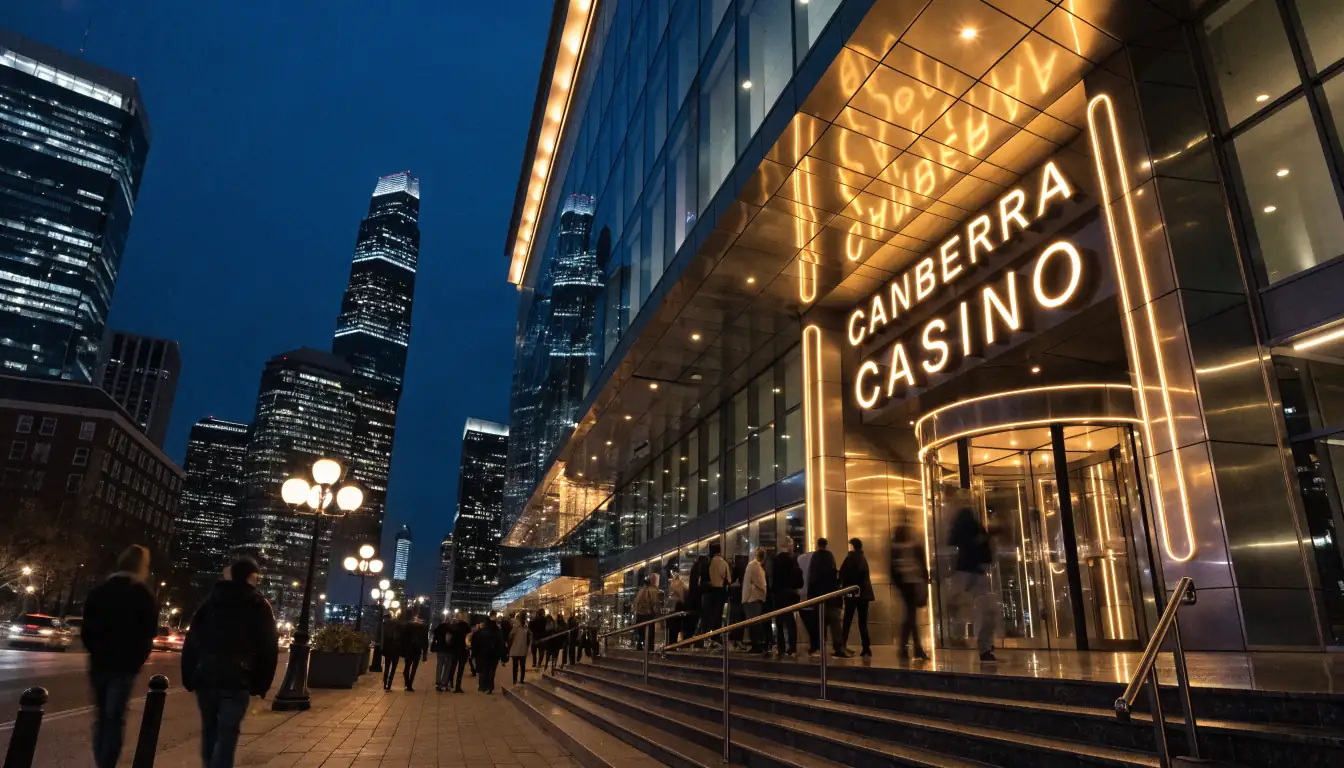
Tasmania’s two licensed casinos operate gaming floors that combine pokies, table games and dedicated poker rooms under a single roof — a structure unchanged since the state granted its casino licences decades ago. The poker rooms function separately from the general gaming floor, with their own seating and staff, and they run scheduled tournaments alongside cash games at set tables. Anyone stepping onto the floor must be 18 or older; that age threshold applies to every gaming area on the premises, not only to poker.
The tournament calendar varies by venue and by season, and neither casino publishes a fixed year-round schedule that holds firm week to week. What stays constant is the format: buy-in events with structured blind levels, feeding into the same tables used for regular cash play outside tournament hours. Staff at the poker room can confirm the day’s schedule on request, which matters more than any printed timetable given how often start times shift around public holidays and staffing.
What the gaming floor covers
Beyond the poker room, the floor holds the pokies banks, blackjack and roulette tables, and other standard casino games. These sit in the same building as the poker area but are managed as a distinct zone — dealers, floor supervisors and support staff rotate through table games separately from poker staff. A player moving between a poker tournament and a blackjack table is, in practical terms, moving between two different operations that happen to share a roof and a cashier’s cage.
Sports betting corners — sometimes called sports bars in casual conversation — sit adjacent to the gaming floor at both properties. These are licensed wagering points tied to state and territory betting rules rather than casino table games, and they run on their own screens and odds boards rather than the poker or pokies schedule. Anyone looking for a place to watch a race or a match while staying near the tables will find that corner is the one built for it.
The ranking treats gaming variety as a factor in venue scores, but a wider game library simply means more ways to lose money, not a guarantee of a better experience.
How the ranking treats gaming variety
Game library breadth is one of the factors used to score gambling venues generally, carrying real weight in a wider assessment framework alongside bonus generosity, payout reliability, customer support and user feedback. That framework was built for evaluating online casino offerings rather than physical Tasmanian venues, and it recalculates weekly rather than sitting fixed. It’s a useful frame for understanding what "breadth" means in gambling more broadly — more tables and formats generally means more ways to lose money, not a guaranteed better night — but it isn’t a scorecard for either Tasmanian floor specifically.
For online alternatives to a physical poker room, the same evaluation logic applies: listings get checked on bonus transparency, cashout speed, customer care and licensing integrity, with reviewers depositing a minimum stake and testing what actually comes back out before publishing a score. None of that changes what happens at a Tasmanian card table, where the only numbers that matter are the blinds and the buy-in.
Checking before a visit
Poker room hours track the casino’s general opening hours rather than running on a separate clock, so confirming whether a room is open on a given day is really a question of confirming the casino’s hours for that day — a detail covered separately from gaming content itself. Tournament nights sometimes extend a poker room’s active hours beyond the rest of the floor, which is the one exception worth checking directly with the venue rather than assuming.
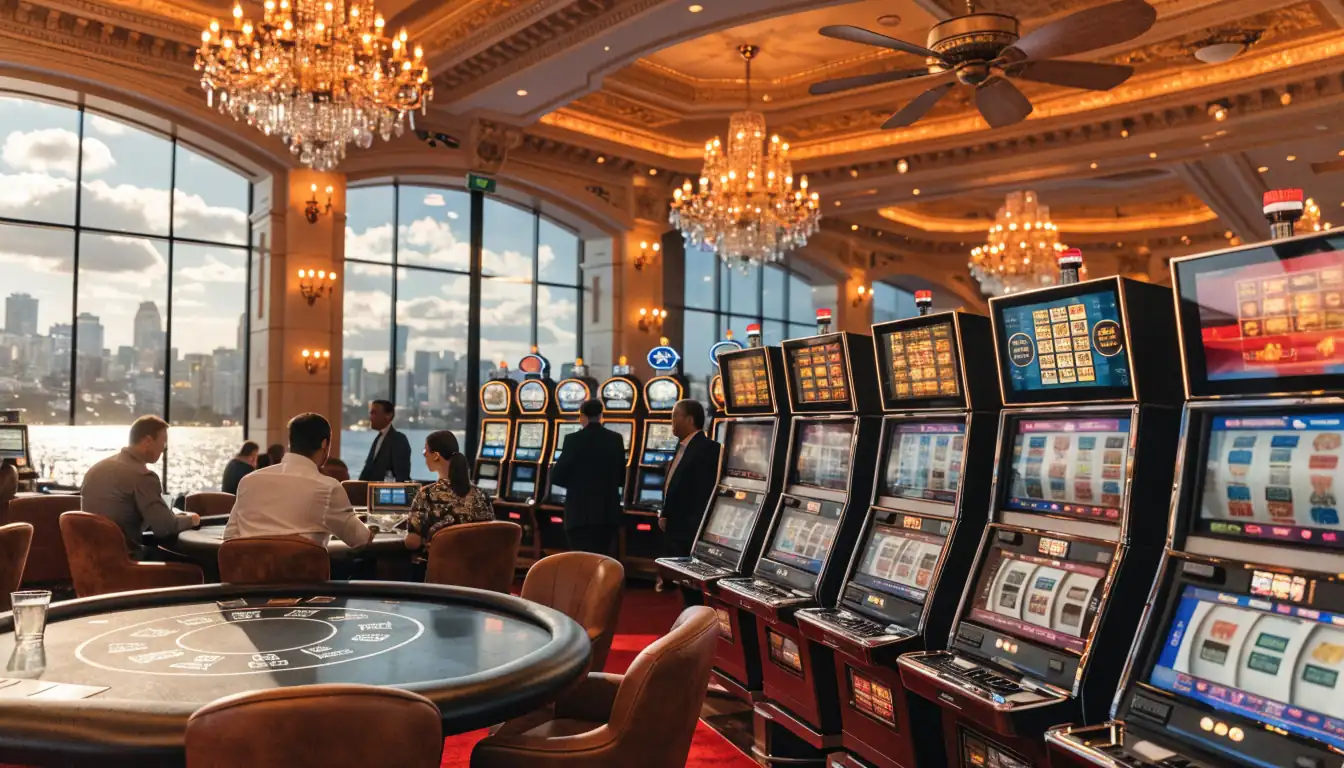
The gaming floor, in short, is where the tables and the pokies sit; the poker room is a defined space within it running its own schedule; and the sports wagering corner is a third, licensed operation next door. Treating them as one undifferentiated "gaming area" is the easiest way to show up expecting a tournament and finding a race broadcast instead.
Parking, Access and Visitor Logistics
Getting to a casino floor in Tasmania is rarely the hard part; the arithmetic starts once the car is parked. On-site parking at the larger properties is typically free for the first few hours, with signage marking the boundary where a fee kicks in — a detail worth checking before wandering off to a show or a late dinner, since the return trip to a ticket machine costs more in irritation than in dollars.
Drop-off and short-stay zones
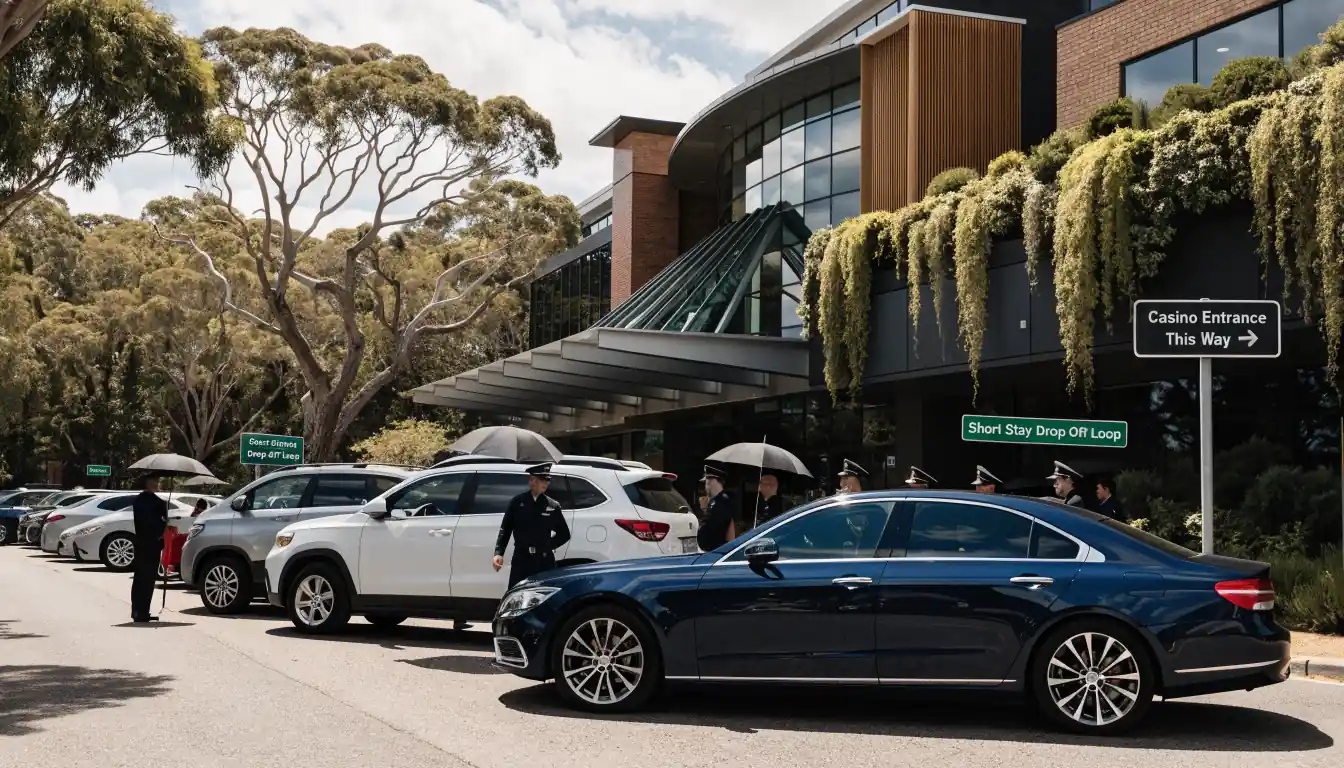
Most Tasmanian casino complexes separate their forecourt into a short-stay loop for drop-offs and a longer-stay structure or open lot further back. The loop suits anyone being droped off for an evening session or a meal booking; it is not designed for parking, and staff move vehicles along quickly during busy periods. Longer-stay parking sits a short walk from the main entrance, close enough that the walk itself is rarely the deciding factor in where to leave a car.
Valet service
Where valet parking is offered, it functions as a paid convenience rather than a standard inclusion — handing over the keys avoids the walk and the search for a bay, but it is a line item, not a perk bundled into a night out. Visitors weighing it against self-parking should treat it the same way they’d treat any other optional service: useful on a cold night or when arriving in formalwear for an event, unnecessary for a quick pokies session on a weekday afternoon.
Public transport and access
Bus routes connect central Hobart and Launceston to their respective casino precincts, making public transport a realistic option for visitors without a car, particularly for evening trips where parking fees or valet costs would otherwise be added to the night’s spend. Taxi and rideshare pickup points are generally sited near the main entrance rather than the parking structure, which matters at closing time when queues form.
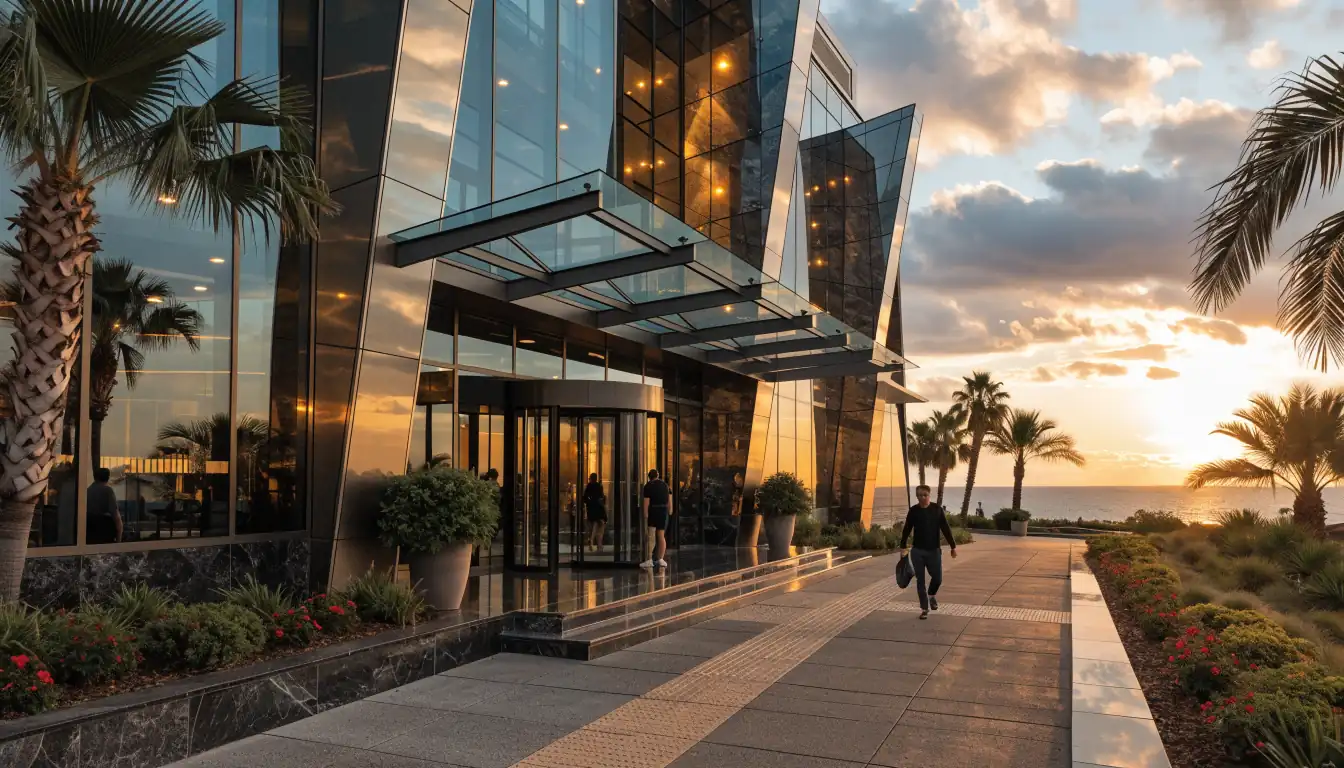
Accessibility provisions — level access, accessible parking bays close to entrances, and lift access to upper floors — are standard at the larger integrated resorts, though the specifics vary enough between properties that confirming ahead of a visit remains sensible rather than optional.
The cost of getting there, in context
None of this logistics layer is separate from the gambling spend itself, even though it feels incidental. Per-capita gambling losses in Australia ran to AUD 1,200 in FY 2020-2021, against average bets of AUD 9,885 for the same period — figures that make a valet fee or an extra hour of paid parking a rounding error for some visitors and a meaningful add-on for others. The gap between those two outcomes is precisely why logistics deserve the same attention as the games themselves: a AUD 1,200 average loss doesn’t account for parking, transport, meals, or the taxi home, and visitors who track only the wager while ignoring what it costs to arrive and leave are working from an incomplete ledger.
Visitor logistics checklist
| Consideration | What to check before arrival |
|---|---|
| Parking cost | Whether free hours apply and when charges start |
| Drop-off zone | Location relative to main entrance |
| Valet | Availability and whether it’s a paid add-on |
| Public transport | Route and last-service times |
| Accessibility | Accessible bays and step-free entry points |
None of these details change the odds on the gaming floor. They do change what a night out actually costs once the receipt for parking, transport and any valet fee sits next to the buy-in — the kind of arithmetic that’s easy to skip and expensive to ignore.
Around 80,000 to 160,000 Australian adults experience significant gambling problems, a figure that includes the incidental costs of a night at the casino as much as the wagers themselves. Logistics are not a footnote to the visit; they’re part of what it costs.
Nearby Accommodation Options
Not every stay in Tasmania needs to happen inside a casino resort. Independent hotels, guesthouses and short-stay apartments cluster around the state’s two licensed venues, offering an alternative for travellers who want proximity without the room rates that on-site properties often carry during peak weekends.
What sits outside the casino complex
Hobart’s waterfront and CBD hold the bulk of independent lodging within easy reach of the casino, ranging from serviced apartments to boutique hotels converted from heritage buildings. Launceston’s options skirt the river precinct, closer to the smaller gaming venue there. None of these properties are affiliated with the casino operator, which means no shared loyalty points and no direct booking link between hotel stay and gaming floor access — a separation worth knowing before assuming a hotel package includes casino perks.
Direct access to the gaming floor, loyalty tie‑ins and often higher rates; best if you plan to spend most of your time gambling.
No casino loyalty, usually lower rates, and a short walk or short ride to the floor; best for broader itineraries.
- Proximity vs flexibility
- Package bonuses vs separate budgeting
- Age‑check at the floor only vs no casino restrictions for the hotel.
Booking considerations
Independent properties near the casinos price separately from the venue’s own accommodation, so comparing a casino-adjacent hotel against the integrated option is a matter of checking distance against rate rather than assuming the casino’s own rooms are cheaper by default. Walking distance to the gaming floor varies by property — some sit a short stroll away, others require a taxi or rideshare, particularly from the outer edges of Hobart’s accommodation cluster.
Cancellation terms, deposit requirements and seasonal pricing follow standard hotel practice rather than any casino-linked promotion. Where a property advertises a "casino package," the fine print typically covers transport or a dining voucher rather than gaming credit — worth reading before treating the word "package" as shorthand for a bonus.
Choosing a base
| Consideration | Casino-integrated stay | Nearby independent stay |
|---|---|---|
| Distance to gaming floor | On-site | Short trip, varies by property |
| Loyalty tie-in | Often linked to casino rewards | None |
| Rate flexibility | Set by casino operator | Standard hotel market pricing |
| Booking channel | Casino’s own reservation system | Independent hotel booking platforms |
Families or visitors planning a broader Tasmanian itinerary — wine regions, coastal drives, national parks — tend to find independent accommodation more practical, since it isn’t tied to a single site and allows a base that suits the rest of the trip rather than the casino’s footprint alone.
A note on age and access
Booking a room near a casino carries no age restriction in itself, but stepping onto the gaming floor does: the legal minimum is 18, strictly enforced regardless of where a guest is staying. That distinction matters given how early gambling participation now starts — close to half of Australians aged 18 to 19 already gamble, a figure that puts pressure on venues and nearby accommodation providers alike to keep age verification consistent at every point of entry, not just the front door of the casino itself.
The wider economic backdrop
Accommodation built up around Tasmania’s casinos exists within a gambling sector that carries real weight in state finances — gambling revenue made up a meaningful share of state and territory tax takings as of the 2015–16 figures, and the largest Australian superannuation funds now hold sizeable stakes in listed igaming companies. None of that changes a booking decision directly, but it explains why casino precincts continue to attract hotel investment independent of the venue itself: the industry around the gaming floor is treated as a durable draw, not a seasonal one.
Age restriction
All guests must be 18 or older to enter the gaming floor; under‑age visitors will be turned away regardless of accommodation type.
Contact Points: Bars, Events and Customer Service
Reaching the right desk inside a Tasmanian casino depends on what the question actually is. A booking enquiry, a table-game rule, and a lost-property report don’t go through the same channel, and treating them as if they do wastes a phone call.
Front-of-house and general enquiries
Every property runs a main switchboard that routes calls to the relevant department — gaming floor, function rooms, guest services. This is the number worth saving before a visit, since it covers most questions that don’t fit neatly into "accommodation" or "dining" (those are handled separately by the hotel desk and restaurant reservations respectively). Front desks typically operate during core casino hours and can confirm whether a specific bar or lounge is open before a trip is made.
Bars and lounges
Casino floors in Tasmania are built around one or more bar areas positioned near the gaming tables, functioning as both a service point and a place to watch the room without playing. Staff at these bars can usually answer immediate practical questions — where a particular game is running, whether a table is full — without needing to be redirected to the main desk. Drink service inside the gaming area is standard; table service at a bar counter itself is the norm rather than the exception.
Concert venues and event spaces
Tasmanian casinos double as entertainment venues, hosting concerts, comedy nights and larger functions in dedicated theatres or ballrooms attached to the main complex. Ticketing and event enquiries go through a separate box office or events line rather than the casino’s general number, and it’s worth confirming this distinction before assuming a switchboard call will get an event query answered on the spot. Event calendars are published ahead of each season, so checking directly with the venue rather than relying on secondhand listings avoids turning up to a date that’s since changed.
Booking considerations specific to the integrated properties
- Room category and floor level matter; some rooms sit above noisy function spaces.
- Cancellation terms on package rates are often stricter than on standalone rooms.
- Check‑in age is crucial: the casino floor requires 18+, so verify any younger guests before booking.
Customer service desks on the floor
Beyond the cashier windows, most gaming floors have a dedicated guest services or player rewards desk. This is the point of contact for loyalty programme questions, dispute resolution on the floor, and general complaints about service or facilities. Formal complaint procedures, where a matter isn’t resolved on the spot, are typically escalated through this desk in writing, and details of the process should be available on request.
A note on scope
None of this touches online play. Sports betting is licensed at state and territory level and can be placed with a properly licensed operator, but online casino games — the pokies, roulette and blackjack equivalents of what’s on the physical floor — sit outside that licensing regime entirely. Playing at an offshore site isn’t an offence for the individual doing it, since the law is aimed at the operators rather than the punters, but no contact desk inside a Tasmanian casino is going to help resolve a dispute with a site operating from outside the country. Any winnings from time spent on the floor, in any case, aren’t taxed — that part at least is consistent regardless of which contact point handles the enquiry.
Quick reference
| Need | Where to go |
|---|---|
| General enquiry, hours, directions | Main switchboard |
| Table rules, immediate service | Floor bar staff or pit staff |
| Concert or event tickets | Dedicated box office/events line |
| Loyalty programme, complaints | Guest services desk |
Confirming the right channel before calling saves a transfer — and on a busy event night, that’s the difference between an answer and a hold queue.
Dining Buffets, Restaurants and Employment Opportunities
Casino hospitality in Tasmania runs on a broader arithmetic than the gaming floor. Buffet halls, a-la-carte dining rooms and the staff rosters behind them form a separate cost centre, and the numbers there matter as much to a visitor’s budget as anything staked at a table.
Buffet service, structured
A casino buffet is priced as a flat entry fee against unlimited servings, which changes the calculation for anyone comparing it to a set menu elsewhere. Breakfast buffets typically run on a shorter service window than dinner, with a narrower spread — pastries, eggs, fruit, the standard cooked options — reflecting the lower average spend expected at that time of day. Whether a resort’s breakfast buffet earns its price depends entirely on how it stacks against the a-la-carte alternative sitting one floor away; a buffet only wins the comparison when appetite and time both run long. For a short stopover, the a-la-carte counter usually settles the bill faster and cheaper.
Loyalty programmes attached to a casino resort often fold dining into the rewards structure — points earned on gaming redeemable against meals, or tiered access to buffet sittings during peak hours. None of this is uniform across venues, and the specific point values, redemption rates or tier thresholds are not something operators publish in a form that allows a clean comparison. Where that detail is missing from a resort’s own disclosure, it stays missing here too, rather than being approximated.
- Verify the room category and floor level before booking.
- Read the cancellation terms of any package rate.
- Confirm the check‑in age requirement with the property.
- Assume the bonus credit in a package is free.
- Assume rates are the same across both casino properties.
- Ignore the need for age verification at the gaming floor.
A-la-carte dining as a separate ledger
Sit-down restaurants inside a casino resort are priced and staffed independently of the buffet operation, usually with their own booking system and a service standard pitched above the self-serve hall. This split matters for anyone weighing a casino resort stay against a standalone hotel package: the buffet covers volume and speed, the a-la-carte room covers occasion dining, and the two rarely compete for the same customer on the same night.
Employment within casino hospitality
Casino resorts in Tasmania function as large hospitality employers, with roles spanning food and beverage service, kitchen operations, front-of-house management and the buffet and banqueting teams that run parallel to the main restaurants. Positions in this segment sit alongside — but are distinct from — gaming-floor roles such as dealers or pit staff, which fall under separate licensing and training requirements.
Job postings for hospitality roles at a casino resort typically move through the same channels as any large hotel group: internal listings, hospitality-sector job boards, and direct applications to the resort’s HR department. Turnover in food service tends to run higher than in gaming operations, which keeps entry-level openings — buffet attendants, wait staff, kitchen hands — more consistently available than specialist gaming positions.
One point of context worth stating plainly: none of this dining or employment activity has any bearing on the separate question of online casino access. The Interactive Gambling Act prohibits Australian residents from being offered online casino games such as slots, poker, blackjack or roulette — sources differ on whether this traces to the 1997 or 2001 version of the Act, but the prohibition itself is not in dispute. There is no domestically licensed real-money online casino operator serving Australian players. A physical resort’s buffet loyalty scheme or job listing carries no relationship to that framework, and nothing in a dining programme substitutes for, or grants access to, online play.
Operating Hours, Licensing and Regulatory Framework
Tasmania’s land-based casinos operate as physical venues licensed under state gaming law, which is a separate matter from the online gambling framework that governs betting and gaming products offered over the internet. Anyone researching whether a casino has reopened, extended its floor hours, or changed its trading schedule is asking a question that state licensing authorities answer directly — physical venue operations sit outside the Commonwealth’s online gambling rules described below, and the two should not be conflated when reading about the property.
That said, the regulatory backdrop matters for context. Australia has no single overarching statute or single regulator covering gambling nationwide. Regulation is split between state and territory bodies, which license and oversee physical venues such as casinos, and the Commonwealth, which governs online gambling through a separate legal channel.
The federal layer
The Interactive Gambling Act 2001 is enforced by the Australian Communications and Media Authority (ACMA), the federal regulator responsible for online gambling compliance. Its remit does not extend to setting the trading hours or floor operations of a physical casino — that remains a state licensing function. ACMA’s enforcement focus is online: it acts against operators offering prohibited services to Australian residents, not against how a bricks-and-mortar venue schedules its gaming floor or events calendar.
The de facto online licensor
Separately, the Northern Territory Racing Commission functions as Australia’s de facto online gambling regulator, since it licenses most of the national online bookmakers that benefit from the Territory’s lower tax settings. This is a licensing arrangement for sports and racing wagering operators, not for casino-style products, and it has no bearing on how a Tasmanian casino runs its premises.
What is and isn’t permitted online
Live, in-play online betting is illegal in Australia, though placing a live bet by phone remains legal — a distinction that matters for anyone comparing what a venue offers on-site against what is advertised online. This split illustrates the broader point: a casino’s physical operating calendar, staffing, and entertainment programming are governed by state licensing conditions, while any online-facing wagering product tied to the brand answers to a different, federal set of rules enforced by ACMA.
Reading licensing information correctly
Questions about a casino’s employment opportunities, menu changes, or event scheduling are operational matters set by the venue and its state licence conditions, not questions the federal online gambling framework addresses. Anyone checking whether a casino is trading, has reopened after a closure period, or has updated its offering should treat that as a state-licensing and venue-management question — separate from, and not resolved by, the Commonwealth rules that apply to online gambling products.
On‑Site Restaurants and Culinary Experiences
A Tasmania casino restaurant scene generally splits into two tiers: a signature dining room with a chef-led concept, and a handful of smaller à la carte venues built around a single cuisine or format — steak, seafood, or an Asian-fusion menu. The buffet halls and food-court counters covered elsewhere serve a different purpose: volume and speed. The restaurants described here are booked in advance, priced per dish, and structured around a sit-down service that runs for a set window each evening.
The signature dining room typically anchors the casino restaurant offering and leans on Tasmania’s own supply chain — the island’s seafood, cool-climate produce and cured meats feature more prominently on menus here than in mainland venues of comparable size. Degustation-style tasting menus, when offered, are priced separately from the standard menu and usually require a booking window that doesn’t overlap with peak gaming-floor hours, since kitchens run a tighter service for multi-course formats.
Convenience vs Cost
Integrated casino hotels save time but add a premium that only pays off if you spend most of your visit on the gaming floor.
Steakhouse-format venues sit alongside the signature room in most properties. These kitchens work from a fixed cut list rather than a rotating menu, which keeps pricing predictable and makes the venue easier to book for a table of any size without needing advance notice for dietary substitutions.
A third category — usually a lighter, Asian-influenced kitchen — fills the gap between the formal dining room and casual counters. These venues tend to run shorter hours, often aligned with pre-theatre or pre-show dining rather than a full evening service, and share proximity with the event spaces covered separately.
What differentiates the venues
- Booking requirement: signature rooms and tasting menus need a reservation; steakhouse and lighter-format venues generally accept walk-ins outside peak periods.
- Pricing structure: à la carte throughout, rather than the fixed-price model used in buffet halls.
- Sourcing: Tasmanian seafood and produce feature more heavily than in comparable mainland casino dining rooms, though menus rotate with seasonal availability.
- Service hours: dinner-only for the signature room in most cases, with lunch service more common at the lighter or steakhouse venues.
None of this dining activity intersects with online gambling in any form. The Interactive Gambling Act 2001 prohibits online casino, poker and in-play betting federally, which means the restaurant and hospitality side of a Tasmanian casino operates entirely apart from any digital gambling offer — there is no equivalent "online menu" or virtual booking tied to a gambling product, because no such product can legally exist for Australian residents in the first place. The dining rooms function as a standard hospitality business sitting inside a licensed gaming venue, nothing more, and any claims linking them to an online casino platform should be treated as inaccurate on their face.
For visitors planning a night around dinner and the gaming floor, the practical detail worth confirming ahead of a visit is which venue takes bookings and which doesn’t — steakhouse and casual kitchens tend to flex around walk-in demand, while the flagship dining room usually holds a reservation list separate from general seating.

Wellness Facilities: Spa and Relaxation Services
Wellness facilities at Tasmanian casinos operate as a separate wing from gaming floors and dining areas, with their own booking desks and staff. The distinction matters for anyone treating a casino stay as a broader retreat rather than a gambling trip: spa services are priced, scheduled and staffed independently of the tables and pokies elsewhere in the building.
What’s typically on offer
Casino spa menus in Tasmania generally cover the standard categories found in hotel-attached wellness centres: massage treatments, facials, body treatments and, in the larger integrated resorts, access to pools, saunas or steam rooms as part of a day-spa package. Treatment lengths and specific product lines vary by venue and by season, and neither the casinos themselves nor any independent register publishes a standard price list across Tasmania — so comparing menus in advance means checking directly with each property rather than assuming parity between them.
Integrated casino hotel
A hotel located on the same property as a casino, offering direct internal access to the gaming floor and often bundled loyalty or credit packages.
Booking and access
Spa access at casino resorts is usually managed through hotel reception or a dedicated spa reservation line rather than through the gaming floor’s customer service points, which are covered separately under contact channels for bars and events. Walk-in availability is inconsistent enough that pre-booking is the safer approach, particularly around weekends when hotel occupancy is higher. Some venues bundle spa credit into room packages; others sell treatments as standalone purchases open to non-guests.
Why the separation matters
Keeping wellness services administratively and physically apart from gaming areas is standard practice across Australian casino resorts, and it serves a purpose beyond convenience. Problem gambling affects a measurable share of the adult population — estimates put significant gambling problems at somewhere between 80,000 and 160,000 Australian adults — and venues that structure their non-gaming amenities as genuinely separate spaces give visitors a reason to be on-site that has nothing to do with a game. A spa booking doesn’t route past a poker room, and a treatment schedule doesn’t require sitting near a gaming floor.
That separation is also relevant given how early gambling exposure begins in Australia: close to 30% of 12 to 17-year-olds report some engagement with gambling activities, a figure that underscores why regulated venues keep age-restricted gaming areas physically distinct from family-accessible or general wellness and leisure spaces. Spa facilities, along with food courts and pools covered separately, sit outside the areas where age verification and gaming-specific access rules apply.
For anyone planning a visit around relaxation rather than the tables, contacting the spa desk directly — rather than the general casino inquiry line — is the more reliable way to confirm current treatment availability, since offerings and operating windows are set at the resort level and change without a centralised schedule to check against.

Food Courts and Outdoor Pools
Not every visitor to a Tasmanian casino resort is there for the gaming floor. Food courts serve the part of the crowd that wants a quick meal without a booking, a menu, or a wine list — families passing through, day-trippers between attractions, staff on a break. The format is casual by design: counter service, shared seating, faster turnover than the a-la-carte rooms covered elsewhere.
Outdoor pools sit in the same category — recreational infrastructure rather than gaming infrastructure. They give resort guests a reason to stay on-site for a full day rather than just an evening, and they’re one of the clearer signals that these properties are built as destinations, not just gambling halls. Sun loungers, poolside service during warmer months, and access typically tied to hotel-room status rather than casino play.
Both spaces share a practical function: they keep the property usable for people who aren’t gambling at all, including anyone under 18, who cannot access the casino offers or gaming floor under the minimum-age rule but can still use a pool or a food court with family.
Worth noting in context: the average Tasmanian gambler’s yearly spend runs well into the thousands, with a loss figure to match — money that doesn’t get spent on lunch or a swim. Food courts and pools represent the non-gambling half of a casino resort’s economics, the part that doesn’t show up in a bankroll but keeps the building full of people who aren’t at a table.