
Best Bonus Buy Slots in Australia: RTP and Rules Explained
 Available in AU
Understanding Bonus‑Buy Slots and Their RTP Profile
A bonus‑buy slot lets a player pay a fixed cost, drawn from the balance, to enter the bonus round directly instead of triggering it through ordinary spins. The mechanic sits on top of a standard slot engine — the base game, the paytable and the random number generator all work as they would in any other title — but it changes how a session behaves, because the player is no longer waiting on the base game to produce a trigger. That single design choice affects pacing, bankroll consumption and, in some cases, the return figures a regulator or testing lab certifies for the game. Before looking at what is or is not permitted for Australian players, it is worth setting out how bonus‑buy slots work mechanically and what return to player (RTP) and volatility actually mean for the money involved.
What a Bonus‑Buy Feature Actually Does
In a conventional slot, the bonus round — free spins, a pick‑a-prize screen, a multiplier feature — appears when a specific combination of symbols lands during a normal spin. The frequency of that trigger is built into the game’s mathematical model and cannot be predicted from one spin to the next, because each spin is generated independently. A bonus‑buy feature adds a purchase option: instead of spinning and hoping for the trigger, the player pays a set amount to unlock the feature immediately and play it out.
If bonus buy slots are your focus for 2026, the welcome offer and its terms matter just as much as the game selection, so it pays to check licensing, deposit requirements, and wagering conditions before you sign up.
License: Curacao eGaming OGL/2024/923/0383 (Antillephone N.V.) · Bonus: up to A$2,000 + 100 free spins across 2 deposits · Min. deposit: A$30 Licensed under Curacao eGaming, this casino offers a two-deposit welcome package worth up to A$2,000 plus 100 free spins, with a low A$30 minimum deposit to get started.
License: Curacao Gaming Authority (Jumpman Gaming Ltd) · Bonus: up to A$6,600 + up to 250 free spins across 4 deposits Operated by Jumpman Gaming under a Curacao Gaming Authority license, it stands out for a generous four-deposit bonus reaching up to A$6,600 alongside up to 250 free spins.
License: Curacao · Bonus: up to A$2,000 Holding a Curacao license, this casino keeps things simple with a welcome bonus of up to A$2,000.
License: Curacao eGaming (Hollycorn N.V., since 2017) · Bonus: 225% up to A$1,540 + 600 free spins across 4 deposits, 20x wagering · Min. deposit: A$20-30 (depends on the offer) Run by Hollycorn N.V. since 2017 under a Curacao eGaming license, it offers a 225% bonus up to A$1,540 plus 600 free spins spread across four deposits, with 20x wagering and a modest A$20-30 minimum deposit.
License: Curacao eGaming (Dama N.V.) · Bonus: up to A$10,000 + 180 free spins, 40x wagering Licensed via Curacao eGaming and operated by Dama N.V., this casino’s welcome offer can reach up to A$10,000 plus 180 free spins, subject to 40x wagering requirements.
License: Tobique Gaming Commission · Bonus: up to A$8,000 + 400 free spins across 4 deposits · Payout speed: crypto ~10-15 minutes, fiat 1-5 days · Min. deposit: A$30 Regulated by the Tobique Gaming Commission, it combines a four-deposit bonus of up to A$8,000 and 400 free spins with fast crypto payouts of around 10-15 minutes and a A$30 minimum deposit.
License: Curacao, operated by Dama N.V. · Bonus: 325% up to 5.25 BTC + 250 free spins across 4 deposits Operated by Dama N.V. under a Curacao license, this casino appeals to crypto players with a 325% bonus up to 5.25 BTC plus 250 free spins across four deposits.
License: Curacao (operating since 2017) · Bonus: 250% up to A$2,000 + 50 free spins on the first of six deposits · Min. deposit: A$20 Active since 2017 under a Curacao license, it offers a 250% bonus up to A$2,000 plus 50 free spins on the first of six deposits, with an accessible A$20 minimum deposit.
Bonus: 240% up to A$4,100 + 300 free spins This casino offers a 240% bonus up to A$4,100 along with 300 free spins for new players.
License: Curacao · Bonus: up to A$10,000 multi-stage + 500 free spins · Min. deposit: A$20 (POLi) Licensed in Curacao, it features a multi-stage bonus package worth up to A$10,000 plus 500 free spins, with a low A$20 minimum deposit via POLi.
This does not remove randomness from the outcome of the bonus round itself. Once the feature starts, the reels, multipliers and any random events inside the round are still generated the same way they would be if the round had been triggered organically. What the purchase changes is the path to get there — the player skips the base‑game spins that would otherwise be needed to land the trigger, and pays for that shortcut directly rather than through the accumulated cost of spins that did not trigger anything.
Because the purchase price is calculated against the game’s own mathematical model, it is generally set higher than the average cost of triggering the same feature through ordinary play. The provider’s model accounts for the frequency with which the feature would land naturally and prices the buy‑in accordingly, so that the return to player figure for the overall game holds up whether the feature is triggered by chance or purchased outright.
Return to Player: The Baseline Metric
Return to player (RTP) is the percentage of money wagered on a slot machine that the game is designed to pay back to players over time. It is not a promise about any single spin or any single session; it is a statistical average built from probability‑weighted outcomes across every possible result the game can produce. A slot with an RTP of 96% is built to return about $96 for every $100 wagered — again, as a long‑run average across the full mathematical model, not as a guarantee for any individual player’s session.
RTP and the house‑edge percentage are inverse values. If a game returns 96% of wagers over time, the operator’s mathematical edge on that game is the remaining share. Neither figure describes what happens in a short session; both describe what the game is engineered to do across a volume of play large enough for probability to assert itself.
Theoretical RTP is a long‑run average; short‑term sessions can deviate significantly, so players should not expect the advertised RTP on a single playthrough.
RTP figures are not measured by watching real players. They are calculated by running computer simulations of millions or, more often, billions of spins against the game’s paytable, reel weightings and feature triggers, and recording what the model pays back relative to what it takes in. This simulated result is the game’s theoretical RTP — the built‑in percentage baked into its code. What a player actually experiences over a limited session is the experienced RTP, and the two can diverge substantially, sometimes for hundreds or thousands of spins, before the theoretical figure and the observed result start to converge.
A simple way to see the gap between theory and a real result: if a slot took $110,000 in total bets across a stretch of play and paid back $100,000 in winnings across that same stretch, the observed RTP for that stretch would be 90.9%. That figure could sit well below or well above the game’s theoretical RTP depending on how long the stretch was and what happened within it — it is a snapshot, not the underlying design.
Reading RTP Numbers in Context
The industry benchmark for RTP sits around 96%. Percentages above that are generally treated as high RTP, and percentages below it are treated as low RTP. This is a useful reference point for comparing games against each other, but it is not a rule that every slot follows, and it says nothing about how the return is distributed across spins — which is where volatility comes in.

An overview of pokies, slot types and deposit options covered across categories like minimum deposit…


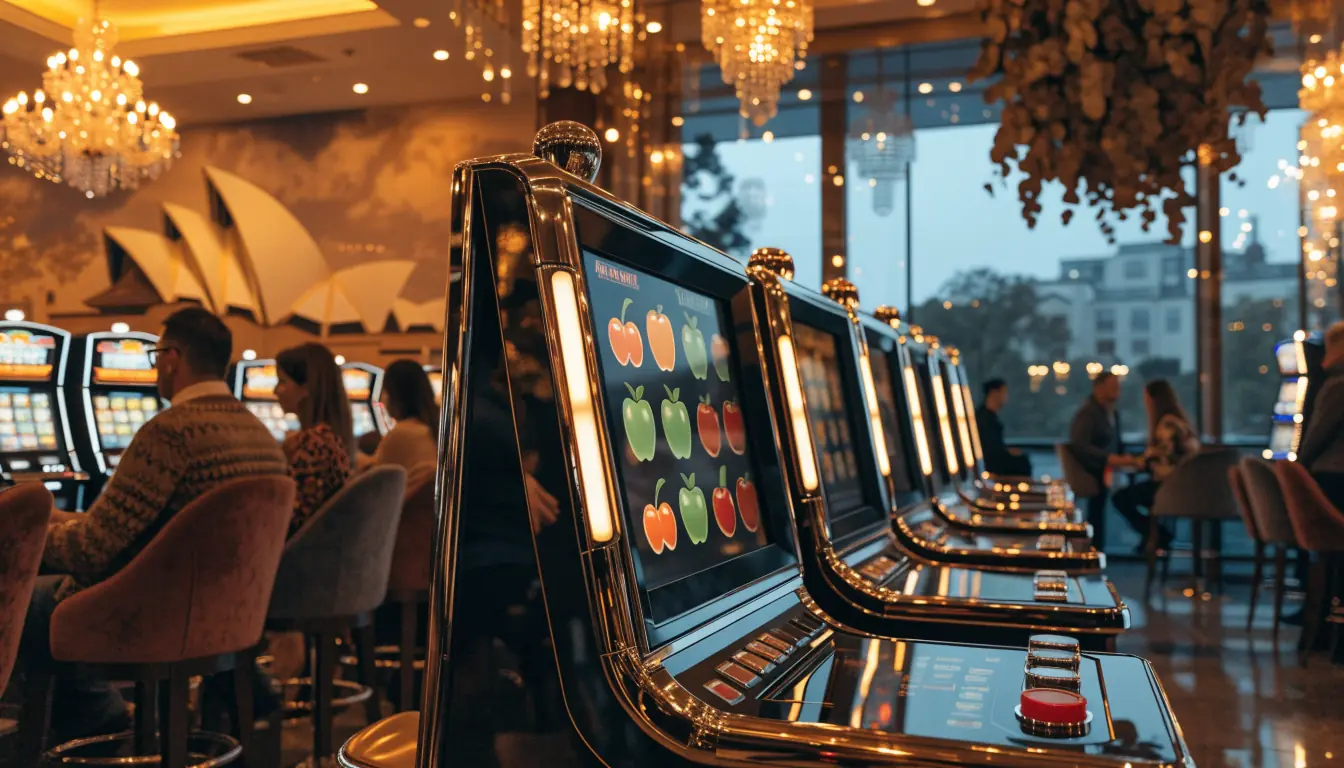




Progressive jackpot slots are a common exception to the benchmark. They often carry a lower RTP than non‑jackpot games because part of every wager is redirected into the jackpot pool rather than into the immediate payout structure. The headline jackpot sits outside the standard RTP calculation in most published figures, which means the advertised RTP for a jackpot title can look lower than a comparable non‑jackpot game while the pooled prize itself grows separately.
It is also worth noting that the same slot title can carry different RTP versions at different operators. According to bgaming.com, providers sometimes supply more than one RTP configuration of the same game to different casino operators, meaning the version available at one site is not automatically identical to the version available at another. This is not a universal market rule and should not be read as one — it is a practice reported by a single provider, and the specifics vary by title and by operator agreement. Where a game’s RTP matters to a decision, checking the figure published for that specific version, rather than assuming a single fixed number applies everywhere, is the only way to know which configuration is in play.
RTP values may vary between operators for the same game title, so always check the RTP reported by the specific casino you are using.
Online slots, as a category, carry higher RTP than their land‑based equivalents. The gap reflects differences in overhead and operating cost between a physical cabinet and an online game, rather than any difference in how the underlying mathematics of RTP is calculated.
Volatility: The Other Half of the Equation
RTP describes how much a game returns over a long run. It says nothing about how that return arrives. Volatility describes the win pattern — how frequently a game pays out and how large those payouts tend to be relative to the stake. Two games can share an identical RTP and still behave completely differently in a session: one might return small wins often, the other might return nothing for long stretches and then pay a large multiple in a single hit. Both can average out to the same theoretical return over enough spins.
This matters directly for bonus‑buy titles, because the bonus round is usually where a slot’s volatility is concentrated. The base game in many bonus‑buy titles is comparatively flat, while the feature — free spins, multiplier chains, hold‑and‑win mechanics — carries the bulk of the game’s variance. Buying the feature does not buy a fixed outcome; it buys entry into a round whose own internal volatility still determines whether the result is small or large. A high‑volatility bonus round bought outright can still return nothing above the purchase price, just as it can pay well above it — the purchase changes the path to the round, not the distribution of results inside it.
The following examples, drawn from published figures for individual titles, illustrate how RTP and volatility can combine differently even within a similar return range:
| Slot | RTP | Volatility |
|---|---|---|
| Cat’s Soup | 98.06% | Medium |
| Golden Paw: Hold & Win | 97% | Medium |
| Aztec Clusters | 97% | Very high |
| Merge Up™ 2 | 97% | Very high |
| Blazing Fire Pots Hold & Spin | 96.27% | Medium‑high |
| Always Up! x10000 | 96.05% | Very high |
Three of these titles sit within a narrow band around 97% RTP, yet their volatility ranges from medium to very high. A medium‑volatility game at that return level tends to distribute payouts more evenly across a session; a very‑high‑volatility game at a near‑identical return level tends to concentrate payouts into fewer, larger events with longer gaps between them. Neither pattern is better in the abstract — they describe different shapes of the same long‑run average, and the choice between them is a question of which pattern suits the bankroll and time available, not which one pays more overall.
Why This Matters for Bonus‑Buy Purchases Specifically
Every bonus‑buy purchase is priced against the game’s model, which means the cost already reflects the provider’s own calculation of the feature’s expected value. Because RTP is a long‑run average built from probability‑weighted outcomes across millions or billions of simulated spins, no individual purchase — bought or triggered — carries any assurance of matching that average. Each purchased round is generated independently, exactly as an organically triggered round would be, and one bought feature says nothing about what the next one will do.

This is where the gap between theoretical and experienced RTP becomes most visible. A handful of bonus‑buy rounds is a very small sample against a model built from billions of simulated spins; the experienced result over that handful can sit well outside the theoretical figure in either direction. A high published RTP describes the design of the game, not an assurance about the outcome of the next purchase, and it does not translate into a guarantee of profit over a short run of buys.
RTP Certification and Where the Numbers Come From
RTP figures published for a slot are not simply asserted by the provider that built the game. Regulatory certification requires third‑party verification of the RTP calculation, which means an independent testing body reviews the mathematical model — the paytable, reel weightings, feature trigger rates and, for bonus‑buy titles, the pricing of the purchase itself — and confirms that the simulated results match what the provider publishes. This third‑party layer is what allows a published RTP figure to be treated as a checked number rather than a marketing claim, and it is a step that sits behind every legitimate RTP figure quoted for a game, regardless of which operator ultimately offers it.
Summary of the Technical Picture
Before looking at how bonus‑buy slots and their demo counterparts fit within the Australian regulatory framework, and before the practical steps for using a bonus‑buy feature, three technical points carry forward:
- RTP is a long‑run statistical average, calculated through simulation and independently verified, not a description of any single spin or session.
- Volatility determines the shape of a game’s payouts — how often and how large — independently of its RTP figure, and this is particularly relevant to bonus‑buy titles because the purchased round is usually where the game’s variance is concentrated.
- The same title can exist in more than one RTP configuration depending on the operator, a practice reported by at least one provider rather than a fixed rule across the industry — which makes the specific figure published for a specific version the only reliable reference point.
None of this changes with a purchase. Buying access to a bonus round changes when a player reaches the feature, not what the feature is statistically built to return, and not what any single purchased round will pay.
Casino Bonus‑Buy & Demo Options Within the Australian Regulatory Framework
The mechanics of a bonus‑buy round sit on top of a legal question that most articles skip: whether an Australian resident can legally access that round at all through a real‑money casino product. The two questions are separate, and the second one has a firm answer.
The Interactive Gambling Act 2001 (IGA) is the primary Commonwealth law covering online gambling in Australia. It was introduced with a focus on harm minimisation rather than on generating licence revenue. Under the IGA, online casino‑style games — slots, poker, blackjack, roulette, and by extension any bonus‑buy variant of a slot — are prohibited from being offered to Australian residents. Some references cite this prohibition under the Interactive Gambling Act 1997; the sourcing on the exact year is inconsistent, but both versions agree on the outcome: providing online casino games to people in Australia is against Commonwealth law.
Illegal Offering
Offering real‑money online casino slots, including bonus‑buy features, to Australian residents breaches the Interactive Gambling Act and can result in enforcement action.
The prohibition sits on the operator, not on the player. It is not illegal for an individual in Australia to play at an offshore‑licensed online casino. What is illegal is offering that casino product into the Australian market without the right authorisation — and no authorisation exists for real‑money online casino games at the federal level. Sports betting and racing are handled separately under state and territory licensing; casino products, including any slot with a bonus‑buy button attached to real stakes, are not.
What this means for bonus‑buy specifically
A bonus‑buy feature is not a distinct legal category. It is a purchase option layered onto a slot’s paytable, and the slot itself is the product being regulated. If the base game is a real‑money online casino slot offered to an Australian resident, the bonus‑buy option inherits the same status as the game around it — outside the scope of anything an Australian regulator has licensed, because no such licence is available to issue.
Demo bonus‑buy slots run on virtual credits with no wagering or payouts, placing them outside the definition of gambling under the IGA.
Demo versions occupy different ground. A demo mode runs on virtual credit with no wagering and no payout, which removes it from the definition of gambling that the IGA targets. This is why demo bonus‑buy rounds are what most Australian-facing slot pages can legally present: a way to see how the purchase mechanic behaves — the spin count, the feature trigger, the volatility pattern — without a real‑money transaction on either side.
Certification versus legality
Regulatory certification is a separate layer from market legality, and the two get confused often. Third‑party RTP verification — testing a slot’s return‑to‑player figure against the number the provider advertises — is a requirement wherever a licensing body has jurisdiction over that operator. A verified RTP figure says the game’s math has been checked by an independent lab. It says nothing about whether offering that game to an Australian player is permitted under the IGA. A slot can carry a fully audited RTP from a recognised testing body and still be a product that no operator may lawfully market to someone in Australia.
Where that leaves an Australian reader
| Question | Position under the IGA |
|---|---|
| Is real‑money online casino slot play, including bonus‑buy, licensed for the Australian market? | No domestic licence exists for this |
| Is playing such a slot from Australia itself an offence for the player? | No — the Act targets the operator |
| Is a no‑stake demo version of a bonus‑buy slot within the same restriction? | No — no wager, no payout, outside the Act’s target |
| Does RTP certification make an offshore casino’s offer legal in Australia? | No — certification and legality are unrelated questions |
There is no public register of licensed Australian online casino operators to check, because the licence category itself does not exist domestically. Any claim suggesting a real‑money bonus‑buy slot is "locally licensed" for Australia should be read against that gap rather than taken at face value.
How to Activate a Bonus‑Buy on an Online Slot – Step by Step
Locating a bonus-buy title usually starts with the game’s information screen, where a dedicated icon or menu option separates it from a standard spin. The mechanics differ from one provider to another, but the sequence a player follows stays consistent.
- Open the paytable or menu. A bonus-buy option, when available, sits alongside the regular bet controls, often marked separately from the standard spin button.
- Check the feature price. The interface displays the cost of the purchase before confirming anything.
- Confirm the purchase. This triggers the feature outright, skipping the base game entirely.
- Play the resulting spin or round. Whatever plays out — free spins, a bonus round, a pick screen — is generated by the same RNG that governs every other spin. Each purchase is an independent event; the RNG does not remember previous purchases, wins or losses, and one bought feature has no bearing on the next.
- Review the result against the built-in RTP. The theoretical RTP describes what the game returns over its full mathematical cycle. A single purchased round, like a single session, only ever shows the experienced RTP — a narrow slice of that long-run figure, not a preview of it.
What is the technical infrastructure of modern casino platforms?
A modern slot engine consists of a base game, a paytable, and a random number generator (RNG) that produces independent outcomes for every spin. Bonus-buy features sit on top of this standard infrastructure, allowing players to pay a fixed cost to trigger the bonus round directly rather than waiting for a random trigger.
Can operators change RTP after a game goes live?
Providers can supply different RTP configurations of the same game to various casino operators, meaning the version at one site might differ from another. To know which configuration applies, you must check the specific RTP figure published for that game version at your chosen operator rather than assuming a universal number.
What is the proposed timeline for implementing the gambling advertising ban in Australia?
The Interactive Gambling Act 2001 governs online gambling in Australia with a focus on harm minimisation, but no specific timeline for an advertising ban is indicated in the available data.
What are the main concerns raised by Responsible Wagering Australia regarding the proposed advertising ban?
Online sports betting is legal and regulated in Australia, but the provided data does not detail the specific concerns raised by Responsible Wagering Australia regarding the proposed advertising ban.
Created by the ”Casino Payment Guide” editorial team.