Pokies Parlour Casino Australia: What the Law Actually Allows
 Available in AU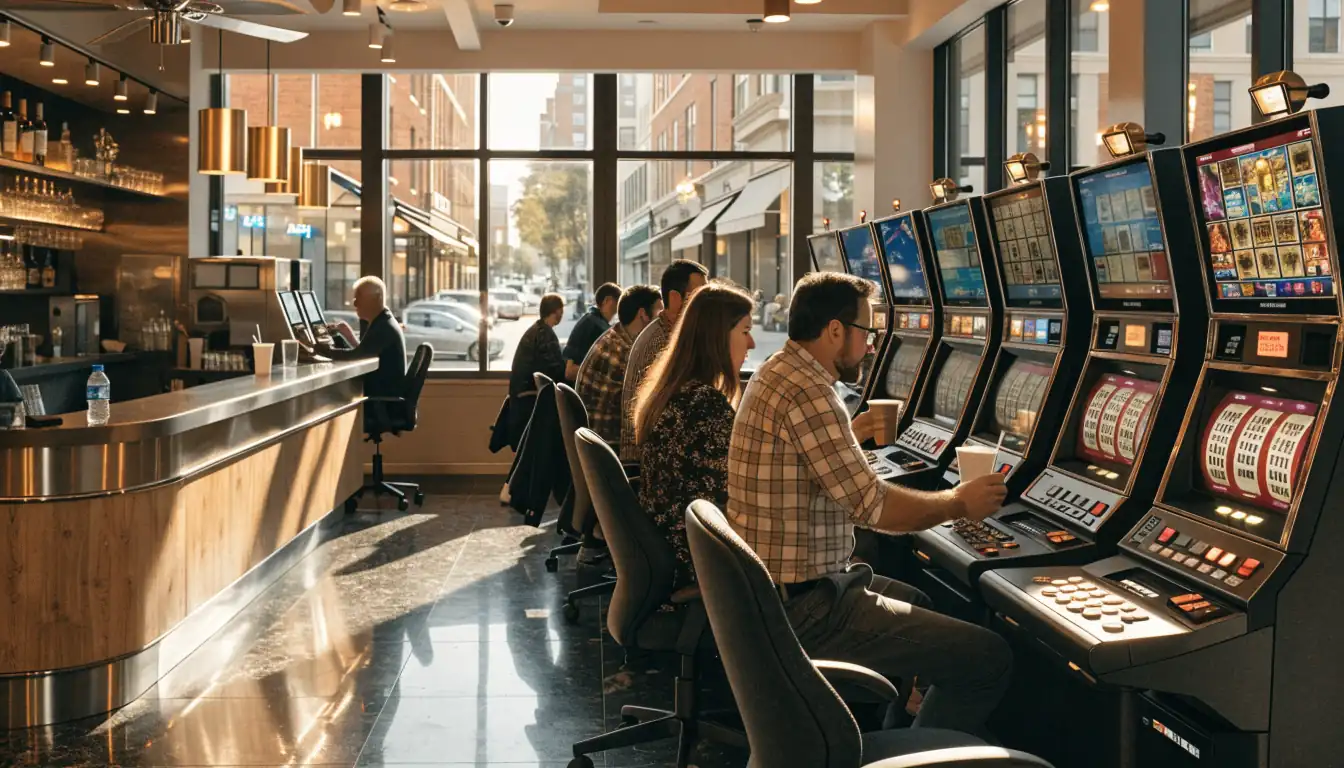
Understanding Pokies in Australian Parlour Casinos
Australian gambling law draws a hard line that any pokies parlour casino Australia 2026 overview has to state before anything else: online casino games — slots, roulette, blackjack, live dealer tables — cannot be offered to Australian residents by any operator, domestic or offshore. The Interactive Gambling Act 2001 makes it an offence for online operators to supply real-money gambling of this kind to people in Australia. No domestic licence for online pokies or online casino games exists, and none is being issued in 2026. What does exist, legally and physically, are pokies — electronic gaming machines installed in licensed pubs, clubs and land-based casinos across the country. That distinction between a machine standing on a venue floor and a slot game offered through a website is the entire legal foundation of this topic, and it does not shift depending on how a brand markets itself.
Scale of the pokies sector
Pokies sit inside a betting economy large enough that the figures need to be read carefully rather than rounded off. One source, ComplyAdvantage, reports that pokies generated AUD 191.2 billion in gambling turnover in 2023. That number describes turnover — the total value passed through machines, not money that stayed in anyone’s pocket — and it comes from a single source tracking a market that changes year to year, so it should be read as a reported figure rather than an official industry benchmark.
Choosing where to play pokies online in Australia comes down to solid licensing, fair bonus terms, and manageable minimum deposits — here’s a quick verdict on each option to help you weigh those factors before signing up.
License: Curacao eGaming OGL/2024/923/0383 (Antillephone N.V.) · Bonus: up to A$2,000 + 100 free spins across 2 deposits · Min. deposit: A$30 Licensed under Curacao eGaming via Antillephone N.V., this casino offers a two-deposit welcome package worth up to A$2,000 plus 100 free spins, with an accessible A$30 minimum deposit.
License: Curacao Gaming Authority (Jumpman Gaming Ltd) · Bonus: up to A$6,600 + up to 250 free spins across 4 deposits Operated by Jumpman Gaming Ltd under a Curacao Gaming Authority license, it stands out for a generous four-deposit bonus structure reaching up to A$6,600 and up to 250 free spins.
License: Curacao · Bonus: up to A$2,000 Holding a Curacao license, this casino keeps things simple with a welcome bonus of up to A$2,000.
License: Curacao eGaming (Hollycorn N.V., since 2017) · Bonus: 225% up to A$1,540 + 600 free spins across 4 deposits, 20x wagering · Min. deposit: A$20-30 (depends on the offer) Backed by Hollycorn N.V. and licensed since 2017 under Curacao eGaming, it offers a substantial four-deposit bonus of 225% up to A$1,540 plus 600 free spins, with a clearly stated 20x wagering requirement and a low entry deposit.
License: Curacao eGaming (Dama N.V.) · Bonus: up to A$10,000 + 180 free spins, 40x wagering Licensed via Dama N.V. under Curacao eGaming, this casino provides one of the larger bonus offers on this list, up to A$10,000 with 180 free spins, though its 40x wagering requirement is on the higher side.
License: Tobique Gaming Commission · Bonus: up to A$8,000 + 400 free spins across 4 deposits · Payout speed: crypto ~10-15 minutes, fiat 1-5 days · Min. deposit: A$30 Licensed by the Tobique Gaming Commission, it appeals to crypto users with notably fast payouts of around 10-15 minutes, alongside a four-deposit bonus of up to A$8,000 and 400 free spins and an accessible minimum deposit.
License: Curacao, operated by Dama N.V. · Bonus: 325% up to 5.25 BTC + 250 free spins across 4 deposits Operated by Dama N.V. under a Curacao license, this casino leans into crypto play with a four-deposit bonus structured in Bitcoin, offering up to 5.25 BTC plus 250 free spins.
License: Curacao (operating since 2017) · Bonus: 250% up to A$2,000 + 50 free spins on the first of six deposits · Min. deposit: A$20 Active since 2017 under a Curacao license, it spreads its bonus across six deposits, starting with 250% up to A$2,000 and 50 free spins on the first deposit, with a low minimum deposit requirement.
Bonus: 240% up to A$4,100 + 300 free spins This casino offers a straightforward welcome package of 240% up to A$4,100 plus 300 free spins.
License: Curacao · Bonus: up to A$10,000 multi-stage + 500 free spins · Min. deposit: A$20 (POLi) Licensed in Curacao, this casino features a multi-stage bonus reaching up to A$10,000 with 500 free spins, and supports a low minimum deposit via POLi.
Player losses are a separate, better-documented figure. In the 2020-2021 financial year, the total loss from electronic gaming machines across Australia was around AUD 12 billion, against total bets of almost AUD 150 billion placed on machines in the same period. Losses at that scale translate to a per-capita loss of AUD 608 for that financial year — a figure calculated across the entire population, not just people who play, which means the real loss concentrated on active players was considerably higher than the average implies.
| Metric | Figure | Period |
|---|---|---|
| Total bets on EGMs | ~AUD 150 billion | FY 2020-2021 |
| Total player losses on EGMs | ~AUD 12 billion | FY 2020-2021 |
| Per-capita loss | AUD 608 | FY 2020-2021 |
| Pokies gambling turnover | AUD 191.2 billion (ComplyAdvantage) | 2023 |
Machines are operated in every state and territory, including the Australian Capital Territory and the Northern Territory — there is no jurisdiction in the country without them. On the question of Australia’s share of the world’s machine count, sources disagree sharply. One figure puts Australia’s share of the world’s pub and club poker machines at 3%. A separate figure puts it at around 18%. These are not close estimates that can be averaged; they describe the same claim in two very different orders of magnitude, and nothing in the available material explains the gap. Anyone relying on either number for a comparison with other countries should treat it as contested rather than settled.
Where the money goes and who taxes it
Winnings from pokies are not taxed in the hands of the player. Whatever a machine pays out belongs to the winner in full, with no personal tax obligation attached to it. This is a feature of Australian gambling law generally, not something specific to pokies, but it matters for anyone doing the arithmetic on a session: a payout figure on the screen is the final figure, not a pre-tax one.
The other side of that ledger — what operators owe — is not uniform. Taxation of gambling operators in Australia varies by state and by the type of gambling service being offered. A pokies venue in one state is not taxed under the same schedule as a venue in another, and the tax treatment of machine gambling is not the same as the tax treatment of, say, licensed sports wagering. There is no single national operator tax rate to quote, and any claim suggesting otherwise should be treated as an oversimplification.
Tax variation
There is no single national operator tax rate; tax treatment of machine gambling varies by state and by the type of gambling service, so any assumption of a uniform rate is inaccurate.
Where pokies are found and how they are regulated
Pokies are used widely across Australian pubs, clubs and casinos — this is the ordinary, day-to-day setting for the machines, not a niche one. Regulation of that setting is split across a number of bodies depending on jurisdiction: the Office of Liquor and Gaming Regulation, the ACT Gambling and Racing Commission, and state-level frameworks such as those overseen by NSW authorities all have a hand in how venues are licensed and monitored, alongside national bodies like AUSTRAC for financial-crime obligations and the Australian Communications and Media Authority for online conduct. This layered structure is one reason the sector is described state by state rather than as a single national regime — because, on tax and on oversight, it genuinely isn’t one.
Why pokies attract financial-crime attention
A recurring theme in regulatory material on pokies is not the games themselves but the cash that moves through them. The high volume of cash transactions handled by machines, combined with limited traceability once that cash is inserted, makes pokies a channel that criminals have used for money laundering. The mechanics described by AUSTRAC and by industry compliance sources follow a consistent pattern:
- Cash-in, minimal play, cash-out. Large sums are inserted into a machine, a small amount of genuine gambling activity takes place, and the balance is cashed out. The resulting payout ticket then looks, on paper, like gambling winnings rather than what it actually is — cash moved through a machine to create a false record.
- Buying winning tickets. Offenders purchase a winning ticket from another player, handing over dirty cash in exchange for a ticket that redeems as clean, traceable funds. The seller gets a premium over the ticket’s face value; the buyer gets a laundering channel.
- Structuring across venues. Rather than moving a large sum through one machine at one venue — which risks triggering reporting thresholds — smaller amounts are spread across multiple venues. Each individual transaction stays under the radar; the aggregate does not.
None of this requires sophistication on the part of the machine or the venue. It relies on the fact that cash entering a pokie and cash leaving a pokie are, absent other controls, difficult to distinguish from ordinary play.
Red flags regulators and venues are told to watch for
AUSTRAC issued a guide in 2024 specifically to help operators recognise the signs of laundering activity running through gaming machines. The indicators it and related compliance material point to are behavioural rather than purely financial, which is part of why they require staff attention rather than automated flags alone:
- Unusually high cash access relative to a customer’s evident means.
- Large single deposits into machines, especially where they are followed by little sustained play.
- Cash transfers between patrons or unexplained cash movement around a venue.
- Requests to check or verify casino disbursement records, which can indicate an attempt to legitimise a payout after the fact.
- Certain occupations or circumstances that make declared income inconsistent with observed spending.
- Large or repeated cash insertions followed by minimal play and an almost immediate cash-out.
- Frequent small redemptions carried out across different venues within a short window of time.
- Customers who refuse to provide identification, or who are found using multiple player cards.
None of these signs, taken alone, proves anything improper — a large win can produce a large cash-out with no laundering involved. What they share is a pattern that diverges from ordinary recreational play, which is why AUSTRAC frames them as prompts for scrutiny rather than automatic conclusions.
Compliance obligations by venue size
Obligations under AUSTRAC’s regime scale with the number of machines a venue operates, which means the compliance burden on a small pub is materially lighter than on a large club or casino floor.
Venues with up to 15 pokies must:
- Register with AUSTRAC.
- Keep identification records for relevant transactions.
- Submit suspicious matter reports when red-flag behaviour is observed.
Venues with more than 15 pokies carry a substantially heavier load. They must:
- Appoint a dedicated compliance officer.
- Conduct formal risk assessments of their operations.
- Implement a full AML/CFT programme.
- Perform customer due diligence on patrons where required.
- Report any cash transaction over AUD 10,000.
Register with AUSTRAC. Keep identification records for relevant transactions. Submit suspicious matter reports when red‑flag behaviour is observed.
Appoint a dedicated compliance officer. Conduct formal risk assessments of their operations. Implement a full AML/CFT programme. Perform customer due diligence on patrons where required. Report any cash transaction over AUD 10,000.
The threshold at 15 machines is the dividing line between a lightly regulated venue and one that functions, for compliance purposes, closer to a financial institution. Failure to meet these obligations carries real consequences: AUSTRAC can issue remedial directions, infringement notices and civil fines, and non-compliant venues face reputational damage that can outlast any individual penalty.
State-level responses: cashless machines
New South Wales has taken the most visible legislative steps in response to laundering concerns tied to pokies. The 2022 NSW Islington Report — a single, specific piece of work rather than a general industry consensus — recommended that all pokies in the state become cashless by the end of 2028. That is a recommendation with a stated deadline, not yet a universal reality across every machine in the state, and it should be read as the position of that report rather than as settled national policy.
Separately, and with more immediate legal force, an amendment to the Casino Control Act 1992 allows NSW casino operators to be fined up to AUD 100 million for compliance failures. That figure applies specifically to casino operators under NSW law — it is a ceiling written into the amended Act, not a general penalty scale applied across every pokies venue in the country.
In NSW, the amended Casino Control Act 1992 allows fines of up to AUD 100 million for compliance failures by casino operators.
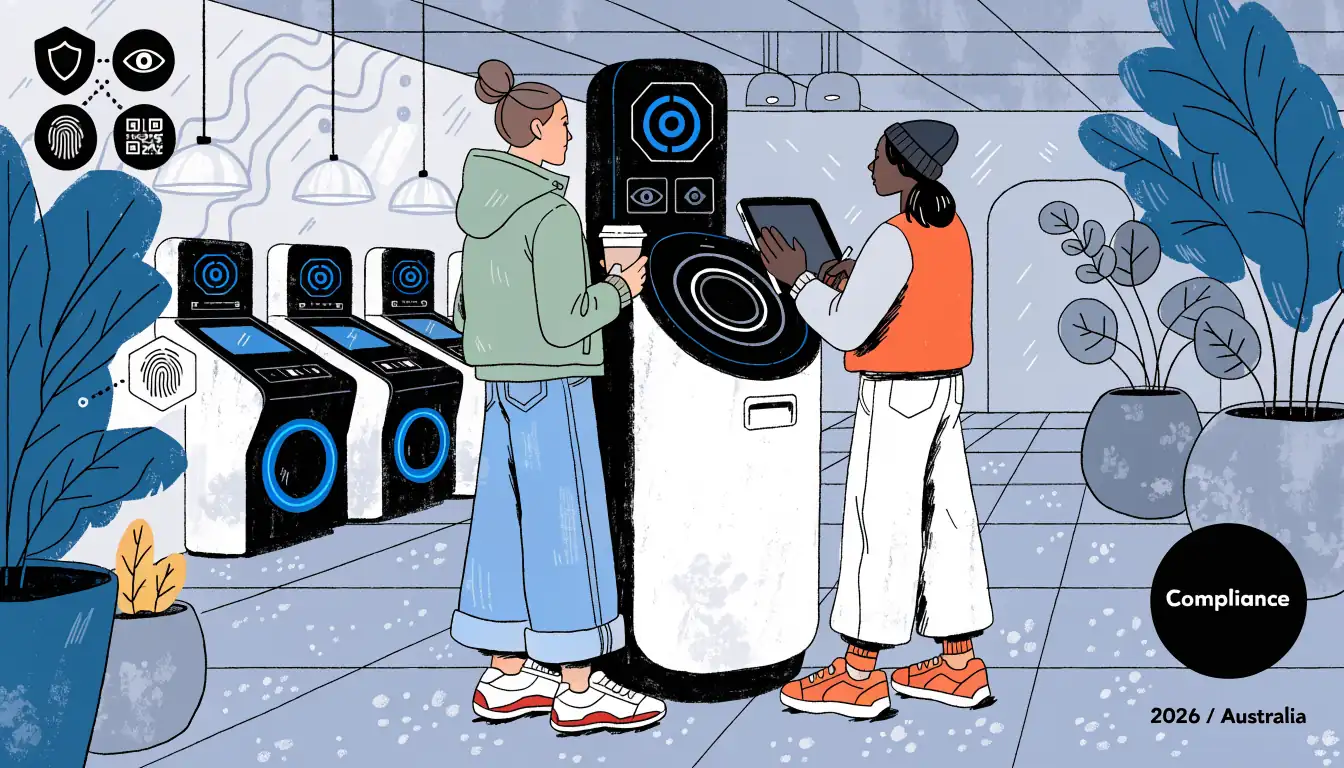
The direction of travel described in both measures points the same way: toward account-based, cashless machines rather than cash-fed ones. The reasoning given by regulators and compliance providers is consistent — cashless, account-based pokies improve traceability and reduce the anonymity that cash-based play affords, because a deposit, a session and a withdrawal on an account-based system leave a full record from one end to the other. Transparent, account-based pokies are described as providing that full traceability across deposits, gameplay and withdrawals in a way that a coin- or note-fed machine simply cannot. It is worth noting that this framing — cashless adoption as the fix — is put forward by a compliance-technology source (FacctUM, among others in this space) with a direct interest in that outcome, so it reads as an industry recommendation rather than a neutral finding.
What regulators are recommending going into 2026
The consistent recommendation from AUSTRAC and related compliance bodies is threefold: tighter customer due diligence at the point of play, ongoing transaction monitoring rather than one-off checks, and continued adoption of cashless gaming systems where venues can implement them. None of this is framed as optional best practice for venues above the 15-machine threshold — it sits on top of the mandatory obligations already described. For a pokies parlour casino operating in Australia in 2026, this is the compliance backdrop against which every other feature of the venue — bonuses, VIP treatment, loyalty schemes — now operates. It is also the backdrop against which "pokies parlour" branding needs to be read carefully: a physical venue offering machine play under this regulatory structure is a fundamentally different proposition from any website using similar language to describe online slots, which remain prohibited under the Interactive Gambling Act regardless of how the marketing is phrased.
The regulatory bodies with a stake in this
A handful of organisations recur throughout any serious account of pokies compliance in Australia, each with a distinct role:
- AUSTRAC — the national financial-intelligence and AML/CFT regulator, responsible for the 2024 red-flag guide and for registration and reporting obligations tied to machine numbers.
- NSW (state government and regulatory apparatus) — driving the cashless-conversion agenda and the amended Casino Control Act penalty regime.
- NSW Crime Commission — engaged in the broader investigation of laundering risk tied to gaming machines within the state.
- ACT Gambling and Racing Commission and the Office of Liquor and Gaming Regulation — state and territory-level licensing and conduct oversight for venues outside NSW.
- Australian Communications and Media Authority (ACMA) — oversight relevant to online conduct and the enforcement boundary the Interactive Gambling Act draws around real-money online gambling.
- Australian Institute of Criminology — research body contributing to the evidence base on gambling-related crime, including laundering typologies.
Between them, these bodies define the conditions under which any pokies parlour casino operates in 2026: state-by-state licensing, a national AML/CFT reporting regime tied to machine count, and a hard federal prohibition on offering the equivalent games as online casino products to Australian residents. Anything describing a "pokies parlour" without acknowledging that split — physical machines lawfully operating under state licensing, versus online casino games that no licence in Australia permits — is describing something that does not match the legal reality on this market.
Signing Up for Pokies Parlour Bonuses: Deposit, No‑Deposit and Sign‑Up Offers
A pokies parlour sign-up bonus is not a gift; it is a marketing cost the venue books against expected turnover. Before comparing offers, it is worth separating what actually exists at licensed land-based venues from what appears on offshore websites — because the two are not the same product, and one of them is not legal to offer to Australian residents at all.
What "bonus" means at a physical venue versus online
Pubs, clubs and licensed pokies parlours in Australia run loyalty schemes tied to a membership card: points for play, occasional free credits, or entry into venue draws. These are administered on-site, under state and territory gaming rules, and are separate from any online casino promotion.
Bonus claim steps
The venue collects identification documents to confirm the player is over 18 and matches AML requirements.
Collected ID information is stored as part of the player’s sign‑up record, forming a paper trail for regulators.
Operators run anti‑money‑laundering checks, monitoring cash access and transaction patterns for red‑flag behaviour.
Any website advertising a "pokies parlour no deposit bonus" or a "pokies parlour casino no deposit bonus" redeemable in real-money online slots is not operating under an Australian licence — because no such domestic licence exists. Online casino games, including pokies-style slots, are prohibited under the Interactive Gambling Act 2001. Signing up for a real-money online bonus does not expose the player to prosecution, since the law targets operators rather than individuals, but it does mean there is no local regulator standing behind the offer, no dispute process under Australian law, and no wagering-requirement disclosure obligation being enforced against the site running it.
Claiming a bonus: the checks that come with it
Wherever a bonus is legitimately offered — at a membership desk or through a regulated betting or lottery product — claiming it requires identity verification. This is not a formality unique to bonus terms; it sits inside a broader anti-money-laundering framework that applies to the machines themselves.
AUSTRAC issued a guide in 2024 to help operators recognise money-laundering red flags around electronic gaming machines, and the scale of oversight depends on venue size:
| Venue size | Obligations |
|---|---|
| Up to 15 pokies | Register with AUSTRAC, keep identification records, submit suspicious matter reports |
| More than 15 pokies | Appoint a compliance officer, run risk assessments, implement AML/CFT programs, perform customer due diligence, report cash transactions over AUD 10,000 |
Sign-up and identification records collected at this stage double as the paper trail regulators use to flag misuse. Indicators AUSTRAC lists include unusually high cash access, large deposits, cash transfers, disbursement checks from the casino, and certain occupations associated with elevated risk. None of this is specific to bonus claims, but a new sign-up is exactly the point where a venue or platform first captures the identity data that later feeds into these checks.
There is a further reason identification matters at this stage: according to a report cited by complyadvantage.com, money mules are recruited specifically to launder funds through pokies, using sign-up and account processes as an entry point. That detail describes a criminal method, not a normal part of registering for a bonus, but it explains why ID verification at sign-up is enforced rather than optional.
Safeguards that apply regardless of the offer
Two protections should hold no matter where a bonus is advertised:
- Age verification. Only players 18 or older may register or access the site at all.
- Terms shown before commitment. Any wagering requirement attached to a bonus must be disclosed clearly before the offer is accepted, not after a deposit has been made.
Operators that fail to meet AML obligations face remedial directions, infringement notices, civil fines and reputational damage — consequences that apply to the venue’s licence and compliance standing, independent of any individual bonus dispute. That framework is the backdrop against which any "sign-up offer" should be read: the identification step attached to claiming a bonus exists primarily to satisfy this reporting regime, not to make the offer more attractive.
Pokies Parlour Casinos: How Traditional Venues Operate
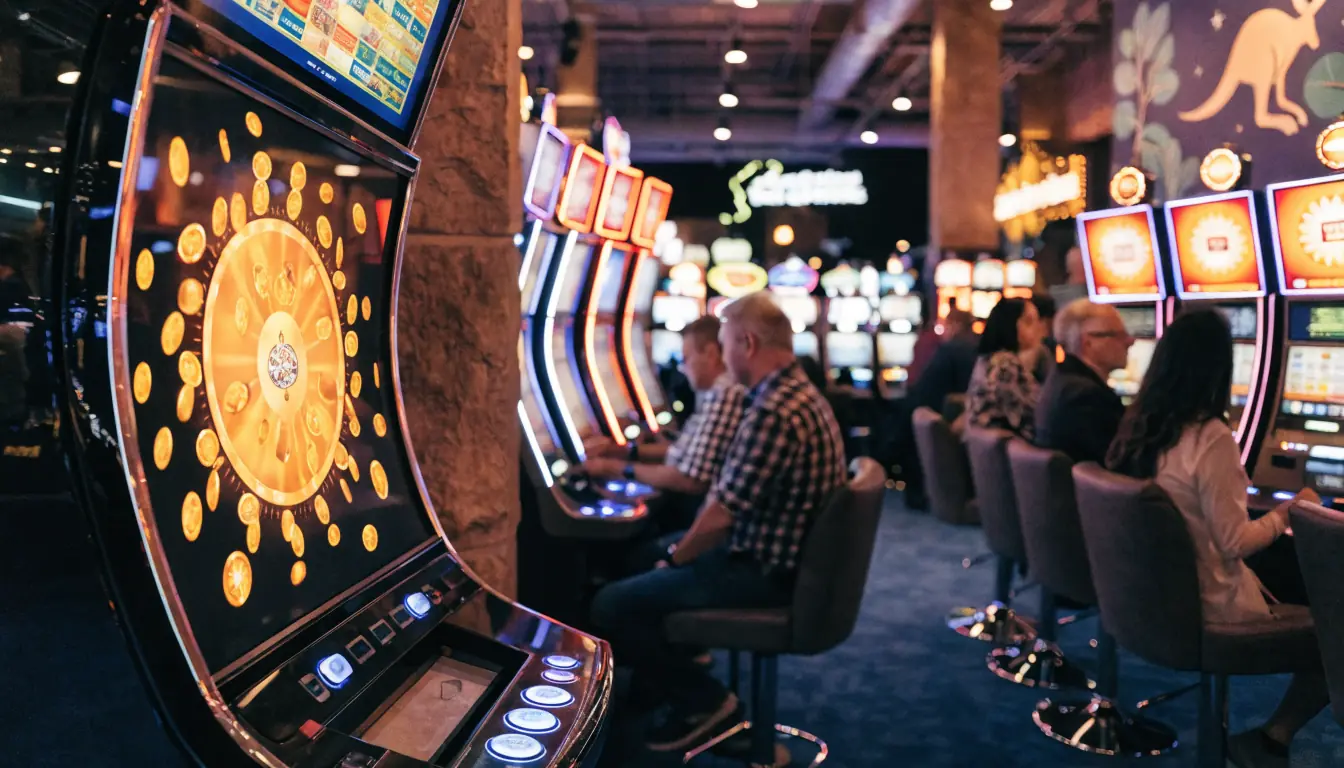
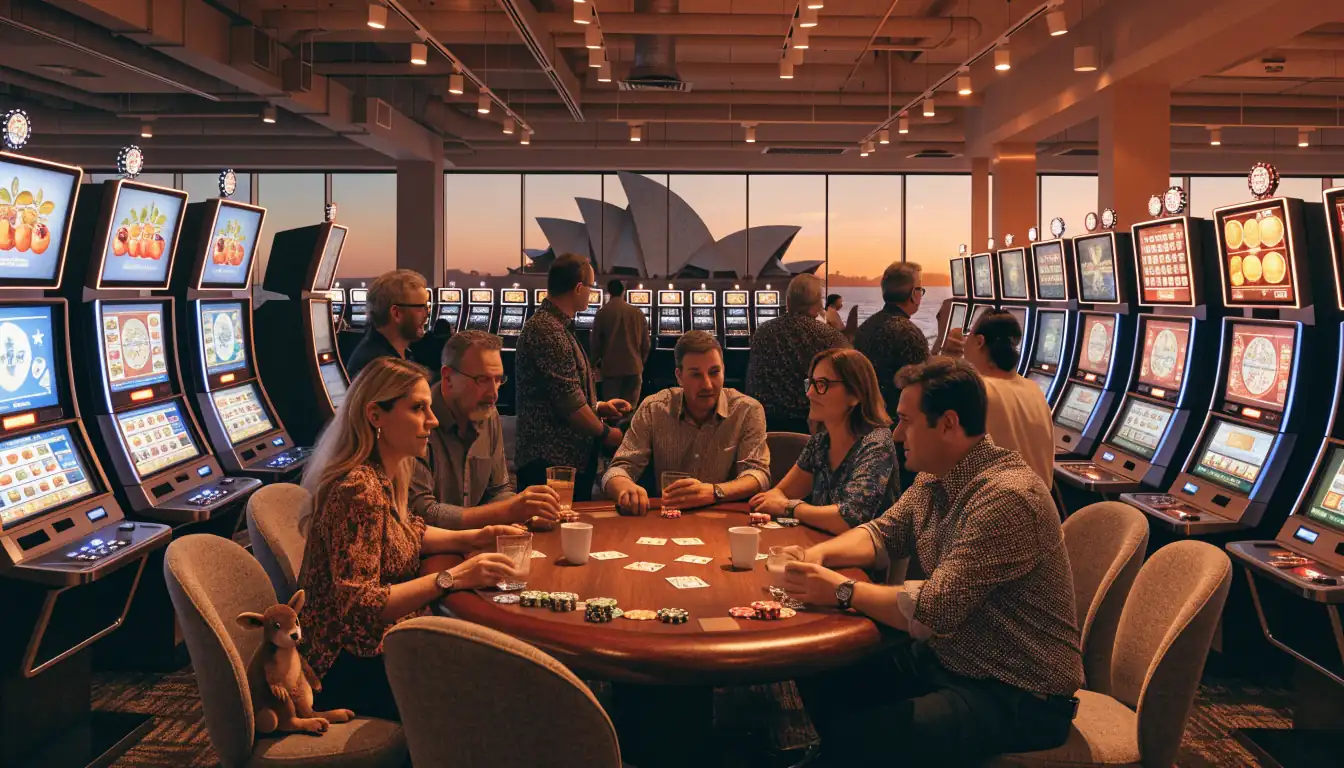
A pokies parlour rarely stands as its own destination. Electronic gaming machines are installed across pubs, clubs and dedicated venues in every state and territory, along with the Australian Capital Territory and the Northern Territory, which means the "parlour" is usually a room inside a building with another primary purpose. A suburban pub floor, a bowls club function area, a licensed club’s gaming lounge — the machines sit wherever the venue’s liquor and gaming licence permits them, not in a separate casino built around them.
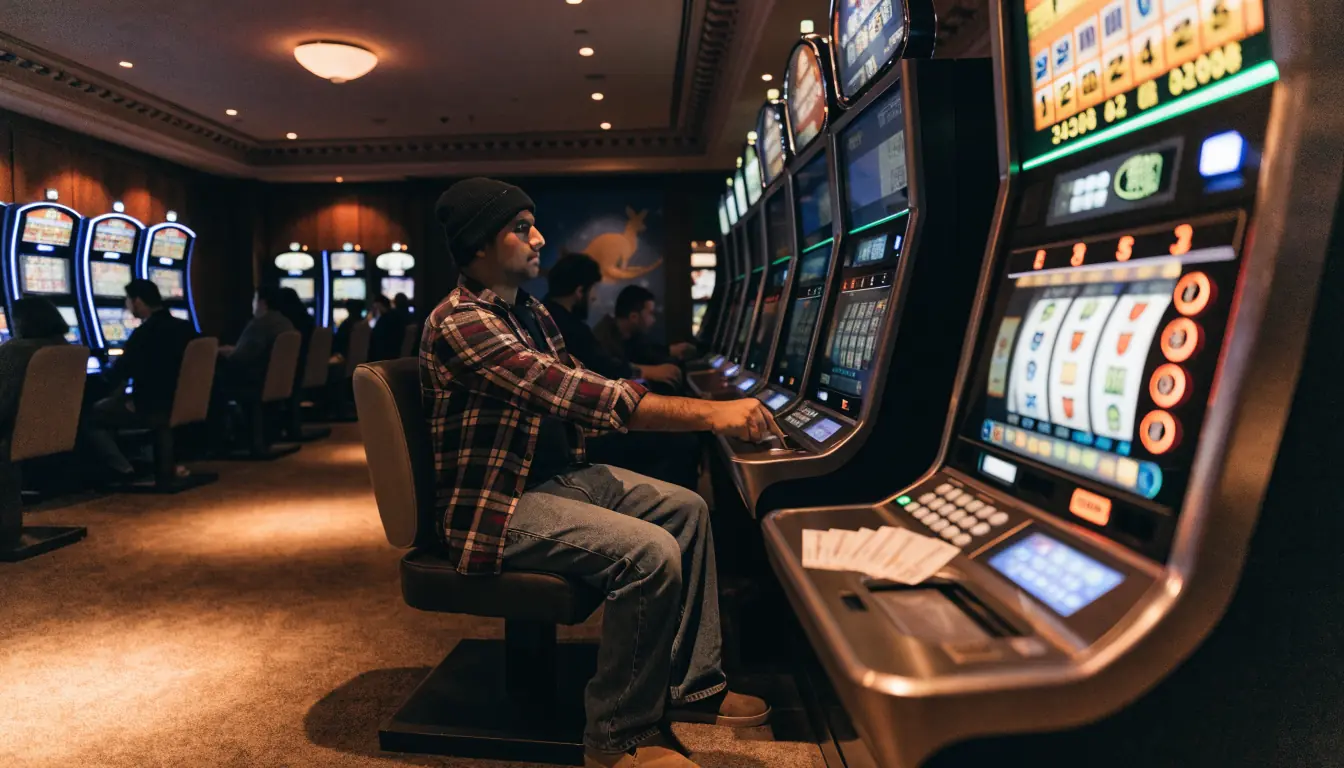
The physical layout follows a familiar pattern regardless of location: banks of machines arranged in rows or clusters, often screened off from bars and dining areas by partitions, low lighting distinct from the rest of the venue, and a cashier or cage where notes go in and tickets or vouchers come out. Some venues cluster their machines by stake size or game type; others simply line them along a wall. There is no standard floor plan mandated across operators, so the experience varies from one venue to the next even within the same suburb.
pokies
Electronic gaming machines installed in licensed pubs, clubs and land‑based casinos across Australia; they are physical slot‑type machines distinct from online casino games.
Player experience is largely self-service. A patron finds a machine, feeds in cash, plays through credits, and cashes out a printed ticket at the end of a session. Staff presence is typically limited to bar or gaming attendants who monitor the floor rather than interact with each machine directly. This low-touch setup is part of what makes the format viable in a pub or club — it needs no dedicated gaming staff beyond basic supervision.
The financial scale behind this everyday setting is considerable. Australians placed bets worth almost AUD 150 billion on electronic gaming machines in the 2020–2021 financial year, and total player losses across that same period reached about AUD 12 billion. Those figures sit behind rooms that, on the surface, look like nothing more than a corner of the local pub — a detail worth holding onto before assuming the stakes are as modest as the décor suggests.
VIP Experience in Australian Pokies Parlours
High-value players in a pokies parlour casino typically get separate rooms, dedicated hosts and priority service — the operational side of the relationship that has nothing to do with deposit bonuses. What changes for this segment is not the offer but the paper trail behind it, and that is where regulation is moving fastest.
The 2022 NSW Islington Report proposed making all NSW pokies cashless by the end of 2028 — a recommendation, not yet a settled rule across the state, but one that bears directly on VIP play, where large cash movements have historically been routine and least scrutinised. A cashless, account-based system would replace anonymous high-roller cash-ins with a recorded balance tied to an identity, changing how premium service is delivered as much as how it is monitored.

Compliance failures now carry weight to match. An amendment to the Casino Control Act 1992 allows NSW casino operators to be fined up to AUD 100 million for lapses — a figure large enough to make VIP rooms a cost centre for compliance teams, not just a revenue one. Any parlour courting high-value custom is, in effect, courting that exposure too.
Pokie Parlour Bonus Structures and Player Incentives
Loyalty programmes inside parlour casinos run on a points-for-play basis: continued spend on pokies accrues points redeemable against food, drinks, or venue credit. Reload offers work the same way as sign-up bonuses in mechanics, but apply to existing accounts rather than new ones, and the same wagering-requirement disclosure rules apply — the terms must be shown before the offer is accepted, not after.
What separates the parlour experience from the wider bonus economy is the tax treatment either side of the counter. Whatever a player wins on the pokies floor is not taxed; a jackpot, a loyalty redemption converted to cash, or a promotional payout all land untouched by any personal tax obligation. The operator’s side is a different ledger. Taxation of gambling operators is not uniform across Australia — it varies by state and by the type of gambling service being offered, which means a bonus structure that costs one venue a certain margin can cost another something different purely on jurisdiction. That asymmetry — untaxed winnings for the player, state-by-state taxation for the house — is the quiet mechanic behind why loyalty terms are rarely identical between venues.
What are the key limits on providing services to customers?
Under the Interactive Gambling Act 2001, operators cannot offer real-money online casino games such as slots, roulette, and live dealer tables to Australian residents. No domestic licences for these online games are being issued in 2026; legally, only physical electronic gaming machines in licensed pubs, clubs, and land-based casinos are permitted.
Are my personal and financial details safe?
Operators with more than 15 pokies must implement AML/CFT programs and perform customer due diligence, while those with up to 15 must register with AUSTRAC and keep identification records. Additionally, regulators recommend adopting cashless, account-based pokies to improve the traceability of funds and reduce anonymity.
What should a valid complaint include?
Red-flag indicators for reporting include unusually high cash access, large deposits, cash transfers, and casino disbursement checks. Operators must submit suspicious matter reports to AUSTRAC, particularly when customers refuse identification, use multiple player cards, or make frequent small redemptions across different venues.
Written by the editors at Casino Payment Guide.