
Best Pokies in Canberra: Land-Based vs Online Rules
 Available in AU
Canberra Pokies Landscape in 2026
Pokie machines in Canberra’s clubs and pubs sit inside a different legal category from the digital games discussed later in this piece. Land-based gaming machines in the Australian Capital Territory operate under territory-level club and gaming legislation, not under the Interactive Gambling Act 2001. That federal law targets a narrow but decisive category: it prohibits the provision of online casino-style games — slots, poker, blackjack, roulette — to Australian residents, whether the operator sits onshore or offshore. It says nothing about a cabinet-style machine bolted to a carpet in a licensed club on Northbourne Avenue. That machine is regulated locally, taxed locally, and licensed to a venue rather than to a website, which is precisely why the same word — "pokies" — describes two products governed by two entirely separate rulebooks.
This section is about the first product: the machines a resident can walk up to inside a physical venue. The next section moves to the second — the online offerings that Canberra residents access from a browser, which fall outside any lawful domestic licensing scheme and require a different legal framing altogether. Keeping the two apart matters because a claim that holds for one is often false for the other. A machine’s cash-in slot, note acceptor, and printed ticket redemption are club-floor realities; a "verified provably fair hash" or a "wagering-free spin" belongs to the online catalogue. Mixing the vocabulary produces the kind of misleading advice this report is built to avoid.
Since online pokies now fill the gap left by Canberra’s limited local gaming floors, it helps to know which platforms are actually worth your time before you sign up.
License: Curacao eGaming OGL/2024/923/0383 (Antillephone N.V.) · Bonus: up to A$2,000 + 100 free spins across 2 deposits · Min. deposit: A$30 Holds a Curacao eGaming licence under Antillephone N.V. and offers a welcome package spread across two deposits, with an accessible minimum deposit for newcomers.
License: Curacao Gaming Authority (Jumpman Gaming Ltd) · Bonus: up to A$6,600 + up to 250 free spins across 4 deposits Licensed via the Curacao Gaming Authority under Jumpman Gaming Ltd, this operator backs its offering with a sizeable welcome bonus split across four deposits.
License: Curacao · Bonus: up to A$2,000 A Curacao-licensed casino offering a straightforward welcome bonus for players getting started.
License: Curacao eGaming (Hollycorn N.V., since 2017) · Bonus: 225% up to A$1,540 + 600 free spins across 4 deposits, 20x wagering · Min. deposit: A$20-30 (depends on the offer) Operating under a Curacao eGaming licence held by Hollycorn N.V. since 2017, it pairs a multi-deposit welcome bonus with clearly stated wagering terms and a modest minimum deposit.
License: Curacao eGaming (Dama N.V.) · Bonus: up to A$10,000 + 180 free spins, 40x wagering Licensed through Curacao eGaming under Dama N.V., it stands out for a large welcome bonus paired with defined wagering requirements.
License: Tobique Gaming Commission · Bonus: up to A$8,000 + 400 free spins across 4 deposits · Payout speed: crypto ~10-15 minutes, fiat 1-5 days · Min. deposit: A$30 Licensed by the Tobique Gaming Commission, it combines a generous multi-deposit bonus with fast crypto payout speeds and reasonable fiat withdrawal times.
License: Curacao, operated by Dama N.V. · Bonus: 325% up to 5.25 BTC + 250 free spins across 4 deposits Operated by Dama N.V. under a Curacao licence, it’s notable for a crypto-denominated welcome package spread across multiple deposits.
License: Curacao (operating since 2017) · Bonus: 250% up to A$2,000 + 50 free spins on the first of six deposits · Min. deposit: A$20 Curacao-licensed and active since 2017, it offers a welcome bonus extending across six deposits with a low minimum deposit requirement.
Bonus: 240% up to A$4,100 + 300 free spins Offers a substantial welcome bonus and free spins package for new players.
License: Curacao · Bonus: up to A$10,000 multi-stage + 500 free spins · Min. deposit: A$20 (POLi) Licensed in Curacao, it features a multi-stage welcome bonus with a large free spins allowance and a low minimum deposit via POLi.
What counts as a pokies venue in Canberra
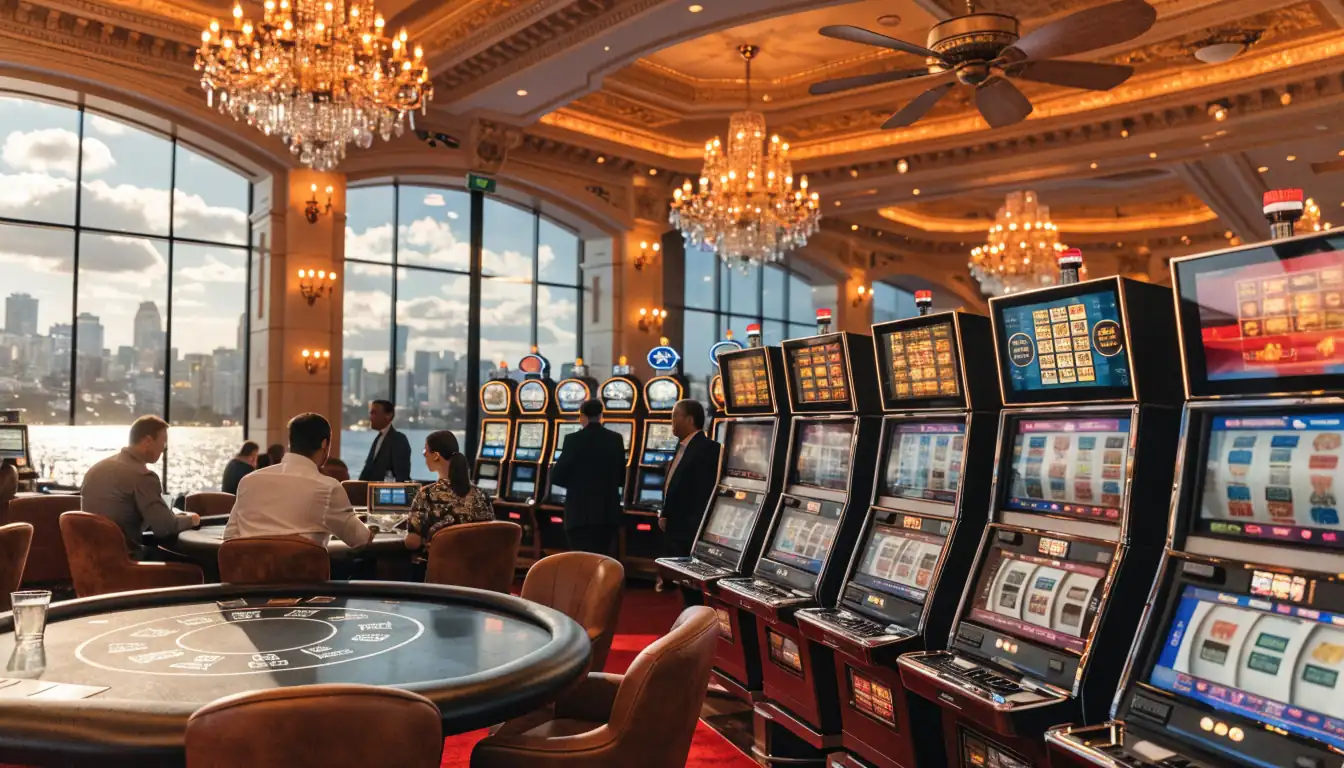
Licensed clubs — RSL branches, bowls clubs, golf clubs, workers clubs, and similar member-based venues — are the traditional home of the poker machine in the ACT, a legacy of a licensing model that ties gaming machine entitlements to club membership structures rather than to standalone casino floors. Hotels and taverns hold a separate, generally smaller allocation. The distinction matters to a visitor mainly in scale: a large club function room can host a substantial bank of machines across several rows, with distinct zones for low-denomination and higher-stake play, while a suburban hotel gaming room tends to be a single carpeted annex with a handful of cabinets near the bar.
Membership requirements vary by venue type. Clubs frequently require sign-in as a visitor or temporary member before floor access, a formality tied to their club licensing rather than to the machines themselves; hotels generally do not impose the same requirement since their gaming permit sits under a different licence class. Anyone checking a specific venue’s rules is better served calling the venue directly than relying on a general description, since the exact sign-in process is set at club level, not at territory level, and changes between venues.
Membership Requirement
Visitors should verify whether a club requires temporary membership before floor access, as failing to do so may result in being denied entry.
Machine variety on the floor
A modern Canberra gaming room rarely runs a single cabinet type. Multi-game terminals — a single cabinet offering a rotating menu of five, ten, or more titles — sit alongside dedicated single-game machines built around one licensed theme. The mix within any given room depends on what the venue’s machine supplier has installed and refreshed, and turnover is a normal part of floor management: venues periodically swap older titles for newer ones to keep the room from feeling stale, in the same way a pub rotates its tap list.
Game mechanics on the floor fall into a few recognisable families, familiar to anyone who has spent time on a club floor across Australia:
- Line-based reel games — the classic three- or five-reel format with a fixed number of paylines, generally the entry point for lower-denomination play.
- Ways-style and grid games — cabinets that pay across adjacent symbol clusters or full-grid combinations rather than fixed lines, usually pitched as higher-variety alternatives within the same room.
- Multi-line video pokies with feature rounds — free-spin triggers, hold-and-respin mechanics, and bonus wheels layered onto a standard reel base.
- Linked jackpot banks — a set of machines within the same room, or sometimes across venues owned by the same club group, contributing to a shared jackpot pool that climbs until a win is triggered on one of the linked cabinets.
The presence and prominence of each family shifts from venue to venue and, within a venue, from year to year, driven by supplier contracts and floor refresh cycles rather than by any single citywide standard. A description of "what’s on the floor" is accurate only as a snapshot; the honest position is that variety exists, its exact shape is venue-specific, and no single article can freeze it in place for the length of a calendar year.
Bonus structures and player rewards on the club floor
Land-based venues layer their own loyalty mechanics on top of the machines themselves, structurally distinct from the promotional language used by online operators. A club membership card, tapped or inserted into a machine, typically accrues points redeemable against food, drink, or event entry rather than against wagering credit — a system built around venue retention rather than around the deposit-and-bonus cycle common online. Some venues run periodic member draws or raffle-style promotions tied to card play; the specifics — draw frequency, entry thresholds, prize categories — are set and published by each club individually, generally on noticeboards near the gaming room entrance or in a member newsletter, and are not standardised across the territory.
This is a meaningfully different structure from the bonus mechanics that dominate the online conversation — free spins, deposit matches, wagering-free offers — which belong to a different regulatory category entirely and are covered in the next section. Nothing about a club loyalty card resembles a wagering requirement; there is no deposit being matched, because there is no online account to deposit into. The card simply tracks in-venue spend and converts a portion of it into non-cash venue benefits.
Licensed clubs such as RSLs, bowls, and workers clubs typically offer a larger bank of machines and may require sign‑in.
Hotels usually have a smaller allocation of machines and often do not require membership.
Points earned can be redeemed for food, drink, or event entry rather than cash.
Some venues have introduced card‑based credit systems, but availability varies by club.
Operational features: what a visit actually looks like
Physical venues differ from online platforms most obviously in the mechanics of getting money onto a machine and off it again. Most modern club and hotel gaming rooms accept banknotes directly into the machine and issue a printed ticket on cash-out, which is then redeemed at a cashier station or a ticket-redemption kiosk near the gaming room exit. Card-based cashless systems — where a venue-issued card holds credit instead of, or alongside, cash — are increasingly part of the floor in venues that have modernised their machine fleet, though the pace and extent of that rollout is set by each club’s own capital budget and technology contract, not by a single territory-wide deadline. A visitor cannot assume a given venue has moved to cashless play; checking with the specific club before a visit avoids a wasted trip for anyone relying on a card rather than cash.
Compare ranked online casinos across payout speed, live dealer options, software providers and state-by-state availability…
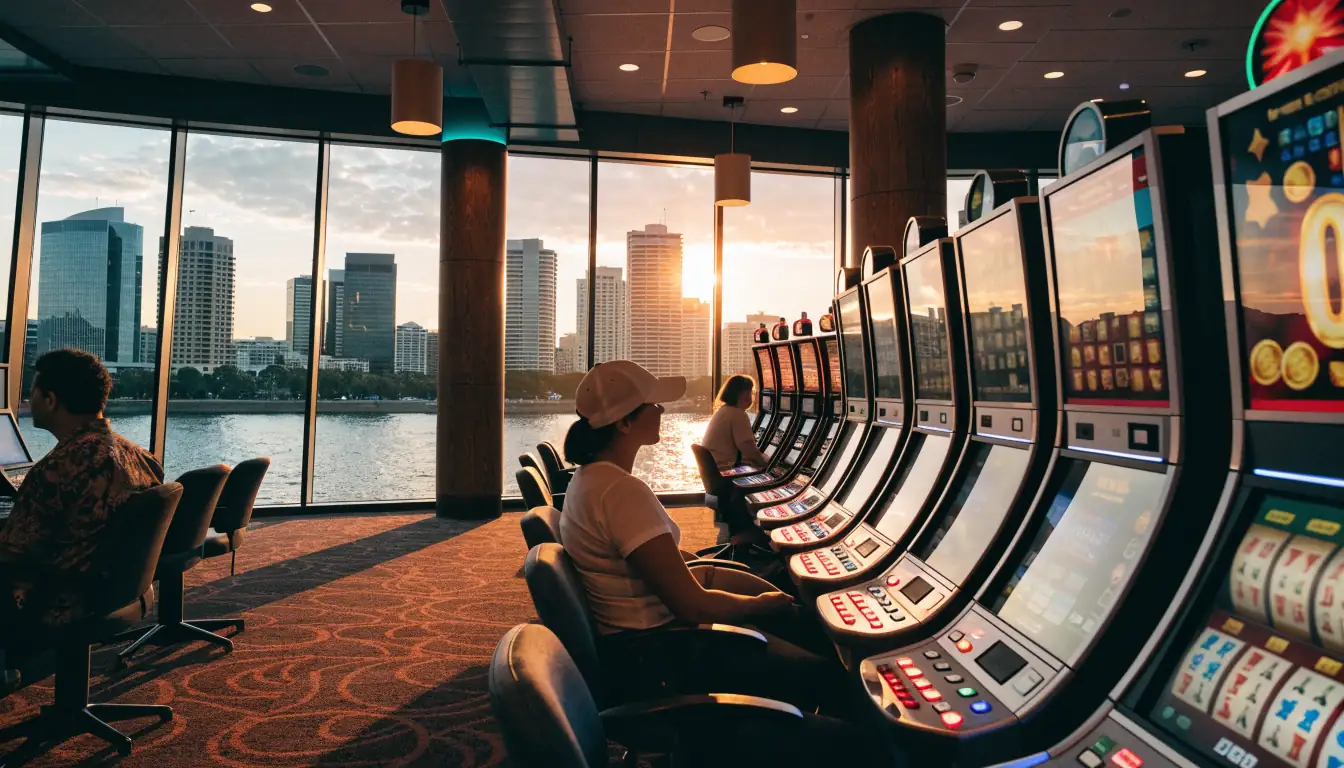
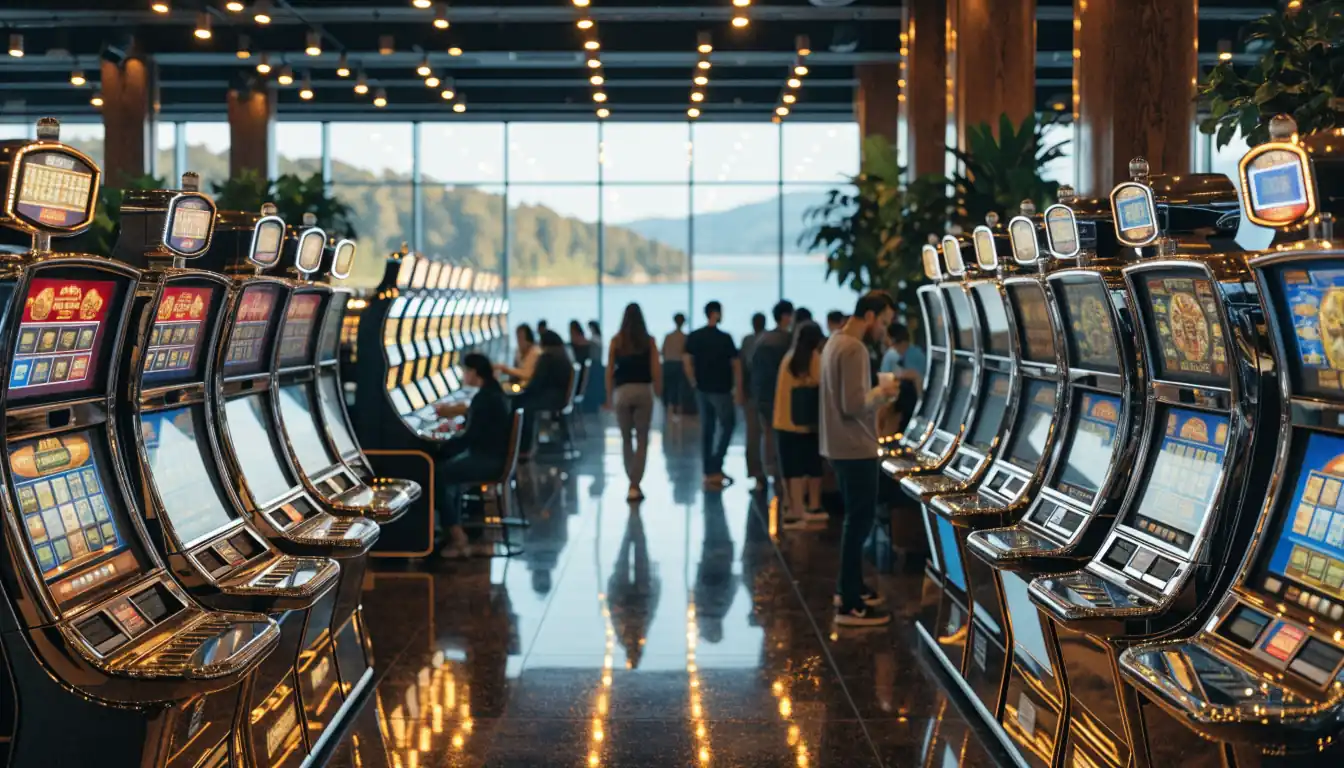
Operating hours follow the same pattern of venue-by-venue variation rather than a single citywide rule. Some clubs run extended gaming-room hours across most of the week, closing only for a short maintenance window overnight; others keep more conventional hours tied to their food and bar service. Public holiday hours, in particular, tend to shift from the standard weekly pattern, and a club’s own noticeboard, phone line, or website is the only reliable way to confirm whether the gaming room is open at a given time — a general claim that "pokies are open 24 hours" or "closed by midnight" cannot be made to hold across every venue in the territory at once, and stating it as a blanket fact would be exactly the kind of manufactured certainty a paying visitor should not have to rely on.
A practical checklist for anyone planning a visit to a specific venue, rather than relying on a citywide assumption:
| What to confirm | Why it matters | Where to check |
|---|---|---|
| Membership or sign-in requirement | Clubs often require temporary or visitor membership before floor access; hotels usually do not | Venue reception or front desk |
| Gaming room opening hours | Hours vary by venue and shift on public holidays | Venue phone line or noticeboard |
| Cash vs cashless play | Not every venue has rolled out card-based credit systems | Venue staff or cashier |
| Ticket redemption process | Cash-out tickets are usually redeemed at a cashier or kiosk, not at the machine | Venue floor signage |
| Loyalty card enrolment | Points-based rewards are club-specific, not standardised | Membership desk |
Responsible play features on the floor
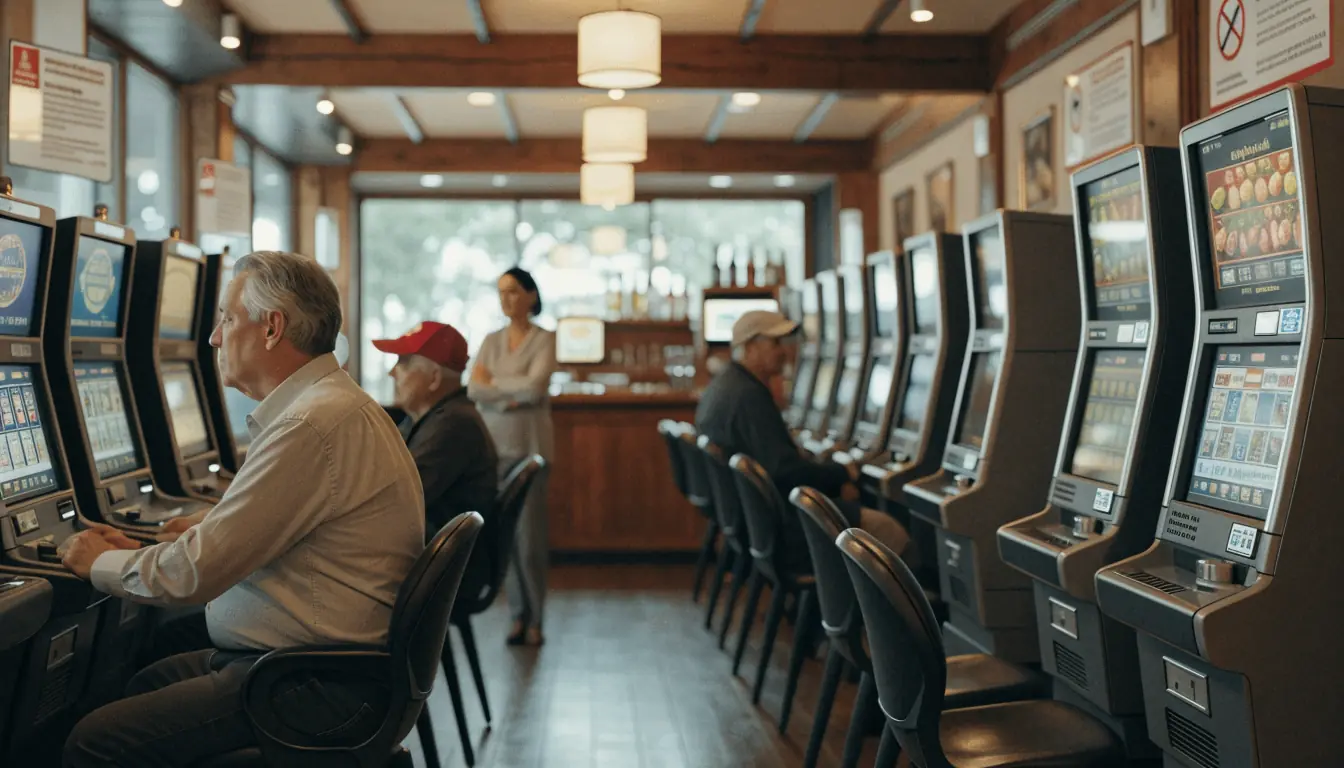
Physical venues in Australia have carried mandated harm-minimisation signage and support information for years, a legacy of state and territory gambling harm-reduction requirements that long predate the current push for equivalent tools online. Prominent signage near gaming room entrances typically directs patrons to support services, and venue staff are generally trained to recognise and respond to visible signs of distress at the machines. Self-exclusion schemes, run at club or territory level, allow a patron to bar themselves from gaming rooms for a period they set, a mechanism that predates — and operates independently of — the account-based deposit limits and reality checks that online platforms are beginning to build into their own software, a topic picked up later in this piece in relation to the online segment specifically.
The presence of these tools does not vary by machine type or jackpot size; they are a condition of the venue’s own gaming licence and apply uniformly across the floor, low-denomination cabinets and linked jackpot banks alike. That consistency stands in contrast to the online sector, where responsible-gambling tooling differs meaningfully between platforms and is not mandated by any Australian licence, since no such licence exists for the online product at all.
Why the physical floor and the online catalogue cannot be compared directly
The instinct to rank Canberra’s "best pokies" as a single list spanning both club floors and online platforms runs into the legal wall described at the top of this section. A physical machine in a licensed club is the product of a lawful, territory-regulated industry with a visible licence, a physical address, and a face-to-face complaints process through the venue itself. An online pokie reaching a Canberra resident’s phone or laptop is, by contrast, being provided in breach of the Interactive Gambling Act 2001 if the operator is offering it to that resident at all — the law prohibits the provision of the game, not the act of a resident choosing to play it, which is why individual players are not prosecuted even as the operators offering the games to them are acting outside Australian law. That asymmetry is worth sitting with rather than smoothing over: it is the reason a page like this one treats the club floor and the online catalogue as two different subjects rather than two tabs of the same comparison table, and it is why no recommendation to "check the operator’s licence" can be made meaningfully for the online segment — there is no domestic register of licensed online casino operators to check against, because no domestic licence for that product exists.
Legal Risk
Offering online casino‑style pokies to Australian residents breaches the Interactive Gambling Act 2001 and can lead to enforcement action against the operator.
What can be said plainly of the physical floor is that it remains, for now, the only segment of pokie play in Canberra sitting inside a licensing structure a player can verify by walking into a venue and asking to see it. The gaming licence is not buried in a jurisdiction thousands of kilometres away; it belongs to the club standing in front of the player, with a manager, a complaints book, and a phone number attached. That is a structural fact about the market, not a matter of taste, and it is the clearest line separating the subject of this section from the one that follows.
Online Casino Pokies Available to Canberra Players
Physical venues around Canberra operate under the licensed club and gaming machine framework that governs the ACT. Online casino pokies sit outside that framework entirely. The Interactive Gambling Act 2001 prohibits operators from offering casino-style games, including pokies, to anyone in Australia, and no domestic licence for that activity exists — not in the ACT, not anywhere else in the country. What does exist, and what is not illegal, is an Australian resident choosing to play at a casino licensed offshore. The law places the restriction on the operator, not on the person clicking play.
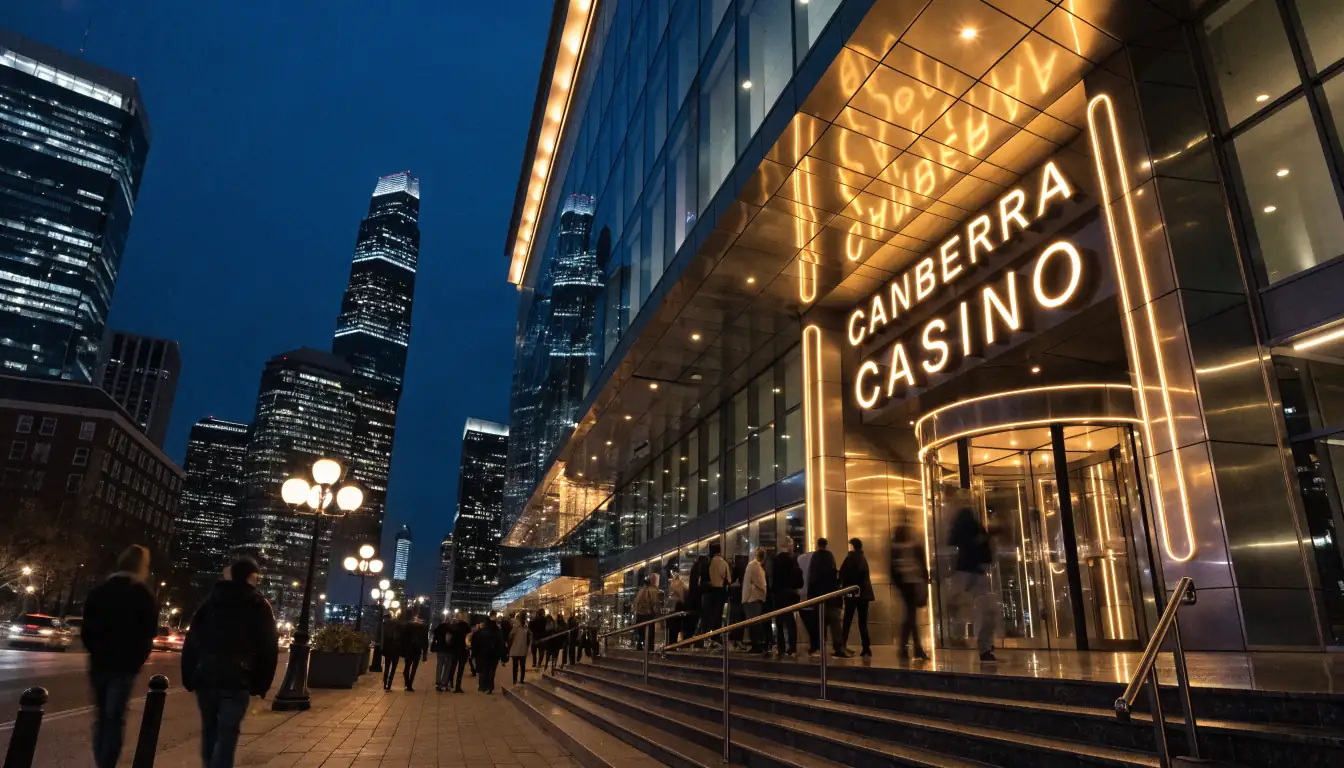

That distinction is why the online pokies landscape reachable from Canberra looks nothing like the club floor. There’s no local reel, no local licence to display, no local regulator to complain to. Any platform accessible from a Canberra address is licensed elsewhere — commonly through bodies such as the Curaçao Gaming Control Board, the Anjouan Gaming License, or the Kahnawake Gaming Commission — and operates under that jurisdiction’s rules, not the ACT’s.
How money moves
The banking layer around these platforms has shifted more than the games themselves. The New Payments Platform has considerably changed how Australians move money generally, and that shift shows up directly in how deposits and withdrawals get handled. PayID lets an account link to nothing more than a mobile number or an email address rather than a full BSB-and-account string, and Osko transactions built on that same rail settle in real time, 24 hours a day, seven days a week — a deposit made on a Sunday night doesn’t sit queued until Monday morning.
PayID and Osko enable real‑time deposits and withdrawals 24/7, meaning funds can be moved instantly even on weekends.
Crypto transfers have their own reporting layer now: verified ID details attached to the transaction under the Travel Rule, which slows nothing for a compliant user but does mean the "anonymous crypto casino" pitch is no longer accurate anywhere it’s enforced. Speed claims around crypto payouts should be read as exactly that — a claim from whoever’s making it. One report on high-performing sites in 2026 put over 90% of crypto payouts at under fifteen minutes, but that figure describes a specific set of platforms measured by a specific source, not an industry average, and no operator should be trusted on that number without checking it against its own published processing times.
Getting to the platform itself
Access has moved away from downloadable apps toward progressive web apps — a format that, per the same reporting, lets a site run through a browser shortcut with app-like behaviour and no install step. That matters for anyone whose device restrictions or storage limits made a native casino app impractical before.
What no deposit, no bonus, and no cash-out promise actually mean
Search terms circling "no deposit," "real money," and "maximum payout" describe marketing categories, not guarantees. No-deposit offers and no-wagering structures exist in the market under various operator terms; each one is a condition set by that specific casino’s terms and conditions, not a standard applied across the industry. The same goes for cash-out ceilings — whatever ceiling applies, it’s written into that operator’s own rules, verifiable only by reading them, not assumed from a headline.
Self-exclusion online
Self-exclusion tools that apply to ACT venues — the club-based schemes — don’t automatically extend to an offshore-licensed website. Any self-exclusion or deposit-limit mechanism on an online platform is set and administered by that platform, separately from anything registered locally. Where a national self-exclusion register exists for other forms of online wagering, it does not cover casino-style pokies, because no domestic licensing regime for those games exists to register against.
Understanding Pokie Payout Percentages (RTP) in Canberra
RTP, or return to player, is the theoretical percentage of wagered money a pokie returns to players over time. It is calculated across millions of spins, not any single session, so it says nothing about what a machine or a game round pays out on a given night in Canberra. It describes the design of the game itself, separate from any venue’s floor mix or any platform’s promotional layer.
One industry review circulating ahead of 2026 argues that players should not settle for a pokie with an RTP below 96%, treating that figure as a working benchmark rather than a regulatory floor. No such floor is set by law in this market; the figure is a commercial recommendation, not a legal minimum.
RTP also says nothing about volatility or how often a game pays at all — a high RTP can still sit alongside long stretches without a win, depending on how the game is built. The two figures answer different questions and neither replaces the other.
How can I manage deposits and withdrawals responsibly?
Use platforms that include deposit limits, reality checks, and self-exclusion tools. Australians can also leverage the New Payments Platform, such as PayID and Osko, for controlled, real-time transaction processing.
What does RTP mean in pokies?
RTP is the theoretical percentage of wagered money a pokie returns to players over time. In 2026, players should aim for games with an RTP of at least 96%.
Are my personal and financial details safe?
Modern platforms use Provably Fair technology, generating a unique cryptographic hash that you can independently verify. Additionally, the Travel Rule for crypto transfers requires casinos to attach verified ID details to transactions for added security.
How does a progressive jackpot pokie work?
In land-based venues, linked jackpot banks connect a set of machines within the same room or across a club group to contribute to a shared prize pool that climbs until a win is triggered. Online, casinos like Goldenbet offer progressive and network jackpots that operate on a similar shared-pool principle.
Prepared by the Casino Payment Guide editorial staff.