
Most Secure Online Casino Australia: What to Check
 Available in AU
Table of Contents
- Understanding the Landscape of Secure Australian Online Casinos
- Core Security Measures of Online Casinos
- Secure Payment Options: PayID, E‑Wallets and Cryptocurrency
- Real‑Money Play and Secure Pokies: What Australian Players Need to Know
- Bonuses for Australian Players: Safety and Fair Terms
- Fast and Reliable Payouts: How Secure Casinos Ensure Quick Withdrawals
- Gambling Safely Online: Player Protection and Fair Gameplay
- Mobile Casino Security: Playing Pokies on the Go
- Website Integrity: SSL Encryption and Licensing Verification
- International Licensed Casinos Accepting Australian Players
Understanding the Landscape of Secure Australian Online Casinos
No online casino operating under an Australian licence exists for slots, roulette or live dealer games. The Interactive Gambling Act 2001 bans companies based in Australia from offering these games to people physically in the country, and no domestic authority issues licences for this activity. That single fact reshapes what "secure" can even mean on this market: it cannot refer to a local regulator, because there isn’t one to check against, and it cannot mean the operator sits in Australian jurisdiction, because none legally can.
What it does mean is that the vast majority of real-money casinos accepting Australian players operate offshore. This is not a workaround or a grey-market trick — it is the only structure available, and it is not illegal for an individual player to use it. The law targets the businesses that offer the games, not the people who play them. So the practical question for an Australian player is never "is this casino Australian-licensed" — that licence doesn’t exist — but "which offshore operator has controls solid enough to trust with money and personal data."
When security is the priority, it pays to check licensing, ownership and payout practices before you trust an operator with your deposit — here’s what stands out about each entry on this list.
License: Curacao eGaming OGL/2024/923/0383 (Antillephone N.V.) · Bonus: up to A$2,000 + 100 free spins across 2 deposits · Min. deposit: A$30 Holds a Curacao eGaming license under Antillephone N.V., with a welcome package spread across two deposits and a modest minimum deposit requirement.
License: Curacao Gaming Authority (Jumpman Gaming Ltd) · Bonus: up to A$6,600 + up to 250 free spins across 4 deposits Licensed by the Curacao Gaming Authority and run by Jumpman Gaming Ltd, offering a sizeable welcome bonus split across four deposits.
License: Curacao · Bonus: up to A$2,000 Operates under a Curacao license and offers a straightforward welcome bonus for new players.
License: Curacao eGaming (Hollycorn N.V., since 2017) · Bonus: 225% up to A$1,540 + 600 free spins across 4 deposits, 20x wagering · Min. deposit: A$20-30 (depends on the offer) Licensed under Curacao eGaming through Hollycorn N.V., an operator that has been active since 2017, with a multi-deposit bonus package and defined wagering terms.
License: Curacao eGaming (Dama N.V.) · Bonus: up to A$10,000 + 180 free spins, 40x wagering Holds a Curacao eGaming license via Dama N.V. and offers a large welcome bonus with clearly stated wagering requirements.
License: Tobique Gaming Commission · Bonus: up to A$8,000 + 400 free spins across 4 deposits · Payout speed: crypto ~10-15 minutes, fiat 1-5 days · Min. deposit: A$30 Licensed by the Tobique Gaming Commission, notable for fast crypto payout speeds alongside standard fiat processing times, plus a multi-deposit bonus.
License: Curacao, operated by Dama N.V. · Bonus: 325% up to 5.25 BTC + 250 free spins across 4 deposits Operates under a Curacao license through Dama N.V., known for a crypto-friendly bonus structure spread across multiple deposits.
License: Curacao (operating since 2017) · Bonus: 250% up to A$2,000 + 50 free spins on the first of six deposits · Min. deposit: A$20 Curacao-licensed and active since 2017, offering a welcome bonus spread across six deposits with an accessible minimum deposit.
Bonus: 240% up to A$4,100 + 300 free spins Offers a substantial welcome bonus package including free spins, though detailed licensing information is not specified.
License: Curacao · Bonus: up to A$10,000 multi-stage + 500 free spins · Min. deposit: A$20 (POLi) Licensed in Curacao, featuring a multi-stage welcome bonus and a low minimum deposit option via POLi.
Why offshore doesn’t mean unregulated
Offshore licensing covers a wide range of rigour, and that range is exactly where the risk sits. A licence issued by a recognised gaming authority still requires the operator to meet ongoing conditions: separation of player funds, dispute resolution processes, and periodic checks on fairness and conduct. A licence that exists only on paper, or one issued by a body with no enforcement capacity, provides none of that. Both look identical on a footer badge. The difference only shows up when something goes wrong — a delayed withdrawal, a disputed bonus, a frozen account — and there’s either a regulator to escalate to, or there isn’t.
This is why licensing sits at the top of any safety assessment, ahead of game selection, ahead of bonus size, ahead of design polish. A safe online casino requires proper and valid licensing and regulation as a baseline condition, not a nice-to-have. Everything else — deposit speed, game library, mobile app — is negotiable. The licence is not, because it is the only mechanism that gives a player any leverage if the relationship turns adversarial.
No Australian Licence
Operating an online casino with an Australian licence is not possible under the Interactive Gambling Act 2001; any site claiming a local licence is misleading and potentially illegal.
The two non-negotiables
Strip away marketing pages and welcome offers, and the security assessment of an offshore casino comes down to two conditions that either hold or don’t.
- The licence is valid and matches the operator. Not a logo, not a claim, but an active licence tied to the actual legal entity running the site. A licence number that belongs to a different company, or one that has lapsed while the badge stays on the page, is worse than no licence at all — it signals that someone is relying on a player not checking.
- Withdrawals are reliable. A casino can have every other feature right and still fail here, and this is where most real complaints originate. Reliable withdrawals meaning the payout actually arrives, without arbitrary holds, unexplained document requests repeated after they’ve already been satisfied, or terms that shift once a win crosses a certain size.
These two conditions are treated as non-negotiable specifically because they are the ones a player cannot verify in advance by playing a few free spins. Game fairness can be checked against published RTP figures. Site design can be judged on sight. Licensing status and withdrawal reliability can only be judged by documentation and by track record — which is why they carry more weight than anything cosmetic.
Security criteria beyond the licence itself
A valid licence is the entry condition, not the full picture. Beyond it, a handful of criteria separate an operator built to last from one built to extract deposits before disappearing.
- Applied security measures and proven game fairness. A licence obliges an operator to meet certain standards, but the practical evidence is in what’s actually implemented — encryption on payment pages, account protections, and games whose outcomes can be checked against advertised return rates rather than taken on faith.
- Collaboration with reputable software providers. An operator that sources its game library from established studios is subject to those studios’ own testing and certification processes. An operator running games built entirely in-house, with no external provider attached, removes that layer of independent scrutiny — which is a different risk profile, not automatically a worse one, but one that needs more evidence elsewhere to compensate.
- Company transparency. Ownership that traces to a real, identifiable legal entity, rather than a name on a licence certificate with no visible connection to who actually runs the operation.
None of these criteria function well in isolation. A licensed operator with poor game fairness controls is not meaningfully safer than an unlicensed one with good ones — the licence just adds a place to file a complaint. A well-designed platform with an unverifiable or mismatched licence carries the same risk as one with no licence badge at all, because the badge was never doing the protective work; the licence behind it was, and if that connection doesn’t hold, the badge is decoration.
What this means for evaluating any specific casino
Given the legal shape of the Australian market, evaluating a casino’s security is less about finding the "most regulated" option — since domestic regulation isn’t on the table — and more about establishing that the offshore structure in front of a player is the genuine article rather than its appearance.
That means checking that the licence number on the page corresponds to the company actually operating the site, not a shell name or a sister brand. It means treating unexplained delays on withdrawals as a warning sign rather than routine processing time, since reliable payout is one of the two conditions that cannot be relaxed. It means noticing whether the games on offer come from named, checkable providers or from an anonymous in-house source with no external testing trail. And it means reading complaint patterns across an operator’s other branded sites, since problems at one casino under a shared corporate group tend to repeat at its siblings rather than stay contained.
None of this requires trusting marketing copy. Licence numbers can be looked up against the regulator that issued them. Provider names can be cross-referenced against known studios. Withdrawal terms are written into the casino’s own terms and conditions, whether or not they’re advertised prominently. The work of assessing security is mostly the work of reading past the surface presentation to the underlying paperwork — and on a market where no local licence exists to shortcut that process, there is no substitute for doing it.
The operator must hold a verifiable offshore licence that matches the legal entity running the site.
Payouts must be processed within the promised timeframes without arbitrary holds or extra documentation.
The baseline before anything else
Everything discussed elsewhere — payment speed, bonus terms, mobile performance — sits downstream of this foundation. A casino can offer fast PayID processing and a generous welcome bonus and still fail the basic test if its licence doesn’t hold up or its withdrawals don’t materialise. The landscape for Australian players is defined by the absence of a domestic safety net, which makes the two non-negotiables — valid licensing tied to the real operator, and payouts that actually arrive — the filter everything else has to pass through first.
Core Security Measures of Online Casinos
Licensing sits at the top of any safety check, but it only means something if the licence is named precisely and the licensing body actually issued it for the type of gambling on offer. A safe online casino operates under valid, verifiable regulation — not a vague claim of being "fully licensed" with no authority named. Since offshore licensing is the only route available to Australian players, the name of the regulator matters more than the fact that a licence exists at all.
Not all regulators carry the same weight. One industry review of offshore operators gives preference to casinos holding Tier‑1 licences — bodies such as the Malta Gaming Authority or the UK Gambling Commission — or, within Australia’s own regulatory patchwork, territory-based authorities such as NT Racing & Wagering. That preference reflects the scrutiny those regulators apply to operators before and after licensing, not a guarantee that lower-tier licences are unsafe. It’s a distinction worth checking casino by casino rather than assuming.
What "security" covers beyond the licence
A licence alone doesn’t cover the technical layer. Core security measures split into three areas that operate independently of each other:
- Encryption of data in transit — protecting login credentials, personal details and payment information as they move between a player’s device and the casino’s servers.
- Game fairness that can be checked, not just claimed — outcomes generated by a system whose randomness has been tested and verified, rather than taken on the operator’s word.
- Regulatory oversight that continues after licensing — ongoing compliance rather than a one-time certificate.
None of these substitutes for the others. Encryption protects data but says nothing about whether the games are rigged. A fairness certificate says nothing about whether withdrawals get paid. This is why safety assessments treat licensing and fairness as non-negotiable baseline requirements — not features that make a casino "better," but conditions that make it usable at all.
Withdrawals as a security signal, not a payment detail
Reliable withdrawals are the second non-negotiable requirement, sitting alongside licensing rather than behind it. This is a security question before it is a payment-logistics one: a casino that stalls, delays without explanation, or invents new conditions once a withdrawal is requested is failing a safety test, regardless of how strong its encryption or how fair its games are on paper. The mechanics of how payouts move — which methods, which processing windows — belong to later sections; what matters here is that consistent, unexplained withdrawal is itself one of the two baseline checks a casino has to pass before anything else about it is worth evaluating.
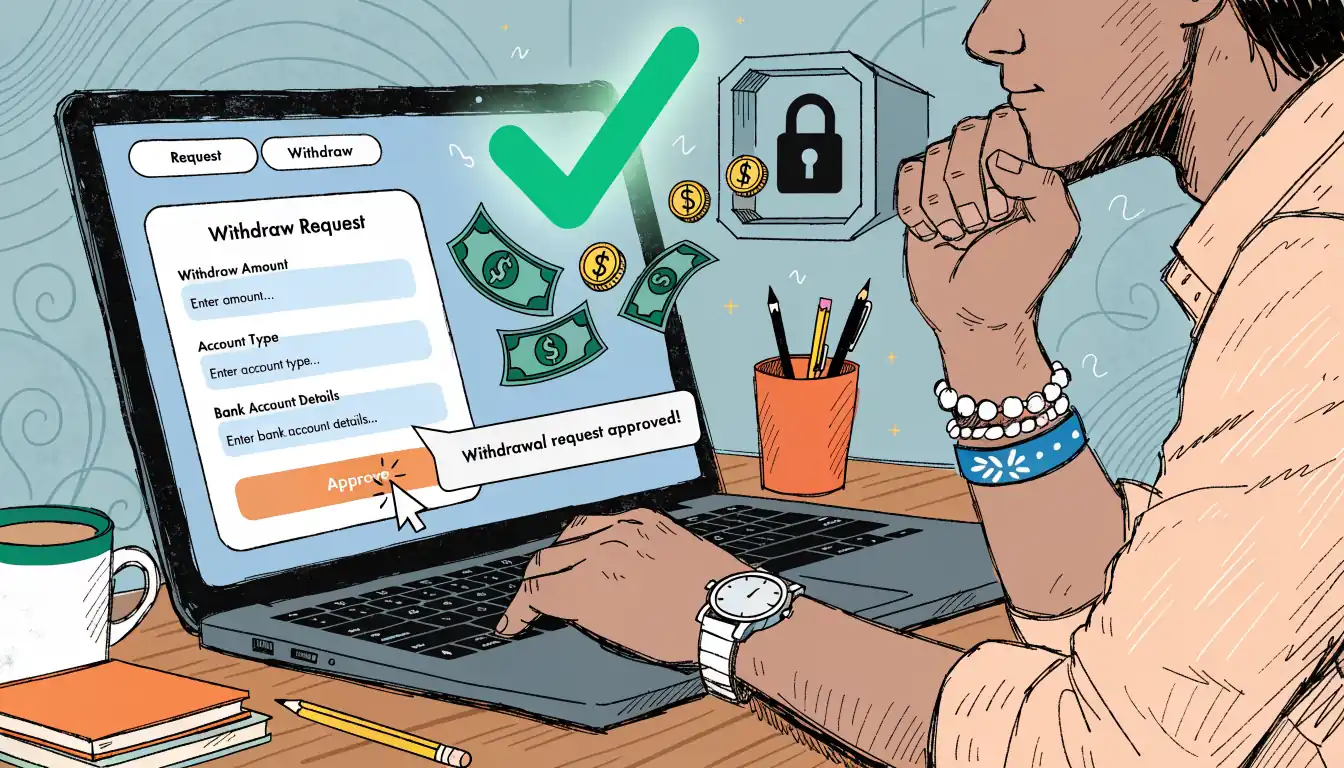
Rules that shift after a win — a bonus term appearing that wasn’t disclosed, a limit invoked only once a payout is due — are treated as a major safety failure rather than a minor grievance. That kind of change indicates the operator’s terms function as leverage rather than as fixed conditions, which undermines everything the licence and the encryption were supposed to guarantee in the first place.
Secure Payment Options: PayID, E‑Wallets and Cryptocurrency
Payment method matters as much as licensing when a casino is assessed for safety. A platform can encrypt every page and still leave a player waiting indefinitely on a withdrawal, or make deposits easy while burying the exit through unclear processing rules. Three payment types dominate the safest options available to Australian players: PayID, e‑wallets, and cryptocurrency. Each has a different risk profile and a different timeline attached to it.
PayID
PayID moves money through the existing Australian banking network, tied to a phone number or email rather than a BSB and account number. For deposits this is close to instant, since the transfer rides on the same infrastructure as everyday bank transfers. Withdrawals are slower by design: processing typically takes between 1 and 3 business days. That window is not a red flag on its own — it reflects standard verification and bank-side settlement rather than the casino stalling the payment. What separates a safe operator from a risky one is not whether the withdrawal clears in one day or three, but whether that timeframe is stated upfront and actually held to, rather than stretching indefinitely once a real balance is at stake.
Cryptocurrency
Cryptocurrency payments run outside the banking system entirely, and this shows most clearly in withdrawal speed. Crypto withdrawals are typically completed within hours — anywhere from a few minutes to about 24 hours, depending on network conditions and the casino’s own processing queue. That is a meaningfully shorter window than PayID, and it is the main reason players who move larger sums gravitate toward Bitcoin, Ethereum or stablecoins over bank rails. The trade-off is that crypto transactions are irreversible once confirmed, so the burden of entering a correct wallet address sits entirely with the player, and there is no bank intermediary to appeal to if something goes wrong.
PayID withdrawals typically take 1‑3 business days, while cryptocurrency payouts can be completed within hours. Consistency with these windows is a strong indicator of a secure operator.
Coverage varies significantly between operators. According to one industry review, a single operator offered close to 20 different cryptocurrency options alongside five major e‑wallets — a range wide enough to suggest that crypto support, where it exists at all, is often built out properly rather than added as a token gesture. That kind of breadth is not universal, and a casino offering only one or two coins is not automatically less secure for it, but it does say something about how seriously the operator treats payment infrastructure as a whole.
E‑Wallets
E‑wallets sit between the two in both speed and structure. They add a layer of separation between a player’s bank details and the casino itself, since the wallet provider handles the transfer rather than the casino touching card or account numbers directly. This matters less for encryption — a properly secured casino protects card data regardless of payment route — and more for exposure: fewer parties holding raw banking details means fewer points where a breach could do damage. Processing speed for e‑wallet withdrawals depends heavily on the individual operator’s internal review process rather than any fixed industry standard, which makes published terms more useful here than assumptions.
What the payment method actually protects
None of these three methods is inherently safer than the others in terms of encryption. The connection between a player’s device and the casino server should carry the same protection regardless of whether the transaction is a PayID transfer or a crypto deposit — one operator’s own terms describe 256‑bit SSL encryption applied across all payment and account pages, and a separate operator states the same standard for protecting user data more broadly. That level of encryption is table stakes, not a differentiator, and a casino advertising it as a unique selling point is really just confirming it meets a baseline.
What actually varies, and what is worth checking before committing funds, is withdrawal consistency: whether a casino processes PayID payouts inside the stated 1‑to‑3‑day window every time, whether crypto withdrawals clear in hours rather than drifting into days without explanation, and whether e‑wallet limits are disclosed rather than discovered after a request is filed. Secure payment methods paired with consistent withdrawals are the operational core of casino safety — the payment method only matters insofar as it delivers on the timeline it promises.
- Verify the licence number matches the operator’s corporate name.
- Test a small withdrawal to confirm the promised timeframe.
- Use reputable payment methods (PayID, well‑known e‑wallets, or crypto).
- Trust a site that only displays a generic “licensed” badge without details.
- Ignore repeated withdrawal delays or unexplained document requests.
- Rely on offshore licences from jurisdictions with no enforcement capability.
Real‑Money Play and Secure Pokies: What Australian Players Need to Know
Real‑money play on pokies carries a different set of obligations than browsing a demo version. Before any withdrawal is processed, a safe online casino requires identity verification — a KYC check confirming that the account holder is who they claim to be. This typically means submitting a photo ID and a recent proof of address. The check is not optional and not a formality: it is the mechanism that ties an account, a payment method and a person together, and it is what stands between a player and a stalled payout if the details don’t match.
Skipping this step, or choosing an operator that treats it loosely, is where real‑money problems tend to start. Documents that were fine at registration can be asked for again at withdrawal, particularly for larger amounts or when a payment method changes. This is not a sign of a badly run casino — it’s closer to the opposite. An operator that never asks for verification at all should raise more concern than one that asks twice.
Deposit limits and self‑exclusion
Control over spending is meant to sit inside the account itself, not depend on the player remembering to stop. One operator’s account settings, for example, expose deposit limits and self‑exclusion tools directly from the account page — a structure worth checking for on any site before real money goes in, rather than after a losing session. Where these controls are buried, disabled by default, or absent, the account setup itself becomes a safety concern rather than a convenience issue.
Deposit limits let a player cap how much can go into an account over a given period, set by the player rather than the house. Self‑exclusion goes further: it locks the account out for a period chosen by the player, with no ability to reverse it mid‑way through by logging back in and asking support to lift it. The presence of both, placed somewhere findable rather than hidden three menus deep, is one of the more practical signs that an operator is built around retention responsibly rather than around extraction.
Bonus terms tied to real‑money play
Bonuses attached to real‑money accounts come with terms that determine whether the bonus is a genuine benefit or a number that looks better on the landing page than it behaves in the account. Fair terms are a baseline requirement, not a bonus feature — a welcome offer with unreasonable conditions attached is not a safer version of no offer at all; it is a worse one, because it creates an expectation the account can’t actually meet. Reviewing the terms before opting in matters more than the headline figure itself, since the figure is what’s advertised and the terms are what’s enforced.
Verification steps often apply specifically to bonus funds and any winnings generated from them, separate from the account‑level KYC check. A casino that pays out real‑money winnings promptly but treats bonus-derived winnings as a separate, slower category is not necessarily acting unfairly — but the distinction should be stated clearly rather than discovered at withdrawal.
Withdrawal speed once verification clears
Once identity checks are complete, the payment method chosen determines how quickly funds actually arrive. PayID withdrawals typically process within one to three business days. Cryptocurrency withdrawals move faster, generally settling within hours — sometimes minutes, occasionally stretching toward a day depending on network conditions. Consistency here matters as much as speed: a casino that processes withdrawals reliably within these windows is behaving as expected; one where the same request occasionally takes far longer, with no explanation offered, is showing a pattern worth noting rather than dismissing as a one‑off.
What this means before depositing
Real‑money play rewards the accounts that were set up carefully rather than quickly. A short checklist before the first deposit:
- Identity documents ready — a photo ID and proof of address, prepared before they’re requested rather than after a withdrawal stalls.
- Limits set deliberately — deposit limits and self‑exclusion options located and understood, not left at default.
- Bonus terms read in full — particularly any clause distinguishing bonus winnings from real‑money winnings at withdrawal.
- Payment method matched to expectations — PayID for a slower, bank‑linked process; cryptocurrency where speed matters more than familiarity.
None of this removes risk from real‑money gambling — it simply moves the account holder from reacting to a casino’s terms to acting inside them, which is the only position from which a payout timeline, a bonus condition or a self‑imposed limit actually functions as intended.
Bonuses for Australian Players: Safety and Fair Terms
A welcome offer at a safe online casino is only as good as the paper it’s written on. The terms attached to a bonus determine whether it functions as an actual benefit or as a mechanism that keeps a balance locked up indefinitely. Reasonable and fair bonus terms are a required feature of any operator worth considering, not an optional courtesy — and the absence of clear terms is itself a red flag, regardless of how large the headline offer looks.
What "fair terms" actually means
Fairness here is not a marketing adjective; it is a set of conditions that should be stated plainly before a deposit is made, not discovered afterward in a support chat. At minimum, that includes how the bonus converts to withdrawable funds, which games count toward meeting any conditions, and whether the offer expires. A casino that buries these details or changes them retroactively is behaving the same way it would if it moved the goalposts on a withdrawal — the concern is identical, only the timing differs.
Licensing sits underneath all of this. The safest Australian online casinos operate under authorities such as the Malta Gaming Authority or Curaçao eGaming, and that licensing extends to how promotions are structured and audited, not only to the games themselves. A bonus offered by an unlicensed or vaguely licensed operator carries no real recourse if its terms are ignored later.
Verification before the bonus pays out
Bonus funds and any winnings generated from them are still real-money outcomes, which means the same identity checks apply. Safe real-money casinos require identity verification — commonly a photo ID and proof of address — before releasing withdrawals, and a bonus balance is no exception. Players who assume a promotional win skips this step are usually the ones surprised by a delay at the exact moment they try to cash out.
This is worth separating clearly from account setup: verification tied to a bonus is not an extra hurdle invented for promotions, it is the standard KYC process applied at the point money actually leaves the account.
What to check before accepting an offer
- Whether the terms are published in full, not summarised in a banner.
- Whether the operator’s licence is named specifically, rather than described in vague terms like “fully regulated.”
- Whether verification requirements are disclosed upfront rather than after a win.
- Whether the terms remain stable rather than being subject to change once a balance is in play.
None of these checks take long, and none of them require trusting a promise. A bonus with fair terms survives a five-minute read of its own conditions; one that doesn’t is telling a player something worth listening to before, not after, a deposit.
Fast and Reliable Payouts: How Secure Casinos Ensure Quick Withdrawals
Withdrawal speed says more about a casino’s actual security than any badge on its homepage. A safe online casino that delays payouts without explanation is not protecting funds — it is holding them. The most secure online casino Australia has to offer in 2026 treats a withdrawal request the same way it treats a deposit: as a transaction with a defined timeframe, not an open-ended process.
What "fast" actually means
Two payment rails set the practical benchmark:
- PayID withdrawals take between 1 and 3 business days to process. That window is short enough to plan around, and a casino quoting anything vaguer than a business-day range is not being precise about its own operations.
- Cryptocurrency withdrawals are typically completed within hours — anywhere from a few minutes to 24 hours, depending on network conditions. This is the fastest route available to Australian players and the one most often used as a stress test for how a casino actually handles cashouts, as opposed to how it advertises them.
Neither timeframe is a promise of instant money. Both are the outer bounds of a process that, on a properly run platform, resolves inside them without follow-up emails or repeated identity checks after the fact.
Why some casinos are faster than others
The difference rarely comes down to the payment method alone. A crypto withdrawal can still sit untouched if nobody on the operator’s side approves it. This is where support quality becomes a security signal rather than a convenience feature: fast and efficient customer support is one of the criteria that separates a safe casino from one that simply looks safe. A support desk that answers withdrawal queries promptly, with a specific status rather than a generic "processing," indicates a back-office that is actually staffed and accountable — not an automated front end with no one checking the queue.
What a stalled withdrawal indicates
A withdrawal that sits in "pending" past the PayID or cryptocurrency windows above, with no explanation offered, is not a minor inconvenience — it is the same warning sign as a licence that cannot be verified. Both point to an operator unwilling or unable to account for money that already belongs to the player. Repeated unexplained delays, especially without a support channel able to give a concrete reason, should be read as a payment-reliability failure rather than a temporary glitch.

None of this depends on game selection or bonus terms. A platform can offer strong odds and still fail on withdrawals, and the reverse holds too: payout speed is a separate, testable measure of trustworthiness, checked the same way regardless of what games sit behind the login.
Gambling Safely Online: Player Protection and Fair Gameplay
Player protection starts before any deposit is made, with a look at who actually runs the operation. A transparent company background, verifiable reputation, and a visible trail of player feedback are required elements — not optional detail. An operator that hides its corporate structure or scrubs negative reviews from public view has already failed the first test, regardless of what its homepage claims about safety.
Game fairness is the second non‑negotiable. This isn’t a matter of taking a casino’s word for it; applied security measures and proven fairness in how games are generated and resolved are what separate a Safe Online Casino from one that merely looks the part. Fairness that can’t be demonstrated isn’t fairness — it’s a marketing line.
What good treatment looks like after a win
The clearest signal of how a casino actually behaves comes after a player wins, not before. A safe operator processes a payout under the same terms that applied when the bet was placed. A problematic one finds new conditions to raise, extra verification to demand, or delays that appear only once money is owed rather than collected. Good player treatment — particularly in the period immediately following a win — is essential, and its absence is one of the clearest markers of an operator worth avoiding.
None of this is visible from a homepage banner or a licence badge alone. It shows up in whether terms stay the same before and after a payout request, whether feedback about the operator is consistent rather than contradictory, and whether the fairness of outcomes is something a player can point to rather than simply trust. A casino that treats these three things — background transparency, demonstrable fairness, and post‑win conduct — as fixed obligations rather than flexible policy is the one worth measuring against the rest.

Mobile Casino Security: Playing Pokies on the Go
A mobile session carries the same risk profile as a desktop one, and the safeguards that matter don’t change because the screen is smaller. The connection between a phone and a payment processor still needs to be encrypted, the licence behind the platform still needs to be real, and the funds moving in and out still need a clear trail. According to one industry review of offshore-licensed sites, all ten platforms it assessed held active international licences and applied 256-bit SSL encryption across their mobile interfaces, not just their desktop versions — a detail worth checking rather than assuming, since a browser-based mobile site and a downloadable app from the same operator don’t always share identical security builds.
Payment support on mobile mirrors what’s available on desktop in a properly run operation. PayID transfers, where offered, still process within 1 to 3 business days regardless of device, since the processing happens on the payment network’s side, not the handset. Cryptocurrency deposits and withdrawals, when supported, follow the same rails on mobile as on desktop — the wallet address doesn’t know or care what screen it was copied from. One operator reviewed in the same industry survey listed close to 20 cryptocurrency options alongside five major e-wallets, all accessible through its mobile interface without a reduced feature set — a reasonable benchmark for what a mobile casino should offer, though terms and coin lists vary by operator and are worth confirming directly before relying on them.
What’s worth checking before depositing from a phone:
- Padlock and certificate — the browser address bar should show a valid SSL certificate on every payment and account page, not just the login screen.
- App source — apps downloaded outside official stores carry higher risk of tampering than browser play or verified store listings.
- Session handling — a platform that logs sessions out on inactivity is behaving the same way it should on desktop; one that doesn’t deserves a second look.
- Payment parity — withdrawal methods and processing windows should match what the same operator lists for desktop users, not a reduced mobile subset.
None of this is specific to Australian regulation; it’s simply what a properly built platform does whether accessed from a laptop or a phone.
Website Integrity: SSL Encryption and Licensing Verification
Two signals on a casino’s own site are checkable without contacting anyone: the certificate securing the connection and the licence text on the footer page.
The certificate matters because every account page, deposit form and withdrawal request passes through it. A missing or expired certificate means card details and identity documents travel unprotected — a browser padlock icon confirms encryption is active, nothing more. One industry review covering ten offshore sites reported that all ten held active international licences and ran 256‑bit SSL encryption across their platforms. That figure describes those ten operators at the time of that review, not a baseline every site meets.
Licensing text needs the same scrutiny. A safe online casino requires proper and valid licensing and regulation, and that requirement is only satisfied when the licence number on the page matches the entity actually holding it — not a parent brand, not a marketing name, not a sister site under a different logo. Vague phrasing such as "licensed and regulated" without a jurisdiction or a verifiable number is not disclosure, it is decoration.
No public register exists on this market to cross-check a licence number against. The check that remains is internal consistency: does the operator named in the terms match the one processing payments, and does the licence reference stay the same across every page rather than shifting between the footer and the terms document.
International Licensed Casinos Accepting Australian Players
No domestic licence covers online casino games in Australia, so every real-money site available to local players operates under a foreign regulator. That licence is what determines whether a complaint has anywhere to go and whether the operator answers to anyone at all.
Curaçao is the licence seen most often among operators serving Australian players. Ricky Casino is licensed in Curaçao, as is Fair Go. A Curaçao licence is not the same as one from a Tier-1 regulator such as the MGA or UKGC — oversight is lighter, and dispute resolution tends to rely more on the operator’s own terms than on regulatory intervention. That does not make the licence worthless, but it does mean the fine print carries more weight than the badge in the footer.

There is no Australian register to cross-check any of this against, so the licence details published on the casino’s own site — regulator name, licence number, and the corporate entity actually holding it — are the only verification available. The name doing business under a brand should match the name on the licence; if it does not, or if the information is vague ("licensed internationally"), that is a reason to look elsewhere rather than assume the best.
Playing at an offshore-licensed casino is not illegal for an individual in Australia. The law restricts operators, not players.
What payment methods are available for Australian players at online casinos?
Available options include major e-wallets, cryptocurrencies like Bitcoin, and local methods such as PayID. Withdrawal times vary by method, with crypto taking hours and PayID taking 1 to 3 business days.
Which software providers power the recommended online casinos?
Reputable operators source their games from established external studios rather than relying solely on in-house development. This ensures an independent layer of testing and certification for game fairness.
What are the common responsible-gaming utilities offered by reputable online casinos?
Reputable platforms typically provide tools like deposit limits and self-exclusion features. These are designed to be accessible directly from the player’s account page.
What are the requirements for an interactive gambling licence?
An active licence must be tied to the actual legal entity operating the site and requires ongoing conditions like player fund separation, dispute resolution, and periodic fairness checks. Valid licences are typically issued by recognised authorities such as the MGA, UKGC, or Curaçao eGaming.
What should a valid complaint include?
A valid complaint relies on the operator holding a genuine licence that mandates a dispute resolution process. If the casino fails to resolve the issue, a documented track record of the problem allows escalation to the relevant licensing authority.
How do I claim a bonus at a bitcoin casino?
Bonuses are claimed by registering at a platform offering cryptocurrency payments and following the promotional terms. Always verify that the bonus conditions are fair and reasonable before accepting, as shifting rules after a win are a major safety concern.
Created by the ”Casino Payment Guide” editorial team.