
Best Pokies in South Australia: 2026 Venue Guide

Top Land-Based Pokies in South Australia for 2026
Physical pokie venues across Adelaide and regional South Australia run machines from multiple manufacturers, and no two floors are configured the same way. What separates a venue worth the drive from one that isn’t comes down to three measurable things: the return-to-player percentage programmed into each machine, how that machine pays out over time, and how often it pays at all. None of that information is printed on a brochure, and venues rarely volunteer it — but the mechanics behind the numbers are consistent enough to explain what to look for on any floor, in any postcode.
What Actually Determines Whether a Machine Is Worth Playing
RTP is a long-term theoretical measure of how much a game returns over many spins. It is not a promise about any single session — a machine set at a given RTP can still take a stack of coins in an afternoon and give nothing back. The percentage only means something across a large enough number of spins to average out, which is why chasing a "hot machine" on the strength of one good hour is a misreading of what the number actually describes.
Before spinning the reels on any South Australian pokies site in 2026, it helps to see how each option stacks up on licensing, deposit requirements and welcome offers so you can pick with confidence.
License: Curacao eGaming OGL/2024/923/0383 (Antillephone N.V.) · Bonus: up to A$2,000 + 100 free spins across 2 deposits · Min. deposit: A$30 Licensed under Curacao eGaming, this operator pairs a low A$30 minimum deposit with a welcome package worth up to A$2,000 plus 100 free spins split across two deposits.
License: Curacao Gaming Authority (Jumpman Gaming Ltd) · Bonus: up to A$6,600 + up to 250 free spins across 4 deposits Run by Jumpman Gaming under a Curacao Gaming Authority license, it offers one of the more generous welcome packages here, up to A$6,600 and 250 free spins spread over four deposits.
License: Curacao · Bonus: up to A$2,000 Operating under a Curacao license, this casino keeps things straightforward with a welcome bonus of up to A$2,000.
License: Curacao eGaming (Hollycorn N.V., since 2017) · Bonus: 225% up to A$1,540 + 600 free spins across 4 deposits, 20x wagering · Min. deposit: A$20-30 (depends on the offer) Licensed by Curacao eGaming and operated by Hollycorn N.V. since 2017, it brings a 225% bonus up to A$1,540 with 600 free spins across four deposits, subject to 20x wagering, with a modest minimum deposit.
License: Curacao eGaming (Dama N.V.) · Bonus: up to A$10,000 + 180 free spins, 40x wagering Licensed under Curacao eGaming and run by Dama N.V., it stands out for a sizeable bonus of up to A$10,000 plus 180 free spins, with 40x wagering requirements.
License: Tobique Gaming Commission · Bonus: up to A$8,000 + 400 free spins across 4 deposits · Payout speed: crypto ~10-15 minutes, fiat 1-5 days · Min. deposit: A$30 Licensed by the Tobique Gaming Commission, this operator offers a bonus of up to A$8,000 with 400 free spins across four deposits, notably fast crypto payouts of around 10-15 minutes alongside standard fiat withdrawal times.
License: Curacao, operated by Dama N.V. · Bonus: 325% up to 5.25 BTC + 250 free spins across 4 deposits Operated by Dama N.V. under a Curacao license, it caters to crypto players with a 325% bonus up to 5.25 BTC plus 250 free spins across four deposits.
License: Curacao (operating since 2017) · Bonus: 250% up to A$2,000 + 50 free spins on the first of six deposits · Min. deposit: A$20 Licensed in Curacao and operating since 2017, it offers a 250% bonus up to A$2,000 with 50 free spins on the first of six deposits, backed by a low minimum deposit.
Bonus: 240% up to A$4,100 + 300 free spins This operator offers a solid welcome package of 240% up to A$4,100 plus 300 free spins for newcomers.
License: Curacao · Bonus: up to A$10,000 multi-stage + 500 free spins · Min. deposit: A$20 (POLi) Licensed in Curacao, it features a multi-stage bonus reaching up to A$10,000 with 500 free spins, and a low minimum deposit via POLi.
The practical rule that follows from this is simple: pokies with an RTP below 96% should be avoided. That threshold isn’t arbitrary — it’s the point below which the house edge starts eating into a session faster than the entertainment value justifies. Machines sitting comfortably above that line exist; the two most commonly cited examples with published figures are Merge Up (97.25%) and Snoop Dogg Dollars (97.00%). These are online titles rather than cabinets bolted to a pub floor, but the RTP logic they demonstrate — a couple of percentage points above the acceptable floor — is exactly what to look for when comparing any land-based machine’s stated return, where venues disclose it.
Volatility is the second variable, and it describes how a pokie tends to pay rather than how much. Low volatility pokies offer frequent but smaller wins — steady, unremarkable, the kind of machine that keeps a session going without much drama in either direction. High volatility pokies take the opposite approach: an all-or-nothing structure where long dry stretches are punctuated by wins large enough to justify the wait, when they land at all. Neither is objectively better; they suit different bankrolls and different tolerances for watching a balance shrink between payouts.
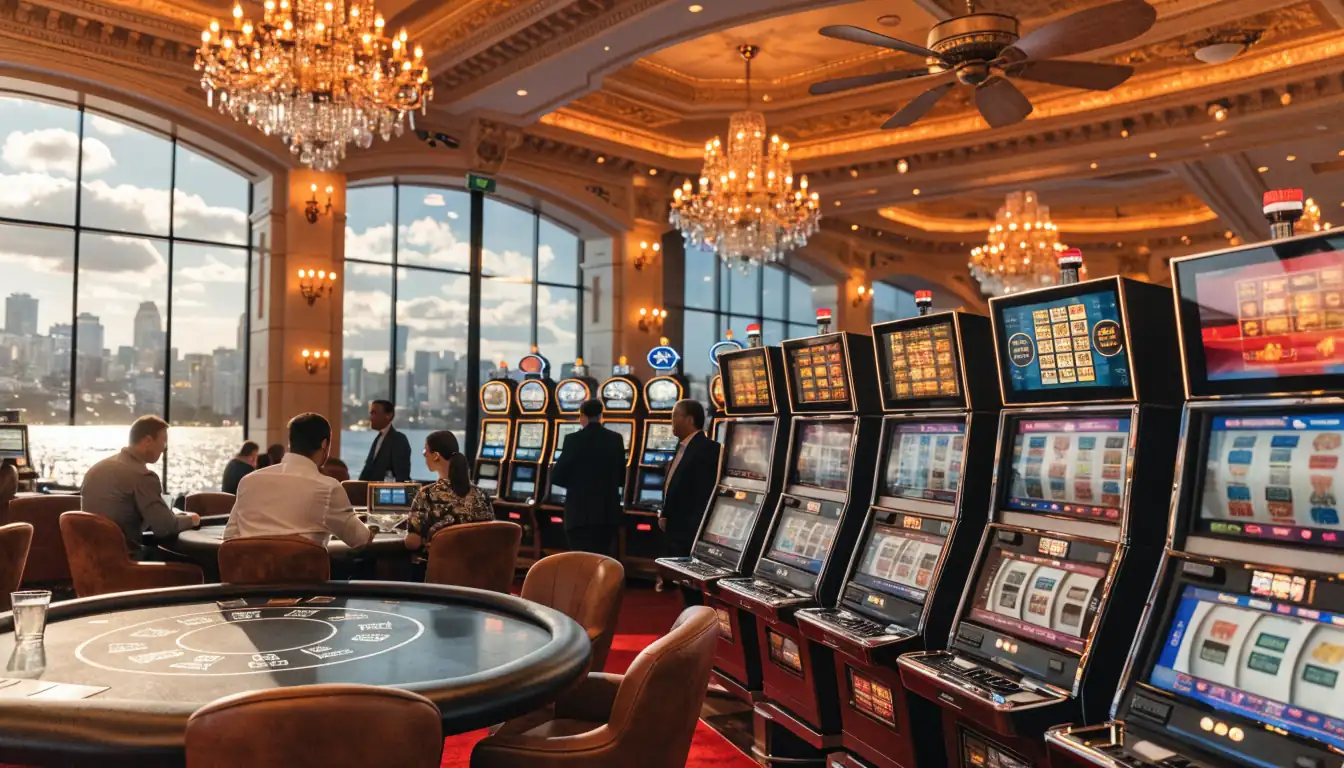

Sitting between the two is hit frequency, a number less commonly advertised but just as relevant. A balanced pokie has a hit frequency between 25% and 35%, meaning roughly one in three to one in four spins returns something, even if that something is smaller than the stake. Machines outside that band tend to fall into one of the volatility extremes described above — very low hit frequency paired with high volatility, or a high hit frequency paired with modest, low-volatility returns. Reading a machine’s behaviour over a reasonable number of spins — rather than judging it after ten pulls — gives a rough sense of where it sits on that spectrum, even without a printed disclosure.
Reading a Floor Without a Spec Sheet
Venue operators in South Australia are not required to display RTP or volatility ratings on individual cabinets, and in practice almost none do. That leaves observation as the only tool available on the floor itself. A machine’s paytable, viewable through the help or info screen on nearly every modern cabinet, will show the relative value of symbol combinations and any bonus triggers — information that indirectly signals volatility even without a stated percentage. A paytable dominated by small, frequent line wins with a modest top prize points toward low volatility. A paytable with a wide gap between common wins and jackpot-tier symbols, especially where the top prize sits far above everything else, points toward high volatility.
Machines with RTP below 96% are likely to erode your bankroll faster than the entertainment value justifies.
Manufacturer matters here too, since different studios build toward different player experiences. Pragmatic Play’s 1000 series offers multipliers up to 1,000×, an approach built explicitly around high-volatility swings rather than the steady grind of a low-variance title — recognising a game from that family on a floor is a reasonable shorthand for what kind of session to expect. NetEnt, by contrast, has built titles around omnichannel gaming that syncs progress across online and physical terminals, meaning some cabinets on a venue floor are designed to carry a player’s session data between a physical machine and a matching online environment. Evolution Gaming’s catalogue centres on live dealer formats with augmented-reality hosts, though that format belongs more to a casino floor’s table games section than to the pokies bank — worth knowing mainly to avoid confusing the two when scanning a venue’s offering.
Progressive jackpot pokies are a separate category again. According to one widely cited industry breakdown, these machines increase their top prize over time as players keep spinning, with a percentage of every wagered credit across the linked network feeding into a jackpot pool that keeps climbing until someone hits the trigger combination. That structure changes the maths of the machine entirely: the advertised RTP on a progressive typically factors in the jackpot contribution, meaning the base game beneath it can run leaner than a standalone title with a comparable headline RTP. Recognising a progressive on the floor — usually flagged by a shared jackpot meter linking several cabinets — is useful context before feeding it credits expecting standalone-game odds.


Software Variety Across Venues
Australian-friendly gaming floors vary widely in the software they offer, and South Australian venues are no exception. A club in the Adelaide CBD might run a bank dominated by one or two major manufacturers, while a suburban hotel a few kilometres away carries an entirely different mix. This isn’t an accident of stocking — venues negotiate supply agreements with specific studios, and the resulting floor reflects those commercial relationships rather than any curated "best of" selection.
The practical consequence is that no single venue guarantees access to every high-RTP or well-regarded title in circulation. A machine worth seeking out at one club may simply not exist on a different floor across town. This is also why chasing a specific title by driving between venues rarely pays off as a strategy — the better approach is to learn to read whatever bank of machines is actually in front of a player, using paytable inspection and observed hit frequency rather than assuming a name recognised from advertising will be sitting in the next room.
BGaming’s provably‑fair verification works only for online play; physical cabinets cannot be checked spin‑by‑spin.
BGaming, credited with pioneering Provably Fair technology, represents a case worth flagging for a different reason: Provably Fair verification is a mechanism built for and around online play, where a cryptographic seed can be checked against a published algorithm after each spin. It has no equivalent on a physical cabinet — a land-based machine cannot be checked the same way after a session, since the fairness of a physical RNG chip is certified by testing at manufacture rather than verified spin-by-spin by the player. The distinction matters because it marks one of the clearest lines between what a land-based floor can offer and what an online environment can offer instead, a line explored further in the section that follows this one.
Reading RTP Modifiers Where They Exist
Some pokie titles — more common in online catalogues but occasionally mirrored in land-based cabinet versions of the same game — include a feature-buy option, letting a player pay a set amount to trigger a bonus round directly rather than waiting for it to land naturally. According to figures published by one review source, a Feature Buy can increase a game’s RTP by 0.5–1.5% and typically costs about 100 times the base bet. That’s a meaningful shift in a game’s underlying maths, but it comes at a steep upfront cost per attempt, and the increased RTP is a statistical property across many purchases rather than a guarantee attached to any single buy-in. Where this feature appears on a cabinet in a South Australian venue, it’s worth treating as a distinct game mode with its own risk profile rather than a shortcut to the same session at better odds.


Hardware and Interface Differences Worth Noticing
Cabinet generation varies as much as software does. Newer machines increasingly carry touchscreen interfaces, adjustable stake controls, and — on some units — the same interface conventions found in online versions of the same title, part of the broader push toward the kind of omnichannel continuity NetEnt has built into its platform. Older cabinets retain physical buttons and a narrower stake range, with less transparency around paytable detail on the info screen.
None of this changes the underlying RTP or volatility of a given title, but it does affect how easy that information is to find before committing money. A touchscreen cabinet with a detailed help menu makes checking a paytable a matter of seconds; an older unit may require asking venue staff, who are not always equipped or willing to discuss payout structures in detail. Where the choice exists between two cabinets carrying the same title, the newer interface is worth the marginal preference purely for the transparency it offers, not because it changes the odds underneath.
Older cabinets may hide paytable details behind staff assistance, increasing the difficulty of assessing RTP and volatility before you bet.
What Doesn’t Transfer From the Online World
A number of features increasingly standard in online pokie catalogues have no land-based equivalent, and it’s worth being clear about that gap rather than implying otherwise. Wager-Free Spins — bonus spins issued without any wagering requirement attached — are, according to one industry source tracking 2026 product trends, becoming a significant feature of online promotional structures. There is no cabinet-based equivalent of a wagering requirement in the first place, since land-based play has no bonus-credit system requiring turnover before a win becomes withdrawable; every credit won on a physical machine is immediately available. The wagering-requirement conversation — including the general guidance that terms sitting between 30× and 35× are reasonable while anything at 50× or beyond should be avoided — belongs entirely to bonus structures attached to online accounts, not to anything encountered on a South Australian gaming floor.
Similarly, Progressive Web App functionality, which lets a player add a casino to a phone’s home screen without downloading a dedicated app, and round-the-clock live chat support with response times under two minutes, are both features of an online account relationship rather than anything a physical venue provides. A land-based floor has staff on-site rather than a chat window, and no home-screen icon replaces the experience of walking onto a gaming floor. These distinctions aren’t minor — they mark the point where the land-based and online pokie experiences genuinely diverge rather than simply offering the same games through different portals, and it’s a divide worth keeping in mind rather than blurring when comparing what each format can realistically deliver.

Venue Categories Across South Australia
South Australian gaming floors fall broadly into three operational categories, each with a different relationship to its machines and its patrons.
Licensed clubs — including sporting, RSL, and community clubs — typically operate gaming rooms as one revenue stream among several, alongside dining and function facilities. Machine banks in this category tend toward a mix of long-standing titles with proven turnover alongside a smaller rotation of newer cabinets, reflecting a club’s more conservative approach to reconfiguring a floor that members already know.
Hotels and pubs with gaming licences generally run smaller machine counts than clubs but refresh their offering more frequently, often in response to what’s proving popular at competing venues nearby. This category is also where the widest variation in cabinet age tends to show up within a single floor, since incremental replacement is more common than a full refit.
Purpose-built gaming venues, where they exist, carry the largest and most current machine counts, generally with the newest cabinet generations and the broadest manufacturer spread. These floors are the most likely place to encounter the touchscreen interfaces and omnichannel-capable titles described earlier, simply because the scale of the operation supports more frequent hardware turnover.
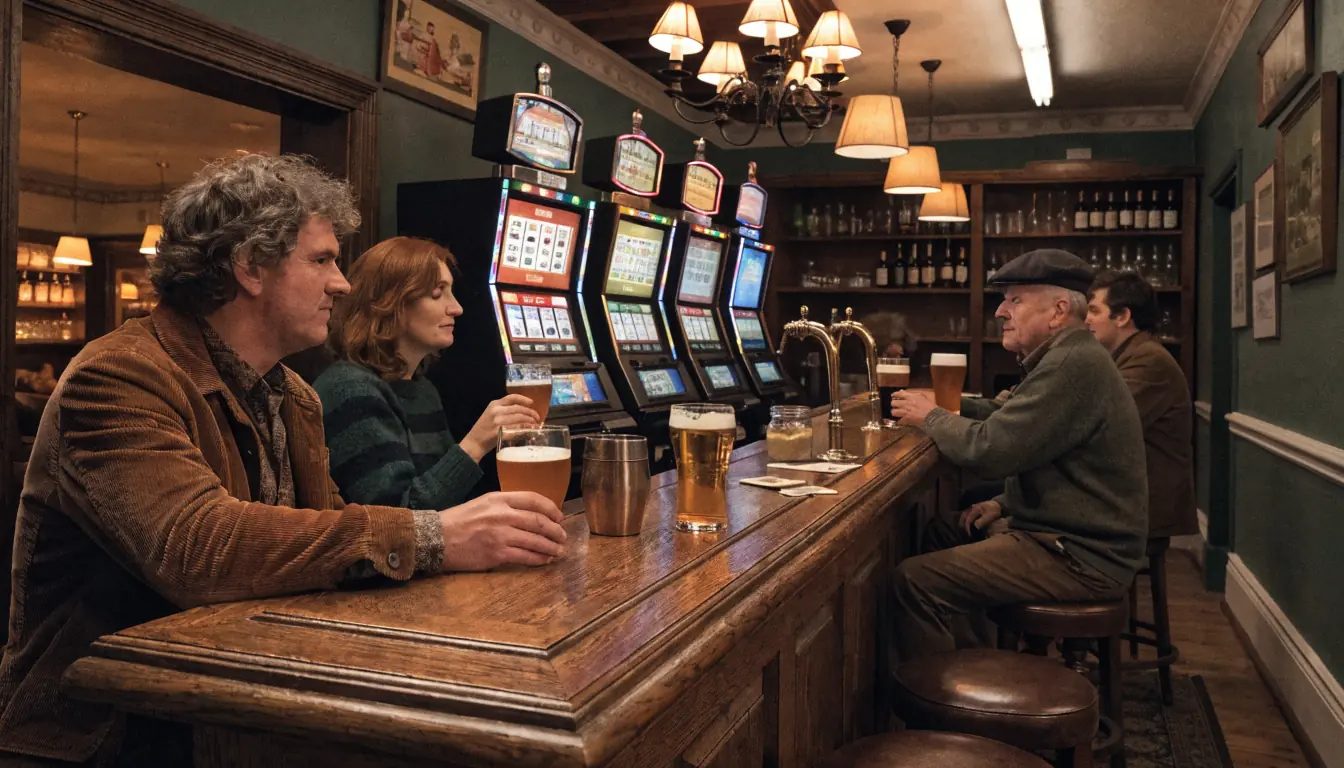
None of these categories can be reduced to a single "best" tier — a club with an older floor can still carry a handful of well-configured, higher-RTP machines, while a larger venue’s scale doesn’t guarantee every cabinet on it is worth playing. The category shapes the general texture of a floor, not the quality of any specific machine on it.
Verifying a Machine Before Playing It
The most reliable practical habit on any South Australian gaming floor is treating the paytable and help screen as the first stop before inserting money, not an afterthought. Nearly every modern cabinet includes this information behind an info button, and it takes under a minute to check the top-tier symbol values, the bonus trigger conditions, and — on titles that disclose it — the stated RTP. Machines that make this information hard to find or that omit it entirely are not necessarily worse, but they remove the one piece of leverage a player has before committing to a session.
Reputable software providers build their titles around RNG-based mechanics that have been tested and audited before reaching a floor, which is the baseline that makes any of the observational strategies above meaningful in the first place — a paytable only tells a useful story if the underlying random number generation behind it has actually been certified rather than assumed. This certification happens at the manufacturing and compliance stage, well before a cabinet is installed in a venue, and it’s the reason the paytable-reading approach described throughout this section is a reasonable substitute for a published RTP figure rather than guesswork dressed up as method.

Matching Machine Type to Session Goals
The choice between a low-volatility and high-volatility title on a South Australian floor comes down to what a session is actually for. A low-volatility machine, paying frequently but modestly, suits a longer session on a fixed budget where the goal is extended play rather than a single large outcome — the frequent small returns keep a bankroll moving without the sharp swings that can end a session early. A high-volatility machine suits the opposite goal: a shorter session where the appeal is the possibility of a large win, accepted alongside long stretches where nothing lands.
Progressive jackpot machines sit as a third option for anyone specifically chasing a large, headline-style payout, though the trade-off described earlier — a leaner base game funding the jackpot pool — means the standalone entertainment value across an average session tends to run lower than a comparable non-progressive title. That’s not a reason to avoid progressives outright, but it’s a fair trade to weigh consciously rather than assume the jackpot signage alone marks the better machine on the floor.
Main Insight
RTP, volatility and hit frequency remain the three measurable levers to evaluate any South Australian pokie.
Hit frequency, sitting in that 25%-to-35% band for a balanced title, gives a rough middle path — enough return frequency to sustain a session without the machine tipping fully into either the "many small wins" or "rare enormous win" extremes. A player uncertain which category suits them is generally better served starting with a title that reads as balanced on the paytable rather than committing to either extreme without having tested the middle ground first.
Where This Leaves the South Australian Floor in 2026
Taken together, the picture across South Australian venues in 2026 is one of considerable variation dressed up in similar-looking rows of cabinets. RTP, volatility, and hit frequency remain the three measurable levers that separate a well-configured machine from a poorly configured one, even where venues don’t disclose the numbers directly. Paytable inspection, recognising manufacturer conventions, and understanding what a progressive jackpot’s structure actually costs in base-game value are the tools available on any floor, in any venue category, without needing a spec sheet the venue was never going to hand over anyway.
What doesn’t carry over from the online catalogue — wagering-free bonus structures, home-screen app access, and round-the-clock chat support — marks a real boundary between the two formats rather than a gap that will close with time. The next section turns to that online side of the market directly: what’s legally accessible to South Australian players, and how payment and verification actually work once a session moves off a physical floor.
Online Casino Pokies Options Available to South Australian Players
No operator holds a licence to offer online pokies to South Australian residents. The Interactive Gambling Act 2001 prohibits the provision of online casino games — pokies, roulette, blackjack — to anyone within Australia, and no domestic licence of that kind exists. What the Act does not do is criminalise the player: an adult in South Australia who spins the reels on an offshore-licensed site is not breaking the law. The operator carries the legal risk, not the person placing the bet.

That distinction shapes the whole market South Australians actually deal with. Offshore-licensed sites — not "crown casino" venues, which are land-based only and covered elsewhere — are what’s on offer, and the only variable worth measuring across them is how fast a win turns into cash sitting in a bank account.
Withdrawal speed decides everything else
Bonus size, game count, loyalty tiers — none of it matters if a withdrawal sits in review for days. Withdrawal speed is the single factor that should decide which site gets used, ahead of any promotional offer including a no-deposit bonus. A generous welcome package attached to a slow cashier is worth less than a modest one attached to a fast one.
Payment methods and why PayID changed the calculation
PayID has become the reference point for Australian online payments generally, casino transfers included. It links a mobile number or email address directly to a bank account, removing the need to key in BSB and account numbers for every transaction. Paired with Osko, which settles transfers in real time, 24 hours a day, the practical effect is that a withdrawal request can clear a bank’s side of the process within minutes rather than sitting in a queue overnight.
Since July 2025, Australian banks have run a Confirmation of Payee check alongside PayID transfers. When a name is entered against a PayID, the receiving bank cross-checks it against the account on file and flags a mismatch before the transfer completes. For casino payouts this closes a specific failure point: money misdirected to a wrong or fraudulent account because a name didn’t match what the bank held.
Crypto transfers sit in a separate category, and one about to get more paperwork attached to it. From 31 March 2026, AUSTRAC’s Travel Rule applies to crypto transfers, requiring the sender and receiver of a transaction to be identified and that information passed along with the transfer. Sites still processing withdrawals in crypto will need to build that identification step into the cash-out flow, which may slow transactions that were previously near-instant.

Compliance checks before a payout clears
Identity verification is not optional friction — it’s a fixed cost of withdrawing anything. Government-issued ID needs to be on file and checked before funds move, regardless of payment method chosen. Sites that have digitised this step process the large majority of payments in well under fifteen minutes; sites still relying on manual document review take longer, sometimes considerably so.
Self-exclusion and account controls
Every legitimate offshore operator serving Australian players should offer self-exclusion alongside deposit limits and reality checks, letting an account be locked out for a set period or indefinitely. These tools sit outside the payment conversation but belong in the same due-diligence pass: a site worth using discloses wagering requirements before any bonus is claimed and makes account controls easy to find, not buried three menus deep.
Understanding Pokies Payout Percentages in South Australia
RTP is not a promise attached to a single spin; it is a theoretical figure describing what a pokie returns across a very large number of spins over its lifetime. A machine rated at 97% has, over that long run, paid out 97 cents of every dollar wagered back to players collectively, with the remainder retained as the house edge. Individual sessions can land well above or below that figure — the mathematics only settles at scale.
The practical rule is simpler than the theory: RTP below 96% should be avoided. Below that line, the house edge widens enough to work against the player over time, regardless of how a session feels in the moment.
Identifying favourable machines means checking the published RTP before playing, not after — most reputable providers list it in the game’s information panel. Volatility matters alongside RTP: it describes how a pokie pays, not how much, so the two figures answer different questions and neither substitutes for the other.