
Best Pokie Machines to Play in Australia: Rules and Odds
Table of Contents
- Pokies in Australian Casinos: Regulation and Recent Changes
- Pokies in Australia: Market Size and Player Demographics
- Understanding Pokie Machines: How They Work and What They Cost
- Pokie Machine Odds: What Players Need to Know
- RTP Tips for Pokie Players: Maximising Your Chances
- Online Pokie Machines: Availability and Legal Boundaries
- Free Pokie Play: When and Where You Can Play Without Money
- Real‑Money Pokies and Money‑Laundering Risks
- Pokie Apps and Digital Integration: Features and Limitations
- Types of Pokie Games: Themes and Features
Pokies in Australian Casinos: Regulation and Recent Changes
Casino pokies sit inside a different legal box than the online gambling market. The Interactive Gambling Act 2001 makes it an offence for operators to offer real-money online gambling to Australian residents, which is why no domestically licensed online casino exists and why a physical casino floor remains the only lawful setting for real-money pokie play tied to a state or territory licence. Nothing about that framework is under review; the changes happening now concern how the machines already on those floors are run, not whether they can exist.
The most consequential shift is the move toward cashless play. The 2022 NSW Islington Report recommended making all NSW pokies cashless by the end of 2028, a timeline set by that report rather than by legislation covering every venue nationally. Treating it as a settled national rule would overstate what has actually been decided — it is a recommendation with a target date, not yet a uniform mandate across states. Cashless systems tie play to a registered account instead of loose cash fed into a machine, which changes what a casino can record about a session and what a regulator can later request.
Before picking a pokie site to play at in 2026, it’s worth checking how each casino is licensed, what it offers new players, and how deposits and payouts actually work.
License: Curacao eGaming OGL/2024/923/0383 (Antillephone N.V.) · Bonus: up to A$2,000 + 100 free spins across 2 deposits · Min. deposit: A$30 Licensed under Curacao eGaming, this casino offers a two-deposit welcome package worth up to A$2,000 plus 100 free spins, with a A$30 minimum deposit to get started.
License: Curacao Gaming Authority (Jumpman Gaming Ltd) · Bonus: up to A$6,600 + up to 250 free spins across 4 deposits Operated by Jumpman Gaming under a Curacao Gaming Authority license, it backs new players with a generous four-deposit bonus reaching up to A$6,600 and 250 free spins.
License: Curacao · Bonus: up to A$2,000 A Curacao-licensed casino offering a welcome bonus of up to A$2,000 for new players getting started.
License: Curacao eGaming (Hollycorn N.V., since 2017) · Bonus: 225% up to A$1,540 + 600 free spins across 4 deposits, 20x wagering · Min. deposit: A$20-30 (depends on the offer) Run by Hollycorn N.V. since 2017 under a Curacao eGaming license, it offers a four-deposit bonus of 225% up to A$1,540 plus 600 free spins, with 20x wagering and a low A$20-30 minimum deposit.
License: Curacao eGaming (Dama N.V.) · Bonus: up to A$10,000 + 180 free spins, 40x wagering Licensed via Curacao eGaming under Dama N.V., it stands out for a sizeable welcome offer of up to A$10,000 plus 180 free spins, subject to 40x wagering.
License: Tobique Gaming Commission · Bonus: up to A$8,000 + 400 free spins across 4 deposits · Payout speed: crypto ~10-15 minutes, fiat 1-5 days · Min. deposit: A$30 Licensed by the Tobique Gaming Commission, this casino combines a four-deposit bonus of up to A$8,000 and 400 free spins with fast crypto payouts of around 10-15 minutes and a A$30 minimum deposit.
License: Curacao, operated by Dama N.V. · Bonus: 325% up to 5.25 BTC + 250 free spins across 4 deposits Operated by Dama N.V. under a Curacao license, it’s notable for its crypto-focused welcome package of 325% up to 5.25 BTC across four deposits, plus 250 free spins.
License: Curacao (operating since 2017) · Bonus: 250% up to A$2,000 + 50 free spins on the first of six deposits · Min. deposit: A$20 Curacao-licensed and operating since 2017, it offers a six-deposit bonus structure starting at 250% up to A$2,000 with 50 free spins on the first deposit, and a A$20 minimum deposit.
Bonus: 240% up to A$4,100 + 300 free spins This casino offers a welcome bonus of 240% up to A$4,100 along with 300 free spins for new players.
License: Curacao · Bonus: up to A$10,000 multi-stage + 500 free spins · Min. deposit: A$20 (POLi) Licensed in Curacao, it features a multi-stage bonus reaching up to A$10,000 with 500 free spins, and accepts a low A$20 minimum deposit via POLi.
Penalties for casinos that fail to meet compliance obligations have also moved. An amendment to the Casino Control Act 1992 allows NSW casino operators to be fined up to AUD 100 million for compliance failures. That figure applies specifically to casino operators under NSW law — it says nothing about pub or club venues, and nothing about other states, where separate regulators and separate penalty regimes apply. A casino operator weighing whether to delay a cashless rollout or tighten internal reporting is not weighing a modest inconvenience; the ceiling on the fine is set high enough to make delay a genuinely costly bet, not a rounding error on an operating budget.
Taken together, the two developments point the same way: toward account-based tracking replacing cash-in, cash-out anonymity on the casino floor. Whether a given venue has already switched, or is still running on the older model while working toward a later deadline, is not something a player can assume by walking through the door — it depends on which state’s rules apply and where that casino sits in its own compliance timeline.

Pokies in Australia: Market Size and Player Demographics
Electronic gaming machines operate in every Australian state, in the Australian Capital Territory and in the Northern Territory. No jurisdiction in the country has opted out. That alone sets pokies apart from casino table games, which remain confined to licensed casino floors: pokies sit in pubs, clubs and casinos alike, which is why the machine in a suburban RSL and the one on a casino gaming floor face the same player base, if not the same rules.
The scale attached to that footprint is large enough to need a source attached to it, not a rounded-off impression. Complyadvantage.com reports that pokies generated AUD 191.2 billion in gambling turnover in 2023. That figure describes turnover — the total amount cycled through machines, not what players actually lost — and it comes from one source describing a market that shifts year to year. It is worth reading as a data point, not as a fixed benchmark the industry has settled on.
Standalone or small banks of machines alongside bar service.
Larger banks, often the main gaming offering on site.
Pokies alongside table games under casino-specific licensing conditions.
A disputed share of the world’s machines
How much of the world’s pub and club poker machine stock sits in Australia is one of the few figures on this topic where the sources actively disagree, rather than just varying in emphasis. One version puts Australia’s share at 3% of the world’s pub and club poker machines. Another puts it closer to 18%. The gap between those two numbers is too wide to average out or quietly pick a side; anyone citing a share figure for Australia’s pokie fleet should know that the claim itself is contested at the source level, not just imprecise.
What is not contested is the density of the machines relative to the population and the routine nature of their placement — a pokie is as likely to be found next to a bar as inside a casino, which is part of why the machines are treated in public debate as a suburban fixture rather than a niche casino product.
Where the machines actually sit
| Venue type | Typical setting |
|---|---|
| Pubs | Standalone or small banks of machines alongside bar service |
| Clubs | Larger banks, often the main gaming offer on site |
| Casinos | Pokies alongside table games, under casino-specific licensing conditions |
This spread across three very different venue types is the core distinction from the casino-specific regulation covered separately: a pub pokie and a casino pokie can be the same machine model, running the same game, but the venue around it determines which set of licensing and compliance obligations applies. Market size figures like turnover numbers describe the machines as a whole, not the casino segment specifically — the two overlap but are not the same population of machines.
Demographics: a market, not a niche
Pokies are not a marginal product used by a small enthusiast group. Their presence in pubs and clubs — venues built for general foot traffic rather than dedicated gambling visits — means the player base extends well beyond people who set out specifically to gamble. Someone visiting a club for a meal or a social event sits within reach of a machine in a way that does not apply to casino table games, which require a deliberate trip to a casino floor.
Per‑capita loss
The AUD 608 per‑person loss figure for FY 2020‑2021 includes everyone, even those who never play, so it should not be taken as the average loss of an active player.
This distinction matters for reading any market-size figure. A turnover number covering the whole pokie market blends casual, incidental play in a pub with dedicated sessions in a casino gaming room. The regulation covered elsewhere in this discussion — cashless initiatives, penalty regimes, casino-specific compliance rules — applies unevenly across that spread, tightening fastest where scrutiny is highest, which is typically the casino floor rather than the local club.
Reading the numbers with the source attached
Two things follow from treating the turnover and share figures honestly rather than smoothing them into a single tidy market description:
- The AUD 191.2 billion turnover figure for 2023 comes from one named source and describes turnover, not player loss, profit, or machine count — it should not be extended to claim anything beyond what it measures.
- The share of the world’s machines attributed to Australia has two conflicting published versions, 3% and 18%, and no basis here to resolve which is correct.
Both points are more useful to a reader than a single confident average would be, because an average built from two disagreeing sources is not a fact — it is a guess dressed as one. What can be stated plainly is that pokies are installed across every Australian jurisdiction, embedded in everyday pub and club life rather than isolated to casinos, and that the turnover attached to them is measured in the tens of billions annually, on the figures published so far.
Understanding Pokie Machines: How They Work and What They Cost
A pokie machine is a computer running a random number generator, dressed up with reels, symbols and a payout table. Every spin is an independent event: the machine has no memory of what came before, no pattern building toward a win, and no mechanical bias that a player can read or time. The random number generator determines the outcome the instant the spin button is pressed; the reels spinning on screen are animation layered on top of a result already decided.
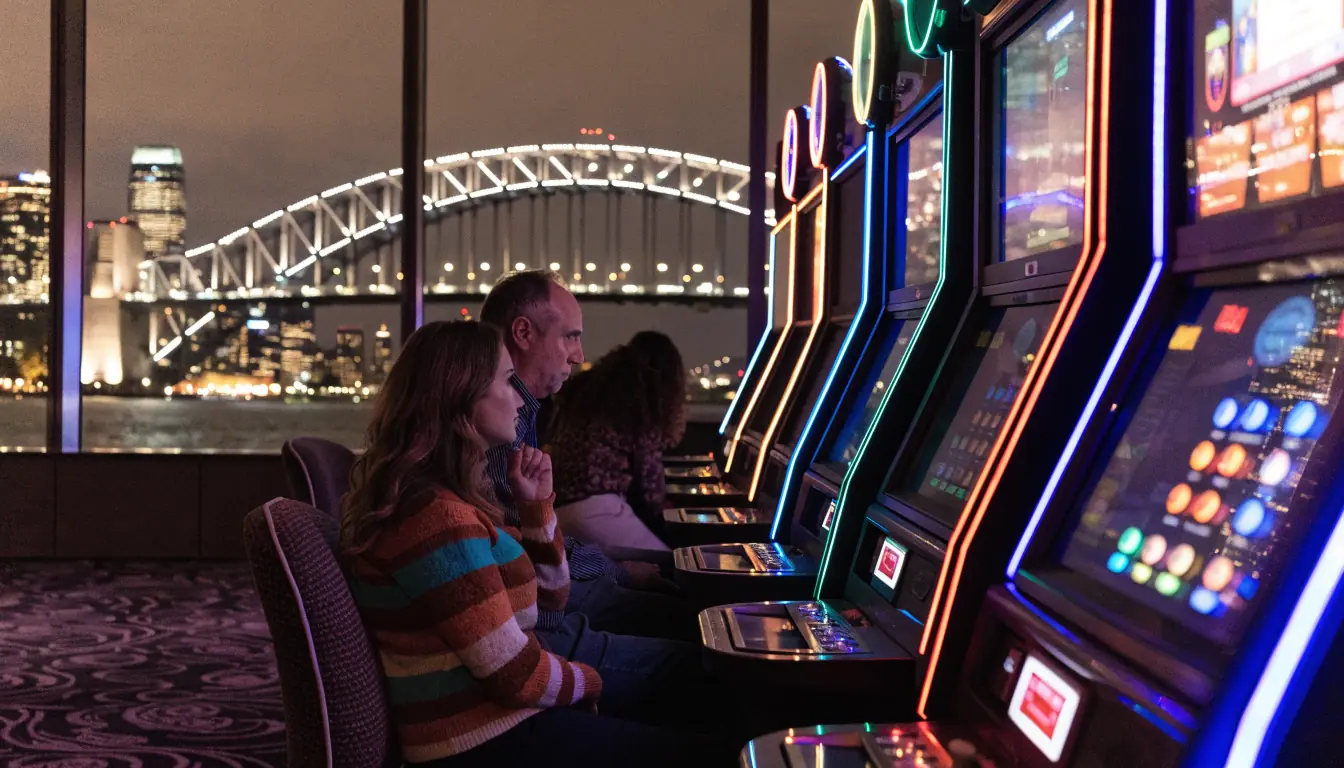
Behind that result sits a payout table programmed into the machine’s software, defining which symbol combinations pay and how much. This table is fixed at configuration and does not shift during a session based on how long a machine has been played or how much has been fed into it. A machine that has just paid out is not "cold," and a machine that hasn’t paid in a while is not "due." Both descriptions treat the machine as if it tracks history, which it does not.
Cash flow through the machine
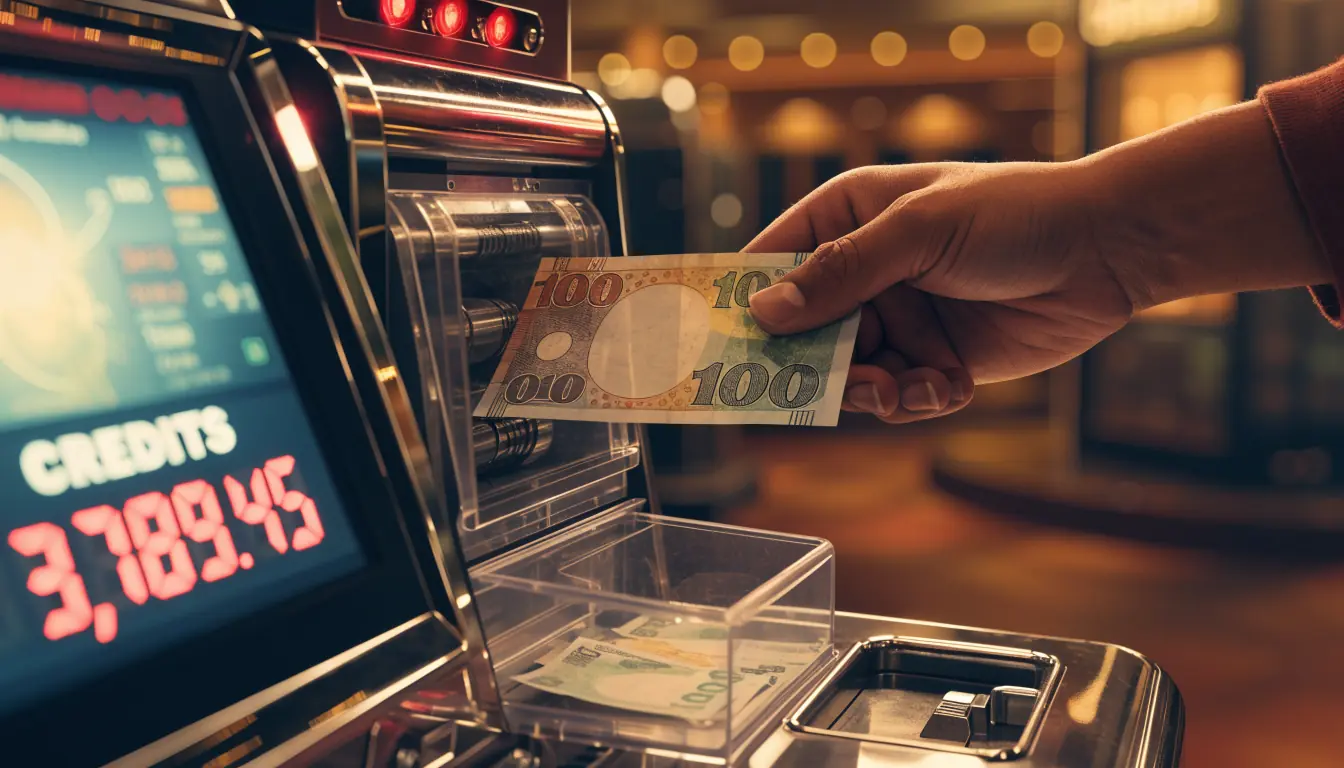
Mechanically, a pokie machine is built to accept cash directly — notes go into a bill acceptor, credits appear on screen, and losses or wins adjust that credit balance in real time. This is the same structural feature that makes pokies useful for laundering money: cash goes in, minimal play happens, and cash comes back out with a payout slip that gives it the appearance of legitimate winnings. The high volume of cash transactions and the limited traceability of that cash as it moves through the machine are precisely what make pokies attractive for this purpose — a detail covered in more depth further into this piece.
What a session actually costs
The technical mechanics only matter because of what they cost. In the 2020–21 financial year, Australians lost about AUD 12 billion to electronic gaming machines in total. Divided across the population, that works out to AUD 608 per person for that year alone — not per gambler, but per capita, meaning the figure includes people who never touched a machine.
That per-capita number is a useful way to think about a pokie machine’s real financial impact: it is not a single bad night that defines the cost, it is the accumulation of small losses across a huge number of sessions and a huge number of players. A machine’s payout table is built so that, over enough spins, the house retains a share of everything wagered. Individual sessions can run either way — a player can walk away ahead — but the AUD 12 billion figure exists because, in aggregate, across millions of sessions, the machines took in more than they paid out.
Reading the machine, not the myths
Because the outcome of each spin is generated independently, there is no mechanical detail — a machine’s location, its recent payout history, how long a player has fed it, or how many credits are sitting on the display — that changes the odds of the next spin. What differs between machines is the game built on top of the random number generator: the paytable, the number of paylines, the volatility of the symbol distribution and whether a jackpot pool is attached. None of that changes the fact that the generator behind it is blind to everything that happened before.
Understanding this mechanism matters less as trivia and more as the basis for what a machine’s odds actually mean in practice — a question about probability rather than machinery, and the subject of the next section.
Pokie Machine Odds: What Players Need to Know
There is no pokie machine that reliably wins for the player who plays it long enough. That is the starting fact, and every number below confirms it rather than complicates it.
In the 2020‑2021 financial year, players across the country lost about AUD 12 billion to electronic gaming machines. Divided across the population, that works out to roughly AUD 608 per person — not per gambler, per person, counting infants and non‑players alike. The figure is not a warning label added for effect; it is what remains after bets are placed and payouts are returned. Whatever the odds on any individual spin, the aggregate outcome across millions of sessions is a loss of that size, carried by the same population searching for the best pokie machine to play.
Turnover (AUD 191.2 billion in 2023) measures total money wagered, not the amount lost by players; the loss figure remains in the tens of billions.
By 2023, according to complyadvantage.com, pokies were generating AUD 191.2 billion in gambling turnover. Turnover is not loss — it includes money that gets bet, paid back, and bet again — but the scale of it explains why the loss figures stay large year after year even as individual sessions can go either way.
Why "best odds" is the wrong question
Searching for the best pokie machine to win misreads how the odds work. A machine’s return is built into its program before anyone sits down; nothing a player does during a session changes it. Short-term results swing wildly — a spin can pay out well above what was staked, and the next fifty can pay nothing — but that variance sits on top of a long-run outcome that favours the operator by design. The per-capita loss figure above is the visible evidence of that design operating at population scale, not the result of players making poor choices about which machine to sit at.
Sounds, near-misses and celebratory animations are part of the machine’s presentation, not part of its odds. They are covered separately as a matter of mechanics; what matters for the odds question is that no combination of machine choice, timing or session length has been shown to move the long-run result in the player’s favour. The billions lost each year are the sum of individual sessions that each felt, in the moment, like they could go the other way.
None of this means every session ends in loss — plenty do not. It means the odds landscape is stable regardless of which cabinet is chosen, and the loss data is the only reliable measure of what that landscape produces over time.
Chasing losses
Continuously trying to recover previous losses can quickly exceed a player’s budget and lead to significant financial harm.
RTP Tips for Pokie Players: Maximising Your Chances
The per-capita loss figure of AUD 608 for FY 2020‑2021 sets a baseline: over a year of typical play, the machine’s design edge outweighs individual strategy. Return-to-player rates describe a long-run average, not a guarantee for any single session — a machine that pays back a stated percentage over its lifetime can still return nothing on a given day.
A few practical points follow from that math rather than from luck:
- Treat any session budget as money already spent, not an investment expected to return.
- Shorter sessions limit exposure to the same long-run edge that produced the AUD 12 billion total loss recorded across the market in FY 2020‑2021.
- Chasing losses to “recover” them ignores that each spin is independent of the last.
- Higher advertised RTP does not change short-term volatility — it only shifts the long-run average slightly.
None of this changes the outcome of any single spin. It only clarifies what the numbers already show: the house edge is structural, not a matter of timing or technique.
Online Pokie Machines: Availability and Legal Boundaries
The question of whether an online pokie machine can be played for real money in Australia has a single, unambiguous answer at the federal level: no domestically licensed operator can offer it. The Interactive Gambling Act 2001 makes it an offence for online operators to provide real-money gambling services to Australian residents. This applies to casino-style pokie games specifically — the law was written to draw a line between wagering products that remain legal online, such as sports and racing bets, and casino games that do not.
That distinction matters because searches for an online pokie machine or pokie machine games online return a mix of genuinely different products, and conflating them leads to wrong assumptions about what’s legal, what’s safe, and what’s even available.
What "online pokie machine" actually refers to
Three separate things get called by roughly the same name, and they sit in different legal categories:
- Free-to-play or demo simulators. These reproduce the reels, paylines and bonus rounds of a pokie without any deposit or withdrawal. No money changes hands, so the Interactive Gambling Act’s prohibition on real-money offers doesn’t apply to them.
- Real-money online pokies hosted offshore. Some platforms licensed outside Australia allow real-money play and accept Australian visitors. The Act targets the operators who provide this access to Australian residents, not the individual player who visits the site — but that does not make the offer itself lawful, and no such operator holds an Australian licence, because none exists for this category.
- Land-based pokies in licensed venues. These are the machines standing in pubs, clubs and casinos, governed by state and territory rules rather than the federal online prohibition. They are covered elsewhere in this piece, not here.
The practical effect is that a real online pokie machine game, in the sense of an Australian-licensed, real-money product, does not exist as a category. Anyone searching for online pokie machine real money is searching for something the domestic legal framework does not permit an operator to sell.
Why the free version is where the legal online activity sits
Because real-money online pokies fall outside what any Australian licence covers, the legally uncomplicated version of "online pokie machine" is the free one. A free online pokie machine, or a pokie machine simulator, reproduces the mechanics — reels, symbols, paylines — without a wagering component, which is why these versions are the ones that can be offered to Australian visitors without running into the Interactive Gambling Act’s restriction. This is a different topic to the free-play products discussed in the next section, which looks at where and under what circumstances no-money play is offered; here, the point is narrower: free play is the one form of "online pokie" that sits cleanly on the legal side of the line, while real-money online play does not.
Illegal online pokies
Offering real‑money online pokie games to Australian residents breaches the Interactive Gambling Act 2001 and is prohibited.
The paylines and structure carry across, the money doesn’t
An online pokie machine game and a land-based one share the same underlying idea — a set of reels, a number of paylines, symbols that combine across them to produce a result. Pokie machine paylines work the same way whether the game is running in a browser or inside a cabinet on a casino floor: the mathematics of the game itself isn’t what the law regulates. What the law regulates is the transaction — whether an operator is allowed to take a bet and pay out real money to an Australian resident through an online channel. That’s the boundary that separates a legal pokie machine simulator from an illegal real-money offer, not the graphics, the theme or the number of paylines on display.
This is also why online pokie machine software and online pokie machine games marketed as free entertainment can legally exist and be accessed, while a version of the same title offering cash payouts cannot be legally supplied to an Australian resident by any operator, local or offshore.
cashless
A system where pokie play is linked to a registered account rather than anonymous cash, allowing operators and regulators to track wagering activity.
What happens to winnings, if there were any
One fact stays constant regardless of where a pokie is played, land-based or otherwise: gamblers’ winnings in Australia are not taxed. This is not a reason to treat offshore real-money play as a viable option — it remains outside what the law permits an operator to offer — but it is worth noting as a point that sometimes gets confused with tax treatment in other jurisdictions. In Australia, the tax question sits with the operator, not the player, and it does not apply at all to a category of product that isn’t lawfully offered in the first place.
Sorting the search terms into what they actually mean
| Term searched | What it actually refers to | Legal status |
|---|---|---|
| Free online pokie machine / free online pokie machine games | Demo or simulator play, no deposit | Not restricted by the Interactive Gambling Act |
| Online pokie machine simulator | Same as above, no wagering | Not restricted |
| Online pokie machine real money / real pokie machine games online | Cash-stake play offered by an online operator | Illegal for any operator to offer to Australian residents |
| Play pokie machine online (unspecified) | Ambiguous — could mean either of the above | Depends entirely on whether money is staked |
| Pokie machine paylines | A mechanical feature of the game, not a legal category | Not a legal question at all |
The recurring confusion in this space comes from marketing language that borrows the word "real" — as in real pokie machine games online — to mean "realistic-looking" rather than "for real money." That distinction is the one the Interactive Gambling Act actually cares about, and it’s the one worth checking before assuming that any online pokie machine offering payouts to an Australian player is operating within the law.
Free Pokie Play: When and Where You Can Play Without Money
Free or demo pokie play strips out the one element the Interactive Gambling Act 2001 actually regulates: real money. The Act makes it an offence for online operators to offer real-money gambling to Australian residents, but it says nothing about reels spinning for no stake at all. That gap is why demo mode exists in the first place — it’s the version of a pokie machine that never has to answer to the licensing question, because there’s no wager, no payout, and no transaction for any regulator to examine.
What "free" actually means here
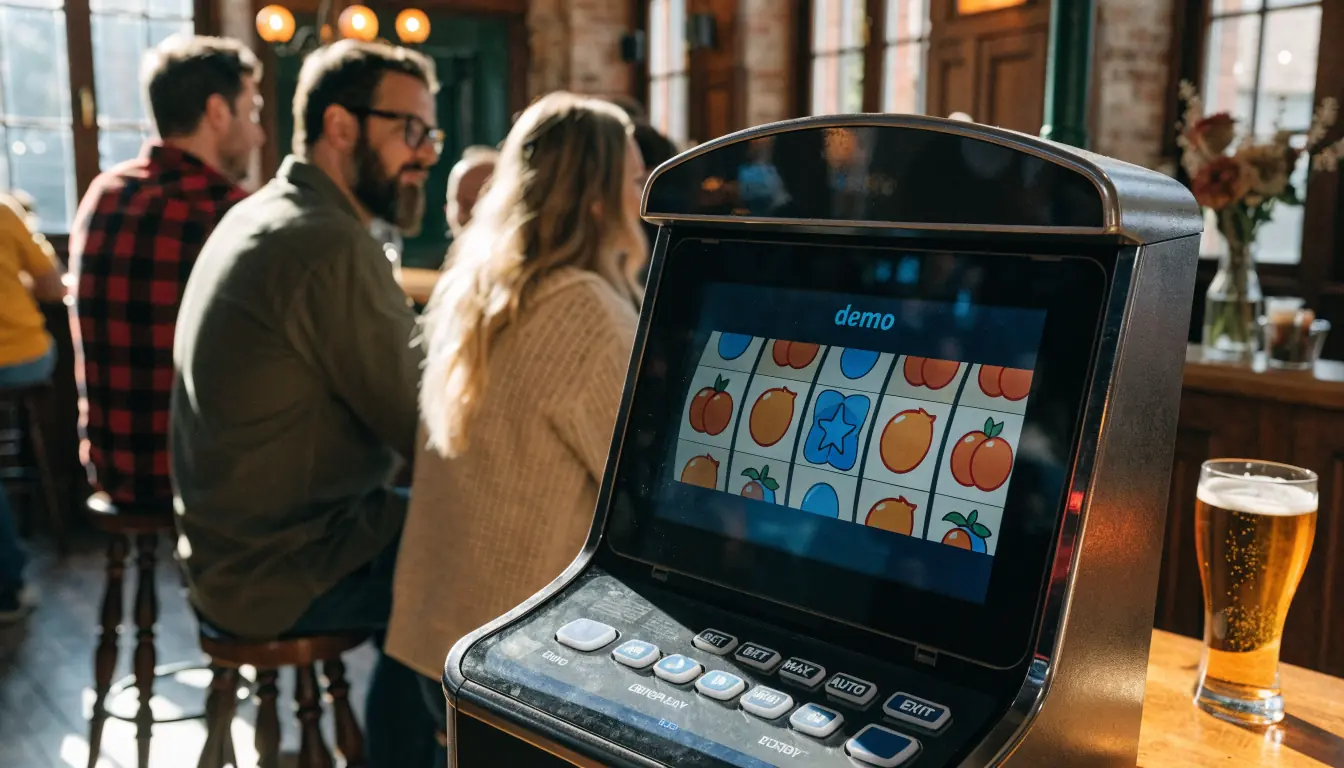
Demo pokies use credits with no cash value. Nothing is deposited, nothing is withdrawn, and nothing converts back into currency at the end of a session. That single distinction is what separates them from the real-money pokies covered elsewhere in this piece and from the broader online pokie landscape, where the legal boundary runs precisely along the line between wagering money and not wagering it. A free-play version of a game and its real-money counterpart can look identical — same reels, same theme, same math model — and still sit on opposite sides of the law simply because of what’s staked.
This is also where free play parts ways with land-based pokies in pubs and clubs, where every credit inserted has a cash origin and every payout has a cash value. A demo game replicates the mechanics without carrying any of that weight. It’s a rehearsal, not a transaction.
Where demo versions turn up
Software providers such as Pragmatic Play, Microgaming, NetEnt and Evolution Gaming build demo modes into their game libraries as standard, since the same game code that powers a licensed real-money site elsewhere in the world can run in a no-stake mode without triggering the same regulatory obligations. Sites that display these games to Australian visitors are not thereby offering real-money gambling, and that’s the entire reason the format survives in a market where the underlying real-money product is prohibited.
It’s worth being direct about a boundary that trips people up: playing for free on an Australian-facing site is not the same as that site being licensed to take real bets from Australians. No such domestic licence exists for online casino-style games, pokies included. A free-play catalogue proves nothing about what happens if a user later tries to deposit — because at that point, if the operator accepts an Australian resident’s money for casino-style play, the operator, not the player, is the one committing an offence under the Act.
What free play doesn’t tell you
Because no cash changes hands, demo mode is also silent on the questions that matter once real money is involved — what a session actually costs over time, what the machine returns, how odds translate into losses. Those belong to the discussion of real-money pokies and their odds, not here. What free play does offer is a way to see how a game’s reels, symbols and bonus rounds behave without that behaviour costing anything, which is a different thing entirely from evidence of how the game performs financially.
The practical boundary
The rule of thumb follows directly from the Act itself: if no money is staked and none can be won, the activity sits outside the real-money gambling regime the law targets. The moment a site asks for a deposit to unlock spins, or offers to pay out winnings from those spins, it has crossed into the territory the Interactive Gambling Act 2001 was written to police — and an offshore operator doing so from outside Australia is still doing something illegal under that Act, even though the player placing the bet is not the one breaking the law.
Free play, in other words, is not a lighter version of real-money pokies. It’s a separate category that happens to use the same graphics.
Real‑Money Pokies and Money‑Laundering Risks
Cash‑based pokies carry a structural weakness that has nothing to do with odds or game design: a high volume of cash transactions combined with limited traceability makes them a convenient channel for moving illicit funds. A machine that accepts notes, pays out tickets or coins, and asks no questions about where the money came from is, from a compliance standpoint, a gap rather than a feature.
Main takeaway
Cashless systems are reshaping Australian pokie regulation and reducing money‑laundering risk.
That gap gets used in fairly consistent ways. Large amounts of cash go into a machine, minimal gambling activity follows, and the funds come back out as a "win" — a paper trail that looks like gambling income rather than what it actually is. Spreading smaller cash amounts across several venues serves the same purpose while staying under reporting thresholds that would otherwise trigger scrutiny at a single location.
ComplyAdvantage, a compliance‑data provider, reports that money mules are recruited specifically to launder money through pokies — individuals who feed cash through machines on someone else’s behalf, distancing the original source of funds from the eventual payout. Recruitment of this kind doesn’t require technical sophistication; it requires access to a machine and a willingness to be a middleman.
Why account‑based systems change the picture
The countermeasure discussed across the compliance sector is a shift away from cash and toward account‑based play, where deposits, gameplay and withdrawals are tied to an identified account rather than anonymous cash exchanged at a terminal. Facctum, a provider working in this space, states that adoption of cashless, account‑based pokies improves traceability and reduces the anonymity that makes structuring and mule activity possible in the first place.
The logic is straightforward rather than technical: a transaction linked to an identity can be monitored and, if necessary, investigated; a transaction made in loose cash at a machine largely cannot. That difference — traceable account versus anonymous cash — is the core distinction driving the current push toward cashless systems, independent of any particular machine’s design or payout structure.
Pokie Apps and Digital Integration: Features and Limitations
Mobile pokie apps fall into two categories, and the difference between them is the whole story. The first is the demo app: a downloadable program, or an API-connected feature inside a broader gambling or entertainment platform, that runs pokie-style reels for no stake and no payout. The second is the real-money app, operated from offshore and offering actual wagering to Australian users. The Interactive Gambling Act 2001 makes it an offence for an operator to offer real-money gambling of this kind to Australian residents. That offence sits with the operator, not the player, but it also means no such app can be lawfully marketed, licensed, or supported domestically — a distinction that separates any app sold in this market from what is described in the section on casino regulation.
API-based integration is what makes an app a "pokie app" rather than a single game. A provider’s API can plug jackpot counters, reel animations and sound assets into a wrapper app, a loyalty program, or a social casino platform without that host ever holding a gambling licence itself. This is why identically branded jackpot features can appear across several unrelated apps — the visual layer is licensed content, not proof of a gambling operation behind it.
Jackpot displays in these apps are a feature of design, not a disclosed probability. No published source breaks down how a mobile app’s jackpot pool is funded, how often it pays, or what share of turnover feeds it — and none of the operators behind these apps publish that detail either.
Cost, in the app context, means one of two things: the price of the download (usually free, subsidised by in-app purchases) or the stake per spin in a real-money version. Since real-money staking through such apps is not something an Australian-facing operator can lawfully offer, no legitimate cost figure for that use case exists to quote.
What separates an app from a casino floor machine or a browser-based version is portability and API dependency — not better odds, not different regulation, and not a lighter version of the same law.
Types of Pokie Games: Themes and Features
No two venues stock identical machines, but the underlying pool of themes draws from a narrow set of categories that repeat across pubs, clubs and casinos alike. Fruit-symbol and bell-and-bar designs sit alongside Egyptian, Irish, and Asian-luck themes, along with licensed film and television tie-ins where publishers have secured the rights. The theme changes the artwork, sound design, and marketing angle; it rarely changes what the machine is structurally doing underneath.
Mechanically, the variation that matters more than theme is feature design:
- Free spins rounds — triggered by a scatter combination, running a set number of spins without further stake deducted.
- Bonus pick-and-win screens — a secondary interface where the player selects from hidden values or prizes.
- Multiplier symbols — wilds or scatters that multiply a line win rather than substitute for it outright.
- Progressive jackpot pools — a prize pool that grows from a portion of stakes across linked machines until won.
- Cascading or expanding reel formats — an alternative to fixed payline grids, where symbols fall away or grow to create new combinations.
Volatility is the practical distinction between machines carrying the same feature set. A cascading-reel game and a fixed-payline game can both offer free spins, yet pay out on very different rhythms — one in frequent small amounts, the other in longer dry stretches punctuated by larger wins. Neither pattern is disclosed on the cabinet itself; it has to be inferred from play or from published game information where a provider makes it available.
Turnover figures give some sense of scale without explaining any of this variety. By one account, pokies generated AUD 191.2 billion in gambling turnover in 2023 — a figure that reflects total stakes wagered across the machine pool, not a breakdown by theme, feature, or volatility. It says nothing about which game types drove that turnover, and no source reviewed here splits the number that way.
What stays constant regardless of theme or feature set is the machine’s basic loop: stake, spin, resolve. Bonus rounds and multipliers change the shape of individual outcomes; they don’t change the fact that each spin is an independent, and equally unpredictable, event.
What are pokies in Australia?
Pokies, or electronic gaming machines, are widely available across all Australian states and territories. Unlike casino table games confined to dedicated floors, they are a routine fixture found in suburban pubs, licensed clubs, and casinos alike.
How do criminals launder money through pokies?
Criminals feed large sums of cash into the machines, play minimally, and cash out immediately to generate a false record of winnings. They may also buy winning tickets from genuine players or structure small cash deposits across multiple venues to avoid AML reporting thresholds.
What advanced security features are used in Australian casinos?
Venues are shifting toward cashless, account-based play which provides full traceability of deposits, gameplay, and withdrawals. This replaces the anonymity of loose cash and is recommended by regulators to reduce money laundering risks and improve transaction monitoring.