
Gambling Casino Sites in Australia: Slots Guide 2026
Table of Contents
- Australian Online Slots Landscape
- Regulatory Framework for Slot Gambling in Australia
- Slot Machines and AML Risks
- Variety of Casino Games Beyond Slots
- Pokies in Australia: Prevalence and Impact
- Real‑Money Slot Play: Taxation and Revenue Implications
- Cryptocurrency (Bitcoin) Gambling – Current Situation
- Ethereum‑Based Online Gambling – What’s Available
- Online Casino Platforms in Australia
- Top Australian Casinos and How to Play Safely
Australian Online Slots Landscape
Pokies sit at the centre of Australian gambling culture, and the numbers explain why the term needed its own word. In FY 2020-2021, Australians bet almost AUD$150 billion on electronic gaming machines, with total player losses reaching AUD$12 billion over the same period. Spread across the population, that works out to a per-capita loss of AUD$608 — a figure that captures every adult resident, not just those who play.
The scale is disproportionate by global standards. Australia holds 3% of the world’s pub and club poker machines while accounting for just 0.3% of the global population. One estimate, cited by complyadvantage.com, puts Australia’s share of the world’s poker machines even higher, at around 18%; the discrepancy between figures depends on what counts as a "poker machine" and where the count is taken, so both numbers are worth noting rather than treated as a single settled fact. Either way, the density of machines relative to population size is not something other markets replicate.
New South Wales alone hosts approximately 95,800 pokies, the highest concentration of any state. Between December 2017 and May 2018, NSW clubs recorded $1.945 billion in net profit from pokies — a five-month window that shows how much recurring revenue these machines generate for venues rather than for players. Pokies, formally known as electronic gaming machines (EGMs), are fixtures in pubs, clubs, and casinos across the country, which is where most Australians actually encounter them, rather than through any domestically licensed online equivalent.
Where the term "slots" fits, and where it doesn’t
The search term "slots" is largely an import. On the ground, Australians say pokies, and that word covers the physical EGMs standing in clubs and pubs — not a licensed online product. This distinction matters because it separates two entirely different markets that get conflated in casual conversation: the machines bolted to the floor of a licensed venue, and the web-based games sometimes marketed under the same name. The scale figures above — the $150 billion wagered, the $608 per-capita loss, the 95,800 machines in NSW — describe the land-based pokies sector. They are not a description of an online slots industry operating under Australian oversight, because no such licensed industry exists domestically.
Newer machines, sometimes referred to as transparent pokies, use account-based systems rather than pure cash-in, cash-out mechanics. This shift changes how play is recorded and tracked at the venue level, though it doesn’t change the underlying scale of the sector or where most of the money is wagered.
Turnover and distribution
Turnover figures for pokies specifically — as distinct from the electronic gaming machine totals above — show a similarly large market. One source, again complyadvantage.com, put pokies turnover at $191.2 billion for 2023. That figure sits within the same order of magnitude as the FY 2020-2021 EGM betting total, which suggests the market has not contracted in any material way over that period, though the two figures come from different years and different reporting methodologies, so they shouldn’t be read as a clean before-and-after comparison.
Distribution across the country is uneven. NSW’s 95,800 machines represent a large share of the national total on their own, and the state’s club sector profit figures reflect that concentration. Pubs and clubs remain the primary venues, with casinos representing a smaller, more contained slice of the physical machine count even though casino floors are where visitors most often picture a "slot machine" in the international sense.
Size versus access
The scale described above is a land-based phenomenon. Australians lose money to pokies primarily by walking into a pub, club, or casino and playing a machine that is subject to state-level oversight and, where applicable, AML obligations tied to cash handling. Searches for online slots, real-money online slots, or online gambling slots are searches for something that does not have a domestic, licensed equivalent — a point covered in detail in the regulatory section that follows this one, but worth flagging here because it shapes how the size of the market should be read.
In practical terms, the AUD$150 billion wagered and AUD$12 billion lost in FY 2020-2021 did not flow through an Australian online slots industry, because no licensed online slots industry exists to receive it. It flowed through physical machines in venues open to the public, machines that are counted, taxed at the state level, and increasingly moved toward account-based tracking. Any online activity involving slot-style games happens outside this domestic framework, through operators based offshore — a separate question from the size and distribution figures covered here, and one addressed later in this article.
A market shaped by density, not novelty
What distinguishes the Australian pokies market from many overseas gambling markets isn’t technological innovation or product variety — it’s sheer density of machines relative to population, combined with high per-capita spend. The 3% global machine share against 0.3% global population share is the clearest single data point for this: it says, without needing further explanation, that Australians encounter poker machines far more often than their population size would predict.
This density has concrete downstream effects that later sections in this piece pick up in more depth — the money-laundering risk profile of high cash-volume machines, the social impact of losses concentrated among a subset of players, and the regulatory apparatus built specifically to manage a machine count this large. But as a starting point, the landscape is straightforward to describe: a very large number of machines, a very large amount of money wagered and lost, concentrated heavily in one state, moving gradually toward account-based systems, and existing almost entirely outside the online space that terms like "online slots" or "real money slots" imply.
The gap between the search term and the reality it describes is itself informative. Someone searching for gambling casino sites in Australia offering slots in 2026 is often looking for the online equivalent of the pokies described above — an equivalent that, at the domestic level, doesn’t exist in licensed form. What exists is a heavily regulated, high-turnover physical market, concentrated in venues rather than on websites, generating billions in turnover every year through machines most Australians have walked past without necessarily registering the scale behind them.
Illegal online slots
Offering online casino slots to Australian residents is prohibited by the Interactive Gambling Act 2001; operators providing such services are breaking the law and can face enforcement action.
Regulatory Framework for Slot Gambling in Australia
The legal position on online slot gambling in Australia is set by a single piece of Commonwealth legislation: the Interactive Gambling Act, passed on 28 June 2001. It prohibits the provision of online casino-style games — slots, roulette, blackjack, poker — to people in Australia. The Act targets the operator, not the player: offering these games to Australian residents is illegal, but an individual placing a bet on an offshore site is not committing an offence. That asymmetry is often glossed over in summaries of the law, though it is the whole reason offshore slot sites keep operating while remaining legally out of reach for local enforcement.
No domestic licence exists for online pokies. There is no application process, no fee schedule, no regulator that issues one, because the Act forecloses the category entirely rather than regulating it. This differs from sports betting and lotteries, both of which are licensed at state and territory level and operate within a framework of registered, identifiable operators. Any site marketing itself as an "Australian licensed online casino" for slots is describing something that does not exist under current law. There is also no public register of gambling licensees on this market, so there is nothing to check a slots operator against even if one wanted to.
Self-exclusion: BetStop
The main harm-minimisation mechanism sitting alongside the prohibition is BetStop, the national self-exclusion register. It launched in August 2023 and had registered 18,000 users within its first six months — a fast uptake for a scheme that requires people to actively opt in rather than being enrolled by an operator. BetStop lets a person exclude themselves from licensed wagering services across the country in one action, rather than contacting each operator individually. Its scope sits within the licensed sector — sports and race betting, lotteries — which is a distinction worth holding onto: it does not, and cannot, extend to offshore slot sites that fall outside Australian licensing altogether. A player who signs up to BetStop is protected from licensed wagering operators re-marketing to them; that protection has no jurisdiction over a slots site based outside the country.
AML controls applied to gambling businesses
Where slot-style gambling does intersect with enforceable Australian rules is anti-money-laundering compliance, administered through AUSTRAC. Businesses that fall within scope are required to register with AUSTRAC using an AUSTRAC Business Profile Form, and operators running more than 15 pokies must go further: appoint a compliance officer, run risk assessments, implement an AML/CFT program, carry out customer due diligence, and report cash transactions above $10,000. These obligations apply to venues operating electronic gaming machines within Australia’s licensed pub and club sector, not to offshore online slot platforms, which sit outside AUSTRAC’s reach in practice even where the underlying law would want to capture them.
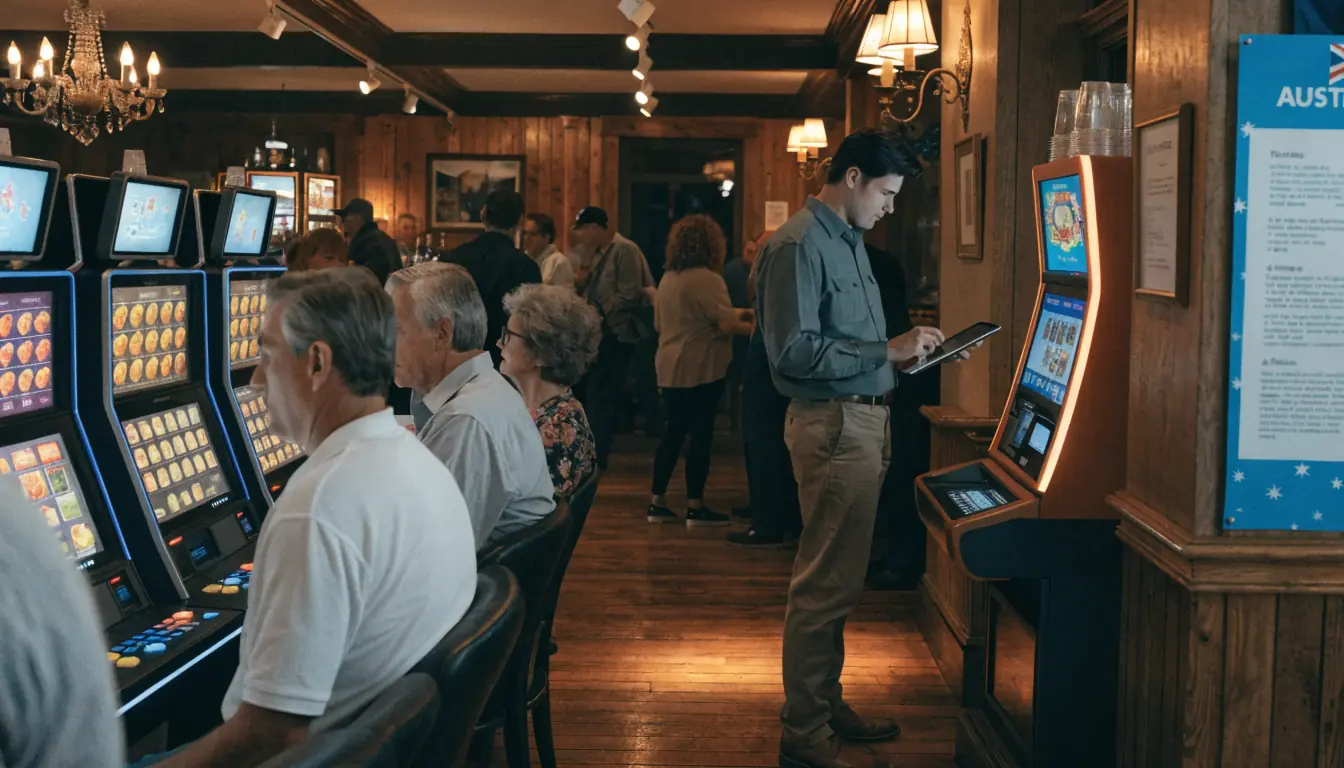
Customer verification and patron profiling are the AML controls most directly relevant to slot-style play at the account level. Verification ties a real identity to an account before funds move; patron profiling builds a picture of what normal play looks like for a given customer, so that departures from it — sudden changes in deposit size, session length, or redemption pattern — become visible to compliance staff rather than passing unnoticed. Neither control depends on the player’s intent; both exist because the alternative is a cash-heavy, high-turnover environment that is difficult to audit after the fact.
What the framework does and doesn’t cover
| Element | Applies to | Does not apply to |
|---|---|---|
| Interactive Gambling Act (2001) | Operators offering online slots/casino games to Australian residents | Australian players using offshore sites (not an offence for the individual) |
| BetStop | Licensed wagering and lottery operators nationally | Offshore online slot platforms |
| AUSTRAC registration and AML/CFT obligations | Venues and operators within Australian jurisdiction, especially those running 15+ pokies | Offshore-licensed online slot operators outside Australian jurisdiction |
| Customer verification / patron profiling | Accounts and venues subject to AML obligations | Anonymous or unverifiable offshore play |
The pattern across all four is consistent: every enforceable control described here attaches to something physically or legally within Australia — a venue, a licensed operator, a domestic bank account. Online slots offered from outside the country sit in a gap where the prohibition is real but the enforcement mechanisms built to police gambling — BetStop, AUSTRAC reporting thresholds, verification requirements — largely cannot reach. That gap is the actual regulatory story here, more than any single clause of the 2001 Act.
Slot Machines and AML Risks
Pokies move cash in volumes that make them a standing item on every AML briefing about gambling. The mechanics that make an electronic gaming machine attractive to a casual player — coins or notes in, credits accumulate, cash out on demand — are the same mechanics that make it attractive to someone trying to give dirty money a clean origin. High cash throughput combined with limited traceability is the exact combination public inquiries and sector guidance keep flagging as a major AML risk area, and it explains why pokies sit at the centre of gambling-related financial crime reviews rather than at the margins.
How the laundering actually works
The base method is blunt: cash placement with minimal play. A large amount of cash goes into a machine, the machine is played briefly or barely touched, and the balance is withdrawn. The money that comes back out carries a gambling receipt instead of its real origin. No skill, no luck, no real betting activity — the machine is functioning as a cash-to-cash converter, not as entertainment.
Two other typologies recur in the same guidance:
- Purchasing winning tickets. Someone who has legitimately won a payout sells the ticket to a third party for cash, who then redeems it. The redeemer’s money now has a paper trail pointing to a genuine win rather than to whatever it was before.
- Structuring across venues. Rather than running a large sum through one club, the amount is broken into smaller sums and spread across several venues, sometimes with several people involved, so that no single transaction or single premises sees the full scale of the activity.
Both rely on the same weakness: a payout receipt looks identical whether the person cashing it in played the machine seriously or just held cash for a few minutes.
What regulators watch for
The New South Wales Crime Commission and AUSTRAC guidance describe the pattern in terms of behaviour that deviates from ordinary play, not in terms of the amounts alone. The indicators that come up repeatedly:
| Red flag | What it looks like in practice |
|---|---|
| Cash placement with minimal play | Large cash inserted, little or no gameplay, immediate cash-out |
| Structuring | Frequent small redemptions spread across multiple venues |
| Collusion | Multiple patrons coordinating to move cash through machines |
| Identity avoidance | Refusing ID checks or using multiple player cards |
| Anomalous redemption patterns | Cash-out behaviour that doesn’t match a venue’s typical patron profile |
| Disproportionate cash access | Cash volumes inconsistent with the customer’s known profile |
None of these on their own proves laundering — a big win produces a big cash-out too. What draws attention is the combination: cash in, no real play, cash out, repeated, sometimes across venues, sometimes with the same faces appearing at different machines on the same night.
Why the machine itself is the weak point
Slot machines don’t ask where the cash came from, and until recently many didn’t ask who was feeding them either. That’s the structural gap public inquiries keep returning to: a venue can run thousands of cash transactions a day through machines that were built to maximise turnover, not to interrogate the source of funds. Collusion between patrons, or simply weak oversight on a busy floor, is enough to let the placement-and-withdrawal pattern go unnoticed unless someone is specifically looking for it.
This is also why the shift toward account-based, traceable pokies gets treated as a control rather than a convenience upgrade — a machine that logs who inserted what, and when, closes off the anonymous cash-in, cash-out cycle that the typologies above depend on. Where that traceability doesn’t exist, the burden falls on venue staff to notice patterns that, taken transaction by transaction, look unremarkable.
Variety of Casino Games Beyond Slots
Table games and card games occupy a different position from pokies in the risk landscape, even though the underlying legal position is identical: the Interactive Gambling Act 2001 prohibits offering blackjack, roulette, poker, and any other online casino game to people located in Australia, regardless of how the game is dressed up or which studio produces it. That prohibition applies to the operator, not to the individual who plays — but no operator can lawfully hold a licence to run these games domestically, so nothing described below exists as a legal Australian product.

Where table and card games are offered — through offshore platforms outside Australian jurisdiction — the mechanics differ enough from pokies to change how illicit money moves through them.
Why table games carry a different risk profile
Pokies are largely a solitary transaction: cash goes in, credits come out, one player and one machine. Table games and multiplayer card games introduce a second variable that pokies rarely have — other people at the same table, and a dealer or live host mediating the outcome. That structural difference opens specific laundering routes that regulators and AML units treat separately from EGM red flags.
Collusion and weak oversight enable illicit cash movements: at a live table, one participant can deliberately lose to another, effectively transferring value between two accounts under the appearance of a legitimate game result. This is far harder to arrange at a slot machine, where the outcome is generated independently of anyone else in the room.
Multiple patrons working together to move cash are treated as a red flag for exactly this reason. A group coordinating bets and losses across a card or table game can move funds between themselves while the transaction record shows nothing more than ordinary wagering.
Some indicators carry across from pokies without much modification, because they describe patron behaviour rather than game mechanics:
- Customers refusing identification or using multiple player cards — a pattern that applies wherever an account or player card sits behind the transaction, table game or machine.
- Frequent small redemptions across venues — relevant to any product where winnings can be cashed out and re-deposited elsewhere in small amounts to avoid drawing attention.
- Large cash insertions followed by minimal play and immediate cash-out — the same logic that flags a pokie used as a cash-in/cash-out conduit applies to a table buy-in that’s converted back to chips-to-cash with barely a hand played.
What sets card and table games apart operationally
The presence of a live dealer or a multiplayer environment means detection depends less on machine logs and more on observed behaviour — watching who is playing with whom, how bets are placed relative to each other, and whether losses at the table follow a pattern that doesn’t match ordinary play. Pokies, by contrast, generate a machine-level data trail that can be analysed after the fact without needing to have observed the session directly.
None of this changes the legal starting point. Table games, card games, and any other casino-style product beyond pokies remain off-limits for domestic real-money offer under the Interactive Gambling Act 2001, and no local licence exists to make that offer compliant. Their risk profile is worth understanding on its own terms — not because a legal domestic version is coming, but because offshore access to these games remains the only way Australians encounter them, and the money-movement patterns around them differ enough from pokies to warrant separate attention.
Pokies in Australia: Prevalence and Impact
Pokies sit inside a legal category separate from online casino slots. Where online casino games — including slots, poker, blackjack and roulette — are prohibited under the Interactive Gambling Act 2001 for Australian residents, pokies operate legally in pubs, clubs and licensed venues across the states and territories. This distinction matters for anyone searching for information about pokies or online gambling in Australia: the machines standing in a local club are a different regulatory animal from any slot offered on a gambling casino site, however similar the reels look.

Within NSW specifically, poker machines have been identified as the most harmful form of gambling. That finding sets pokies apart from other in-venue products — table games, card games, sports betting terminals — none of which carry the same weight of harm designation in the state’s own assessments. The concentration of machines in pubs and clubs, combined with their accessibility and the volume of play they generate per session, underpins why regulators and harm-reduction bodies treat pokies as the priority category rather than one product among several.
Traceability and how it’s changing
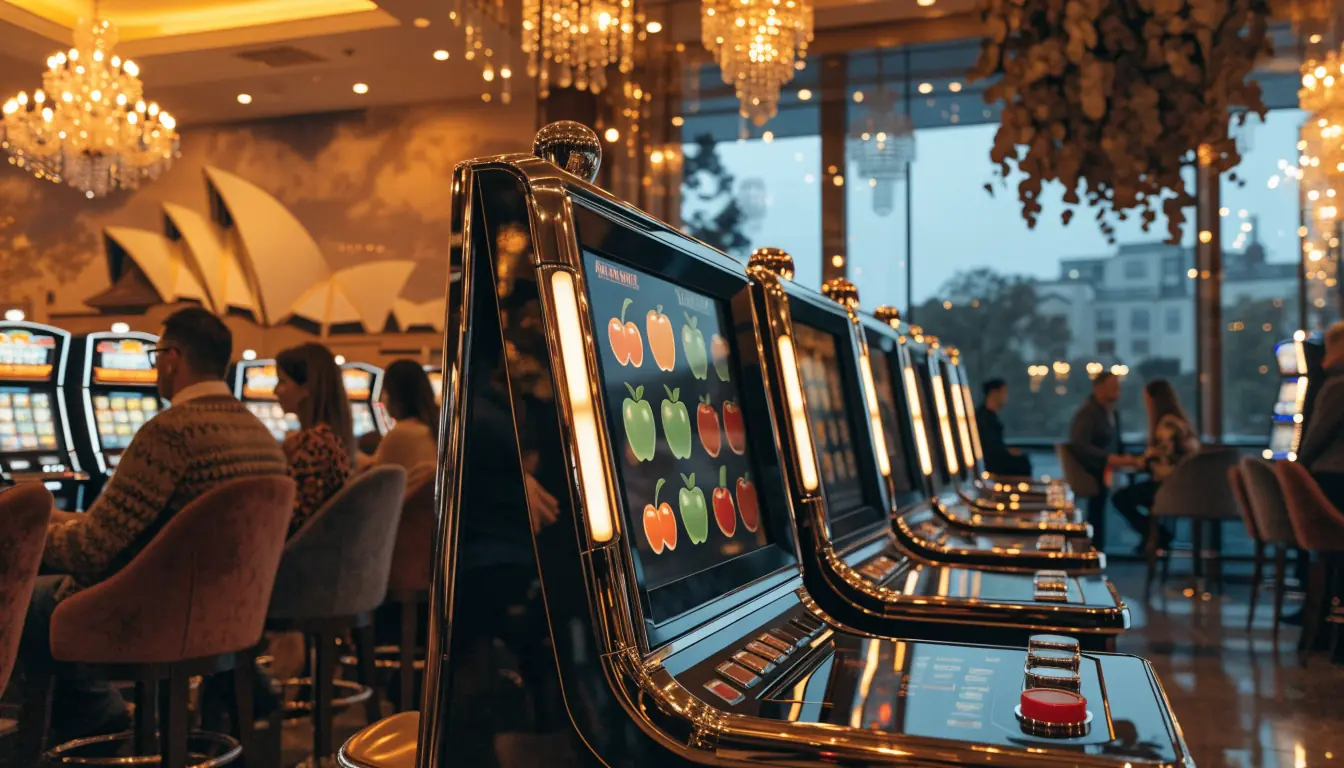
Traditional pokies accept cash with minimal record-keeping, which limits any after-the-fact review of who played, how much, and how the pattern of a session compares to normal use at that venue. Cashless and account-based pokies — sometimes referred to as transparent pokies — change that picture. Linking play to an account rather than to loose cash improves traceability, giving venues and regulators a data trail that shows spending over time instead of a single anonymous transaction at the machine.
That traceability has a direct bearing on harm monitoring, not just on anti-money-laundering oversight. Unusual redemption patterns compared to venue averages are flagged as a red flag indicator in compliance work, but the same data point also tells a harm-reduction story: a pattern that departs sharply from how other patrons at the same venue play is a signal worth examining, regardless of whether the underlying concern is financial crime or player welfare. Account-based systems make that comparison possible in the first place; cash-based play mostly does not.
Why the distinction from online slots matters
Nothing about pokies’ prevalence or harm profile transfers automatically to online slots, because the products are not interchangeable in law or in practice. Pokies are a fixture of licensed physical venues, subject to state and territory oversight; online casino slots are not licensed for the Australian market at all, and no such licence exists to check. Anyone searching for pokies statistics alongside terms like online gambling or real-money slot play should keep the two apart — the harm data cited for pokies describes venue-based electronic gaming machines, not any offshore online product.
The shift toward account-based systems suggests where oversight of pokies is heading: less reliance on cash anonymity, more reliance on data that lets a venue or regulator ask why one player’s redemption pattern doesn’t match the room. Whether that shift meaningfully reduces the harm already documented in places like NSW is a separate question — one the traceability improvements themselves don’t answer.
Real‑Money Slot Play: Taxation and Revenue Implications
Money staked on pokies and other real‑money slot play sits outside the personal income tax system on the player’s side of the ledger. Winnings are not taxed in Australia, regardless of size or frequency — the Australian Taxation Office treats gambling wins as a matter of chance rather than income, so no return has to account for a payout from a machine. That principle applies to any real‑money slot session, whether the machine sits in a licensed pub, a club, or a domestic casino floor. It does not extend a similar treatment to operators outside Australian jurisdiction, and it says nothing about the legality of where the play happens — a separate question covered elsewhere.
The absence of tax on winnings does not mean gambling is a marginal line item for public budgets. Gambling revenue accounted for 7.7% of state and territory taxation revenue in 2015‑16, a share collected not from players’ pockets directly but from operators and venues through licensing fees, machine levies, and taxes on gambling turnover. That structure explains why the financial stake in pokies runs in two directions at once: the individual player owes nothing on a win, while the machines themselves generate a taxation stream that state and territory governments have built into their budgets.
The arithmetic is worth stating plainly because it is often blurred in casual accounts of gambling and tax. Players keep what they win, without deduction. Governments collect from the supply side — the venues and machines — not from the payout. Any comparison between "how much tax slot winnings carry" and "how much gambling contributes to state revenue" is answering two different questions, and conflating them produces a distorted picture of who actually pays.

Cryptocurrency (Bitcoin) Gambling – Current Situation
Bitcoin gambling occupies a grey zone in Australian law rather than a defined category. The Interactive Gambling Act 2001 prohibits online casino games — including slots, poker, blackjack and roulette — for Australian residents regardless of the currency used to fund them. A bitcoin casino offering these products to an Australian player is offering something already banned; the payment method does not change the legal status of the game.
What does change is who the law targets. The Act reaches operators, not individual players, so an Australian using bitcoin to play at an offshore-licensed site is not committing an offence by doing so. The offshore operator, meanwhile, is not authorised to serve that market under any Australian licence — there is no domestic pathway to license a bitcoin casino, sports-betting-only licences being the exception that does not extend to casino-style games.
This creates a mismatch worth stating plainly: a site can market itself as a "bitcoin casino gambling" destination without holding any Australian authorisation, because none exists to hold. Claims of being "licensed" typically refer to a jurisdiction such as Malta or elsewhere offshore — a real licence, but not one that permits legal operation in Australia and not one a local player can verify against any Australian register, since no such public registry of casino operators exists here.
Where the market rules apply regardless of currency
The market’s advertising and compliance restrictions do not carve out an exception for crypto-funded platforms. Age verification, wagering-requirement disclosure, and identity checks before withdrawal are baseline expectations for any lawful gambling business operating in Australia — none of which a purely offshore bitcoin casino is bound to observe, and none of which a player can enforce from the outside.
One rule bites directly on the payment method itself: Australian-licensed gambling operators are barred from accepting digital currencies for deposits or betting. That prohibition is not a technicality — it is the line between a compliant local operator (sports betting, racing, lotteries) and the offshore casino segment that bitcoin gambling largely inhabits. Any site accepting bitcoin for casino-style play is, by definition, sitting outside the licensed local market.
What remains unverified
Beyond the legal framing, there is no verifiable data available on how many Australians gamble with bitcoin, what volumes move through these platforms, or how the practice compares to fiat-based offshore play. Public sources do not publish figures specific to this niche, and no regulator breaks out crypto-funded gambling as a separate reporting category. Anything beyond the legal position above would be speculation dressed as fact.
Litecoin and other altcoins raised in the same context fall under the identical analysis: the currency is incidental, the game category is what the law regulates, and none of it is licensed for Australian residents.
Ethereum‑Based Online Gambling – What’s Available
Ethereum occupies a similar position to Bitcoin in the Australian gambling conversation: frequently mentioned, rarely documented. No domestically licensed operator can accept it, since the Interactive Gambling Act 2001 prohibits online casino games for Australian residents regardless of the payment rail behind them, and deposits in digital currency are separately restricted under the same compliance framework that governs card payments. Offshore platforms that advertise Ethereum wallets, smart‑contract wagering, or "provably fair" outcomes sit outside any Australian regulator’s remit — not ACMA, not AUSTRAC, not the state gaming commissions.

That absence of oversight cuts both ways. Smart contracts are often marketed as removing the need to trust an operator, since payout logic is supposedly visible on‑chain. Whether any given site’s contract matches what it claims, or whether the randomness feeding it is verifiable in practice, is not something this market’s regulators test or certify. No public register exists to check against, because none is meant to include offshore crypto‑gambling sites in the first place.
Publicly available data on how many Australians use Ethereum for gambling, what volumes move through these platforms, or how they compare to fiat or Bitcoin alternatives is not published by any Australian authority. Where Bitcoin gambling already lacks verifiable local statistics, Ethereum’s footprint is smaller still and even less documented — a gap worth stating plainly rather than filling with estimates.
Online Casino Platforms in Australia
No operator can hold a domestic licence for online casino gambling. The Interactive Gambling Act 2001 prohibits offering online casino games — slots, roulette, blackjack — to Australian residents, and no application process exists to change that. Any platform advertising itself as an Australian-licensed online casino is misrepresenting its status, because that licence category does not exist.

What does exist, legally, is offshore-licensed operators accepting Australian players. The law does not criminalise the player for using them; it targets the operator. Regulators such as the Malta Gaming Authority and the UK Gambling Commission license some of these platforms, but that licence governs the operator’s home jurisdiction, not its conduct toward Australians — there is no Australian register to check it against, because none is published.
This gap matters beyond legality. Platforms operating outside any local compliance framework set their own standards for identity checks and transaction monitoring. Two indicators regulators flag as warning signs of illicit activity apply directly here: a customer having access to more cash than their profile would suggest, and deposits that grow in value and frequency without a clear explanation. On a domestically regulated product, such patterns trigger reporting obligations. On an offshore platform, whether they trigger anything at all depends entirely on that operator’s own policies — information rarely published and never verified by an Australian authority.
Sports betting and lottery products sit apart from this problem: both are licensed at state and territory level, with operators identifiable through their respective regulators.
Top Australian Casinos and How to Play Safely
Before diving into slots in 2026, it helps to know how each site stacks up on licensing, welcome offers, and deposit requirements so you can pick a match for your budget and preferences.
License: Curacao eGaming OGL/2024/923/0383 (Antillephone N.V.) · Bonus: up to A$2,000 + 100 free spins across 2 deposits · Min. deposit: A$30 Licensed under Curacao eGaming via Antillephone N.V., this site offers a welcome package worth up to A$2,000 plus 100 free spins spread across two deposits, with a low A$30 minimum deposit.
License: Curacao Gaming Authority (Jumpman Gaming Ltd) · Bonus: up to A$6,600 + up to 250 free spins across 4 deposits Operated by Jumpman Gaming Ltd under a Curacao Gaming Authority license, it stands out with a sizeable welcome bonus of up to A$6,600 and as many as 250 free spins spread over four deposits.
License: Curacao · Bonus: up to A$2,000 Holding a Curacao license, this casino keeps things simple with a welcome bonus of up to A$2,000.
License: Curacao eGaming (Hollycorn N.V., since 2017) · Bonus: 225% up to A$1,540 + 600 free spins across 4 deposits, 20x wagering · Min. deposit: A$20-30 (depends on the offer) Run by Hollycorn N.V. since 2017 under a Curacao eGaming license, it offers a 225% bonus up to A$1,540 plus 600 free spins across four deposits, with a 20x wagering requirement and a modest minimum deposit of A$20-30 depending on the offer.
License: Curacao eGaming (Dama N.V.) · Bonus: up to A$10,000 + 180 free spins, 40x wagering Licensed by Curacao eGaming under Dama N.V., this site features one of the larger bonus ceilings on the list at up to A$10,000 plus 180 free spins, subject to 40x wagering.
License: Tobique Gaming Commission · Bonus: up to A$8,000 + 400 free spins across 4 deposits · Payout speed: crypto ~10-15 minutes, fiat 1-5 days · Min. deposit: A$30 Licensed by the Tobique Gaming Commission, it combines a welcome bonus of up to A$8,000 with 400 free spins across four deposits, fast crypto payouts of around 10-15 minutes, fiat withdrawals within 1-5 days, and a A$30 minimum deposit.
License: Curacao, operated by Dama N.V. · Bonus: 325% up to 5.25 BTC + 250 free spins across 4 deposits Operated by Dama N.V. under a Curacao license, this casino appeals to crypto players with a 325% bonus up to 5.25 BTC plus 250 free spins across four deposits.
License: Curacao (operating since 2017) · Bonus: 250% up to A$2,000 + 50 free spins on the first of six deposits · Min. deposit: A$20 Curacao-licensed and operating since 2017, it offers a 250% bonus up to A$2,000 with 50 free spins on the first of six deposits, and a low A$20 minimum deposit.
Bonus: 240% up to A$4,100 + 300 free spins This casino offers a 240% bonus up to A$4,100 along with 300 free spins for new players.
License: Curacao · Bonus: up to A$10,000 multi-stage + 500 free spins · Min. deposit: A$20 (POLi) Licensed in Curacao, it provides a multi-stage bonus reaching up to A$10,000 plus 500 free spins, with a low A$20 minimum deposit available via POLi.
No domestically licensed online casino exists in Australia, and no public registry lists approved operators. The Interactive Gambling Act 2001 prohibits any company from offering online casino games, including slots, roulette, blackjack, and poker, to Australian residents. That leaves nothing to rank: any list of "top Australian casinos" describes offshore operators outside Australian jurisdiction, not licensed local businesses. Naming specific sites here would misrepresent their legal standing.
What can be checked before playing is the legal position, not a licence number. Playing at an offshore-licensed site is not an offence for the individual — the law targets the operator, not the person placing a bet. That distinction matters more than any comparison table, because it means the usual advice to "check the licence" has no local equivalent to check against.
What actually reduces risk
- Confirm the site does not accept credit cards or digital currencies for deposits — a site that does is not following the deposit rules that apply where oversight exists.
- Look for wagering requirements disclosed before any bonus is accepted, not after.
- Expect identity verification before a first withdrawal; its absence is a warning sign, not a convenience.
- Treat any operator advertising through social media or paying referral commissions as operating outside the restrictions written for this market.
- Registration with BetStop remains available regardless of where a site is based, and Gambling Help Online provides support independent of any operator’s location.
None of this substitutes for a licence that, for online casino play, does not exist in Australia.