
Golden Pokies Casino Australia: Rules, Risks and Bonuses
What Are Pokies and How They Shape Australia’s Gambling Market
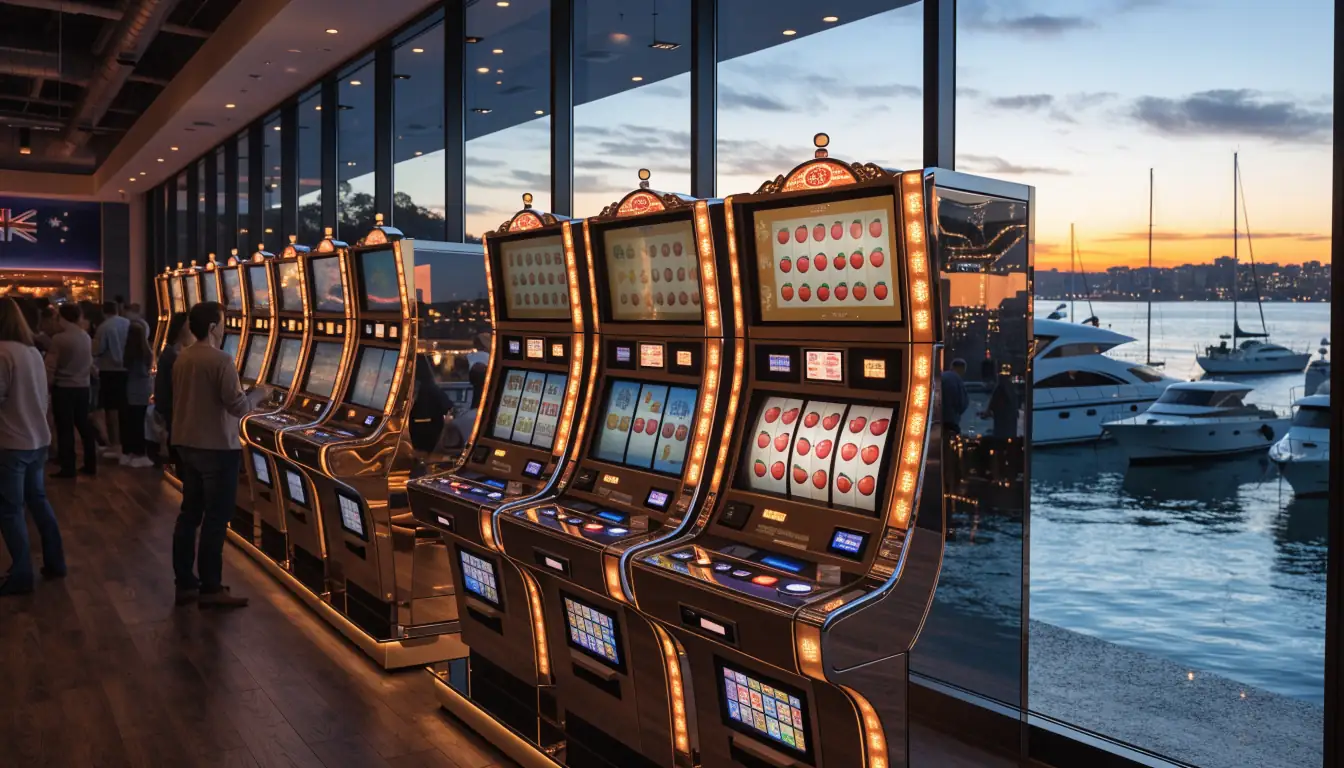
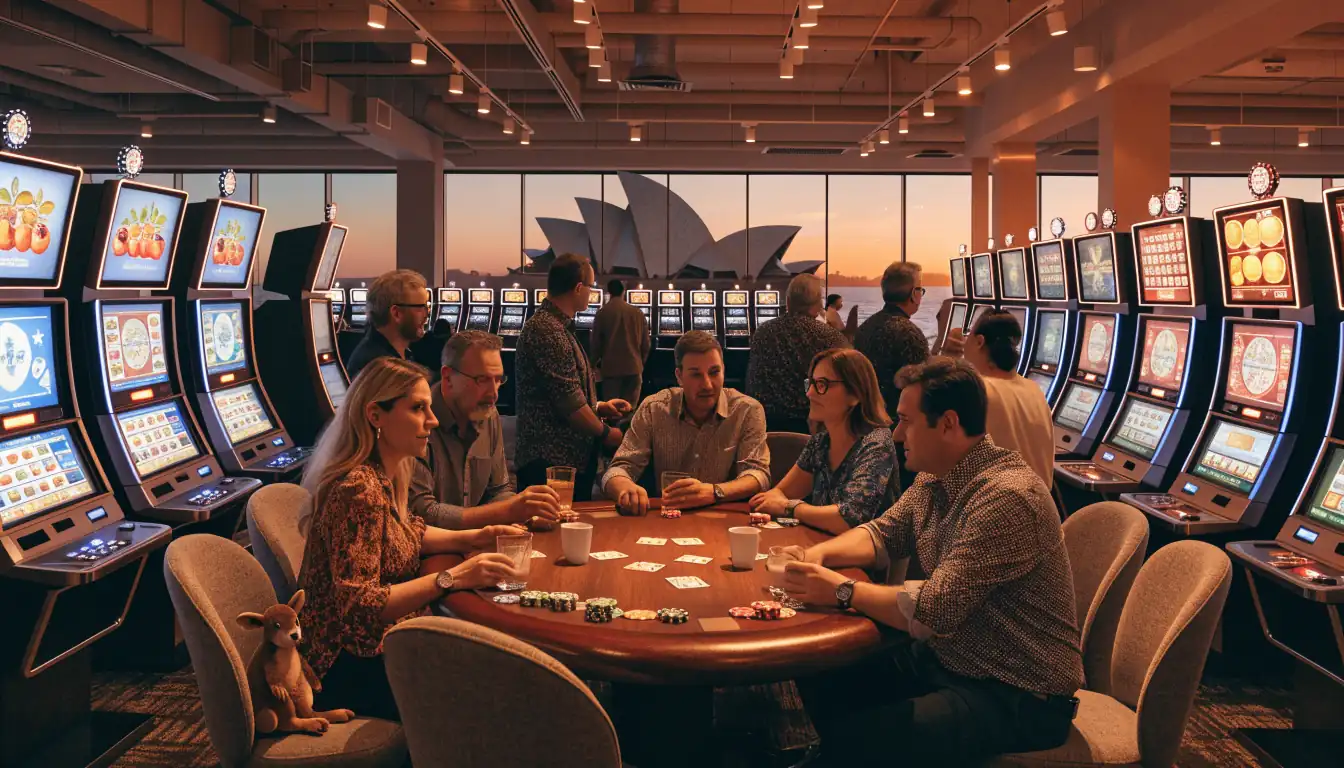
Pokies is the term Australians use for electronic gaming machines — the row of cabinets with spinning reels or video screens that sit in the corner of nearly every pub and club in the country. The name is local shorthand; internationally the same devices are called slot machines. In regulatory documents they appear as EGMs, and both terms describe the same machine: a device that accepts cash or credit, runs a randomised game, and pays out according to a fixed return structure set by the manufacturer.
Pokies are operated in every Australian state, in the Australian Capital Territory and in the Northern Territory. There is no jurisdiction where they are absent. What differs from one place to another is not whether pokies exist, but who is allowed to host them, how many machines a venue can run, and which body enforces the rules — a regulatory patchwork rather than a single national system.
A machine with no single owner and no single rulebook
Unlike a casino table game, which is almost always confined to a licensed casino floor, a pokie can sit in a suburban pub, a bowls club, an RSL, or a dedicated casino resort. That spread across venue types is what makes the machine so embedded in everyday Australian life, and also what makes it hard to regulate as a single category. A pub pokie in Queensland answers to the Office of Liquor and Gaming Regulation. A club machine in the ACT falls under the ACT Gambling and Racing Commission. A casino floor in New South Wales answers to state gaming law and, since recent amendments to the Casino Control Act 1992, to significantly harsher financial penalties for compliance failures than a suburban club would ever face.
Before signing up at any casino, it pays to check how it’s licensed, what its welcome offer actually requires, and how much you need to deposit to get started – the basics below cover exactly that for each option on this page.
License: Curacao eGaming OGL/2024/923/0383 (Antillephone N.V.) · Bonus: up to A$2,000 + 100 free spins across 2 deposits · Min. deposit: A$30 Licensed under Curacao eGaming, this operator offers a welcome bonus of up to A$2,000 plus 100 free spins spread across two deposits, with a relatively low A$30 minimum deposit.
License: Curacao Gaming Authority (Jumpman Gaming Ltd) · Bonus: up to A$6,600 + up to 250 free spins across 4 deposits Operated by Jumpman Gaming under a Curacao Gaming Authority license, it stands out for a large welcome package of up to A$6,600 plus up to 250 free spins spread across four deposits.
License: Curacao · Bonus: up to A$2,000 Curacao-licensed, this casino offers a straightforward welcome bonus of up to A$2,000 for new players.
License: Curacao eGaming (Hollycorn N.V., since 2017) · Bonus: 225% up to A$1,540 + 600 free spins across 4 deposits, 20x wagering · Min. deposit: A$20-30 (depends on the offer) Backed by Hollycorn N.V. and licensed under Curacao eGaming since 2017, it offers a 225% bonus up to A$1,540 plus 600 free spins across four deposits, with 20x wagering and a low minimum deposit of A$20-30.
License: Curacao eGaming (Dama N.V.) · Bonus: up to A$10,000 + 180 free spins, 40x wagering Licensed by Curacao eGaming through Dama N.V., it features a substantial welcome offer of up to A$10,000 plus 180 free spins, carrying a 40x wagering requirement.
License: Tobique Gaming Commission · Bonus: up to A$8,000 + 400 free spins across 4 deposits · Payout speed: crypto ~10-15 minutes, fiat 1-5 days · Min. deposit: A$30 Licensed by the Tobique Gaming Commission, this casino combines a welcome bonus of up to A$8,000 plus 400 free spins across four deposits with fast crypto payouts of around 10-15 minutes and a A$30 minimum deposit.
License: Curacao, operated by Dama N.V. · Bonus: 325% up to 5.25 BTC + 250 free spins across 4 deposits Operated by Dama N.V. under a Curacao license, it offers a crypto-focused welcome package of 325% up to 5.25 BTC plus 250 free spins across four deposits.
License: Curacao (operating since 2017) · Bonus: 250% up to A$2,000 + 50 free spins on the first of six deposits · Min. deposit: A$20 Curacao-licensed and operating since 2017, it provides a 250% bonus up to A$2,000 plus 50 free spins on the first of six deposits, with an accessible A$20 minimum deposit.
Bonus: 240% up to A$4,100 + 300 free spins This casino offers a welcome bonus of 240% up to A$4,100 plus 300 free spins for new players.
License: Curacao · Bonus: up to A$10,000 multi-stage + 500 free spins · Min. deposit: A$20 (POLi) Licensed in Curacao, it features a multi-stage welcome bonus of up to A$10,000 plus 500 free spins, with a low A$20 minimum deposit via POLi.
This state-by-state structure means there is no single "Australian pokies licence." A venue’s obligations — machine caps, reporting lines, technical standards — are set by whichever state or territory regulator has jurisdiction over that address. Anyone trying to describe "the rules for pokies in Australia" as one coherent code is describing something that does not exist; it is eight or nine overlapping sets of rules that happen to regulate the same kind of machine.
Scale: what the numbers actually say
The scale of pokies in Australia is where the category stops being anecdotal and starts being a measurable slice of the national economy.
In the financial year 2020–2021, Australians placed bets worth almost AUD 150 billion on electronic gaming machines. That is turnover — the total value of money cycled through the machines, not money lost. Turnover on a pokie is high by design: a single dollar can be bet, lost, won back, and rebet dozens of times within a session, so the headline figure includes money that changed hands multiple times over, not just fresh money staked once.
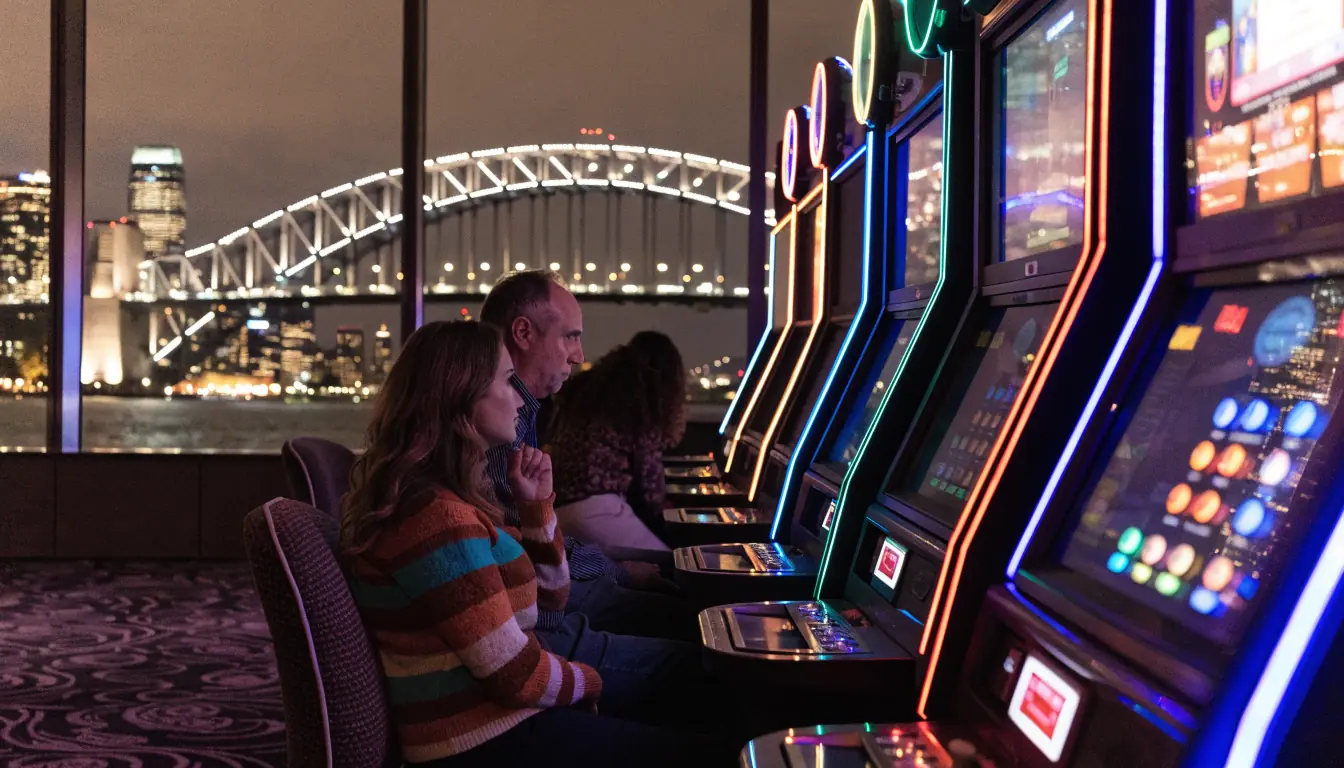
The number that matters more for understanding actual harm is player loss — what stayed with the machines rather than returning to players. In the same financial year, total player loss from electronic gaming machines was about AUD 12 billion. Spread across the national population, that works out to AUD 608 in per-capita losses for the year — a figure that includes people who never touched a machine, which says something about how concentrated the losses actually are among those who do play regularly.
A more recent figure, reported for 2023, puts pokies turnover at AUD 191.2 billion for that year. That number comes from a single source — complyadvantage.com — and should be read as one publisher’s reported figure for a specific year, not as a confirmed trend line or an official regulator statistic. It is not clear from that source alone whether the increase over the 2020–2021 figure reflects genuine growth, a different measurement method, or simply a different year in a volatile market. Treat it as a data point, not as evidence of a pattern.
Player losses from pokies amount to about AUD 12 billion annually, equating to roughly AUD 608 per capita, highlighting a significant financial risk for gamblers.
How big a share of the world’s machines is genuinely unclear
One claim repeated across pokies commentary is Australia’s share of the world’s pub and club poker machines. Here the sources disagree sharply, and the disagreement is worth stating plainly rather than picking a side. One figure puts Australia’s share at 3% of the world’s pub and club poker machines. Another puts it at around 18%. These are not close enough to be a rounding difference — one estimate is roughly six times the other. It is not possible from the material at hand to say which is correct, or whether they are counting different things (all EGMs worldwide versus a narrower pub-and-club category, for instance). What can be said with confidence is that Australia’s pokies footprint is large enough, relative to its population, that both figures get repeated as if self-evident — and that a reader should treat either one with some caution until a single authoritative count is available.

Why pokies sit at the centre of Australia’s gambling economy
Three things make pokies structurally different from other forms of gambling on the Australian market, and worth separating clearly:
- Distribution. Pokies are not confined to casinos. They are placed inside pubs and clubs — venues built around food, drink and socialising — which puts the machines in front of people who did not necessarily walk in intending to gamble.
- Volume of play. The turnover figures above are only possible because a pokie session involves rapid, repeated small bets rather than the occasional large wager typical of, say, a night at a card table. This is also the mechanic that later sections on money-laundering risk return to: high transaction volume paired with limited visibility into where the cash came from.
- Cash intensity. Traditional pokies run on coins, notes and cash-out tickets rather than traced electronic payments. That cash-heavy design is central to why pokies, more than most other gambling products, attract regulatory attention around traceability — a point this section flags without developing, since the mechanics of that risk belong to the next part of this discussion.
Pubs, clubs and casinos: three different environments, one machine
The same pokie cabinet behaves differently depending on where it is installed, not in its mechanics but in its social and regulatory context.
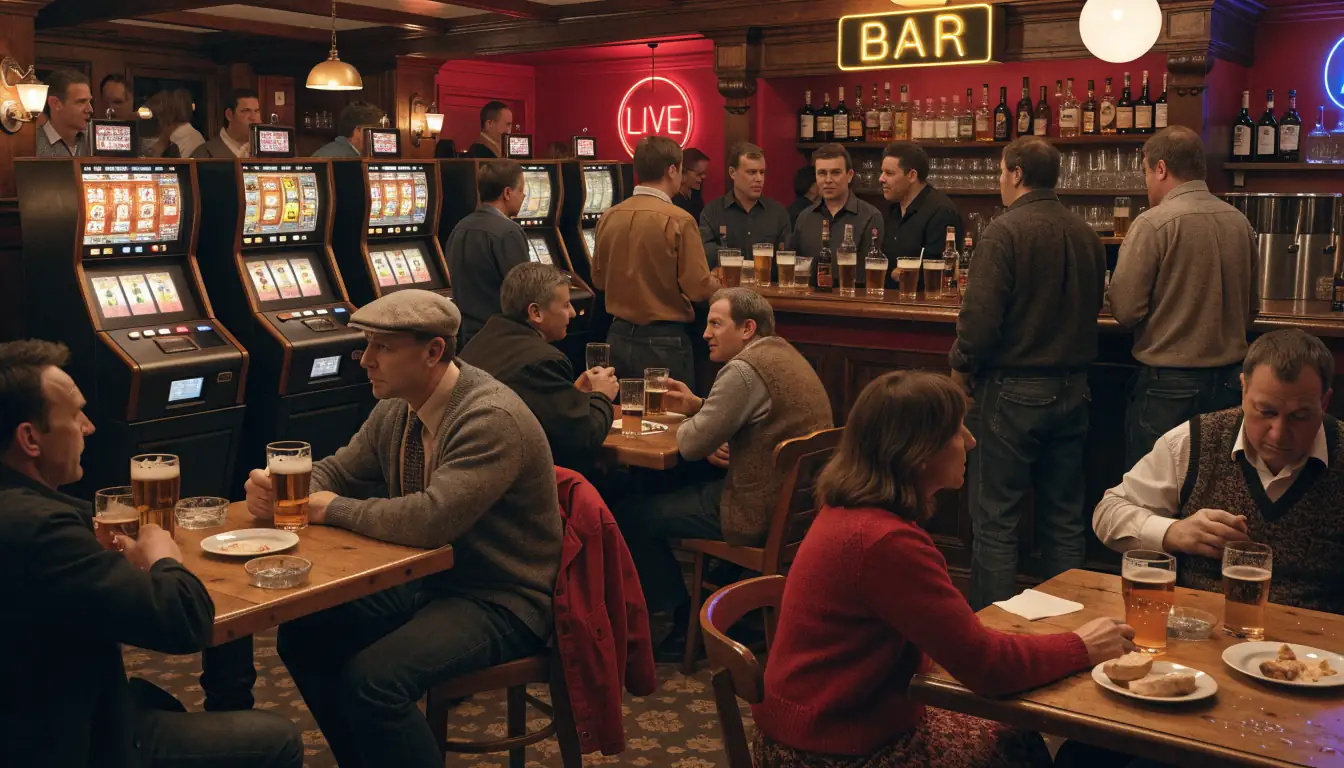
Pubs. A pub pokie sits alongside a bar, often visible from the street, and is typically capped in number by state licensing conditions tied to the venue’s liquor licence. Turnover here tends to come from casual, repeat local visits rather than planned gambling trips.
Clubs. Clubs — RSLs, bowls clubs, leagues clubs — have historically hosted larger pokie fleets than pubs, often justified by the community and welfare funding those clubs channel back from gaming revenue. This is the venue type most associated with the high aggregate turnover figures cited above, simply because of machine density.
Casinos. Casino pokies operate under a different, generally stricter regulatory regime, including surveillance and reporting obligations that go beyond what a suburban club faces. The financial penalty regime under the amended Casino Control Act 1992 in New South Wales — fines of up to AUD 100 million for compliance failures — illustrates how much heavier the compliance burden is at the casino end of the market compared with a corner pub.
Pokies in pubs are limited by liquor licence conditions and generate turnover from casual, repeat local visits.
Clubs host larger fleets of pokies, often funding community projects with the gaming revenue.
Casino pokies operate under stricter surveillance and reporting obligations, with higher compliance penalties.
None of this changes what the machine itself is. It changes who is watching it, how closely, and what happens when something looks wrong.
The traceability problem, in outline
Pokies are widely used across Australian pubs, clubs and casinos, and that ubiquity is precisely what makes the category significant to describe on its own terms before moving to narrower questions like online availability or money-laundering exposure. But it is worth flagging here, at a purely structural level, why pokies attract more regulatory scrutiny than most other gambling products: the high volume of cash transactions and limited traceability of pokies make them attractive for exploitation beyond ordinary play. This section does not attempt to detail how that exploitation works — that belongs to the dedicated discussion of money-laundering risk later in this material — but it matters as context for why the machine that seems like simple entertainment on a pub floor is treated by regulators as something requiring active monitoring.

In practical terms, the cash-based design of many pokies means a transaction can begin and end without any identity check at all, unless the venue’s own systems or a regulator’s reporting threshold intervene. Contrast that with a cashless, account-based pokie, where every deposit, spin outcome and withdrawal is logged against a registered account. The difference between those two machine types — cash-fed versus account-based — is not cosmetic. It is the difference between a transaction that leaves a full record and one that leaves almost none, and it explains why regulators have pushed cashless systems as one part of a broader compliance response. Adoption of cashless, account-based pokies is reported — notably by facctum.com — to improve traceability and reduce anonymity, though this again is a claim tied to one publisher’s framing rather than an established market-wide standard. The direction of travel, however, is consistent with what regulators themselves recommend: tighter customer due diligence, ongoing transaction monitoring, and a shift toward cashless gaming systems generally.
Cash risk
The cash‑intensive design of many pokies allows transactions to occur without identity verification, creating a major money‑laundering vulnerability.
Regulation: state-based, uneven, and still catching up
Because pokies are licensed and supervised at the state and territory level, the regulatory framework around them is not one system but several running in parallel. A machine’s operating hours, maximum bet size, and reporting obligations are set locally. What is consistent nationally is the broader anti-money-laundering architecture that overlays the machine-specific rules — AUSTRAC’s federal role, the reporting thresholds tied to machine fleet size, and the identification obligations that apply once a venue crosses a certain number of machines. Those obligations are detailed in the section on money-laundering risk rather than here, but their existence is part of what shapes the modern pokies market: a machine that in the 1980s might have been a simple mechanical device with a coin slot is now, in most Australian jurisdictions, connected to systems designed to flag exactly the kind of cash pattern that concerns regulators — large or repeated cash insertions followed by minimal play and an immediate cash-out, frequent small redemptions spread across venues in a short window, or a customer who refuses identification or shuffles between multiple player cards.
None of these red flags are exotic edge cases dreamed up by compliance departments. They are the direct consequence of the machine’s original design: accept cash, run a randomised outcome, pay out. A design built for straightforward entertainment turns out, at scale and without oversight, to also be a design that can obscure where money came from — which is precisely why the regulatory apparatus around pokies has grown heavier even as the machines themselves have changed relatively little in basic function.
What this means for the market as a whole
Pulling the picture together: pokies are not a niche gambling product in Australia. They are present in every state and territory, they generate turnover in the tens of billions annually, and player losses run into the billions in the same period — figures large enough that per-capita loss becomes a meaningful national statistic rather than a rounding error. They are distributed across three distinct venue types — pubs, clubs and casinos — each operating under somewhat different rules but the same underlying machine. And their cash-handling design, which made them simple and popular for decades, is now the same feature drawing sustained regulatory attention, from state gaming authorities down to federal AML oversight.
That combination — huge scale, uneven state-based regulation, and a cash-intensive design now under active reform — is the backdrop against which every other question about pokies in Australia has to be read. It is also the reason the picture cannot stop at "how the machines work" without going on to ask what happens when that same machine is accessed online, and what happens when its cash-handling design is put under a compliance microscope. Both of those questions are addressed separately in what follows.
Online Pokies in Australia: Legal Landscape and Player Options
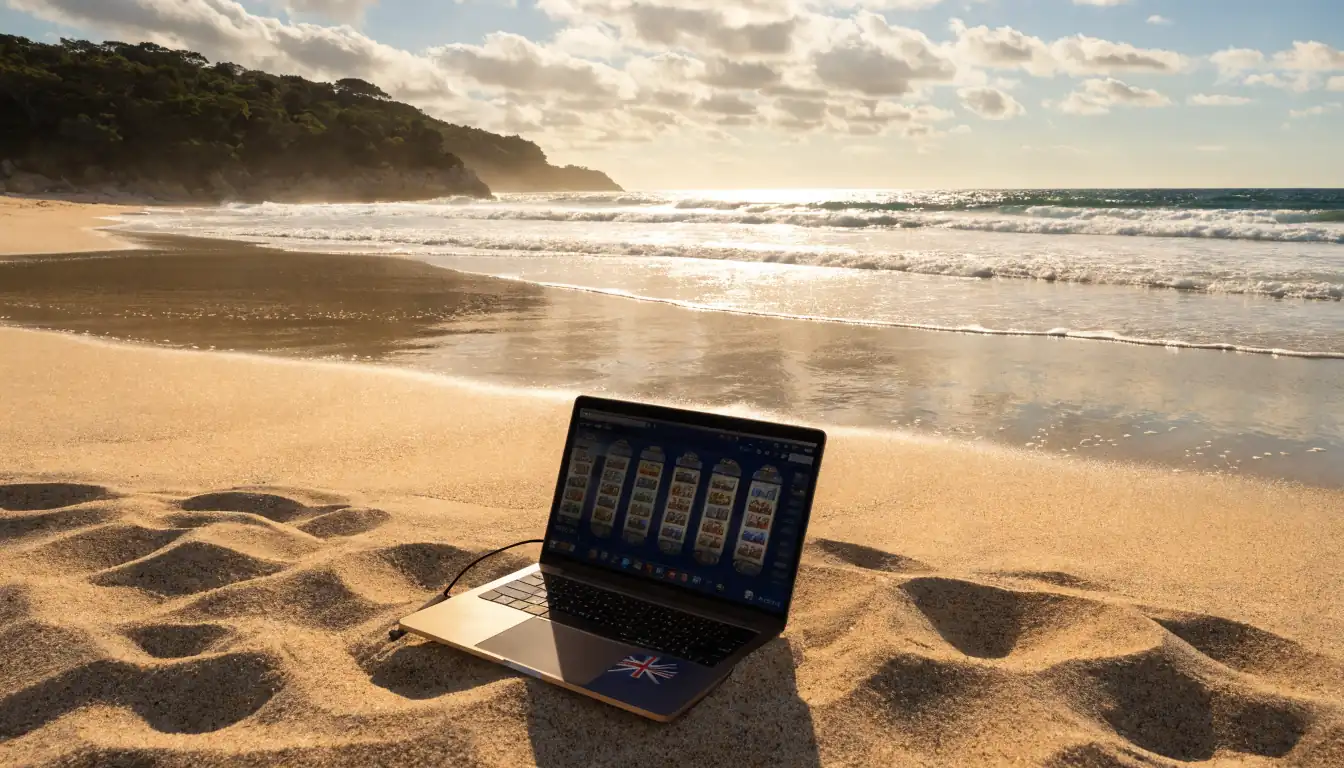
The Interactive Gambling Act 2001 draws a hard line around online pokies. It makes it an offence for an operator to offer real-money online gambling to Australian residents, which covers online slots, poker, blackjack, and roulette regardless of where the operator is based. No domestic licence for online casino-style pokies exists, and none can be issued — the prohibition sits at the operator level, not at the player level. Searches for brand names like Golden Crown, Golden Century, Golden Strike, Golden Goddess, Golden Egypt, or Golden Jaguar online pokies mostly lead to offshore-licensed sites, since no equivalent product operates under an Australian licence.
This creates a split regulatory picture. Sports betting and racing wagers are licensed at state and territory level, with operators supervised by bodies such as the Office of Liquor and Gaming Regulation or the ACT Gambling and Racing Commission. Online pokies fall outside that licensed structure entirely. There is no public register of approved online pokies operators to check against, because the licence category itself does not exist domestically.
What this means for players
Playing an online pokie through an offshore site is not illegal for the individual — the Act targets the operator, not the person placing a bet. That distinction matters for anyone weighing up brands marketed under names like Golden Jungle or similar themed slots: the legal risk sits with whoever is offering the game to Australian residents, not with the person who deposits.
Practically, this leaves players without the consumer protections that come with a domestic licence — no local dispute resolution body, no Australian regulator to escalate a complaint to, and no guarantee that identity verification, deposit limits, or complaint handling meet Australian standards. Any operator claiming an Australian licence for online casino products is misrepresenting its status, since that licence type is not issued here.
One point works in the player’s favour regardless of where a pokie is hosted: winnings from gambling are not taxed in Australia. Tax settles on the operator’s side of the ledger, not the player’s, and the rules governing that side vary by state and by the type of gambling service on offer — a sports betting operator and a pokies venue are not taxed under the same regime.
Offshore online pokies operators are outside AUSTRAC’s registration regime, meaning they are not subject to Australian AML compliance requirements.
Compliance obligations that follow operators, not players
Where an operator does run pokies within Australian regulatory reach — physical venues rather than offshore online platforms — obligations scale with the size of the operation. An operator running up to 15 pokies must register with AUSTRAC, keep identification records on players, and submit suspicious matter reports when activity warrants it. These are baseline duties, not optional best practice, and they apply irrespective of whether the venue is a pub, a club, or a licensed casino floor.
Failure to meet these obligations does not stay a private matter between operator and regulator. Non-compliant operators face remedial directions, infringement notices, and civil fines, on top of the reputational damage that follows once enforcement action becomes public. None of this framework extends to offshore online pokies operators, which sit outside AUSTRAC’s domestic registration regime entirely — a further reason the online and land-based segments of the market are regulated as two separate systems rather than one continuous one.
The practical takeaway for anyone searching out golden-themed online pokies is straightforward: the legal landscape does not offer a licensed local alternative, the offshore market carries fewer enforceable protections, and the tax treatment of any winnings remains the one constant regardless of where the game is hosted.


Real‑Money Pokies and Money‑Laundering Risks
Themed titles change with every promotional cycle — Golden Century, Golden Goddess, Golden Egypt, Golden Jaguar, Golden Jungle, Golden Wolves — but the mechanism that attracts money launderers has nothing to do with theme and everything to do with cash volume and weak traceability. High turnover, repeated small transactions and limited identity checks make real-money pokies a convenient laundering channel regardless of which branded machine is used, and this is true whether the fleet sits in a pub, a club or a licensed casino.
According to complyadvantage.com, criminal networks recruit money mules specifically to move illicit funds through pokies. The pattern is straightforward: a mule feeds cash into a machine, plays a minimal amount, then cashes out — converting dirty money into a receipt that looks like ordinary gambling winnings. A variation involves buying winning tickets directly from other players, which achieves the same result without the mule ever touching the machine.
What AUSTRAC’s 2024 guidance flags
AUSTRAC issued a guide in 2024 to help operators and staff recognise money-laundering red flags at the machine level. The indicators named include:
- Unusually high cash access relative to a customer’s known profile.
- Large deposits with no clear relationship to disclosed income.
- Cash transfers structured to avoid a single large, reportable transaction.
- Casino disbursement checks that don’t match recorded play.
- Certain occupations flagged as higher-risk for cash-intensive laundering.
None of these indicators depend on the game’s name or its provider — they describe cash behaviour, not gameplay.
Structuring and low-play cash-outs
A common tactic is spreading smaller cash deposits across different venues to stay under reporting thresholds — structuring, in AUSTRAC’s terms. Large or repeated cash insertions followed by almost no play and an immediate cash-out is a textbook red flag, as are frequent small redemptions across multiple venues within a short window. A customer who refuses identification, or who uses several player cards, adds to that picture rather than settling it.
Obligations that scale with fleet size
Compliance requirements are tied to how many machines an operator runs, not to which games sit on the floor. Operators running more than 15 pokies carry a heavier load: they must appoint a compliance officer, run risk assessments, maintain an AML/CFT program, perform customer due diligence, and report any cash transaction above AUD 10,000. None of this is optional paperwork — it is the operating cost of holding a larger fleet, and it applies identically whether the machines are branded Golden Jungle, Golden Wolves or anything else.
Main conclusion
Pokies dominate Australia’s gambling market, generate billions in turnover, and their cash‑based nature drives stringent regulatory scrutiny.
For a player, the practical takeaway is narrower than it looks: real-money pokies played through legitimate, regulated cash channels carry the same scrutiny regardless of theme or provider. Anything promising real-money play through an unregulated offshore site sits outside this entire framework — no compliance officer, no reporting threshold, no AUSTRAC oversight reaches it, which is a different risk from money laundering but not a smaller one.
Bonus Codes and Deposit Incentives for Pokies Players
Search interest in terms like a golden pokies no deposit bonus code or a sign-up offer reflects a broader pattern: bonus codes are a marketing tool, not a feature specific to any single brand, and their structure follows the same logic across the industry regardless of the name attached to them.
A deposit bonus typically matches or adds to funds a player puts in; a no-deposit code credits free chips or spins without a prior payment. Both come attached to wagering requirements — conditions specifying how many times the bonus (or bonus plus deposit) must be played through before any winnings can be withdrawn. None of this is optional detail. It is the arithmetic that determines whether an offer has any value at all, and it has to be disclosed before a player accepts the bonus, not after.
For the Australian market specifically, this disclosure obligation sits inside a legal structure that already prohibits online casino-style pokies for residents under the Interactive Gambling Act 2001. No bonus code changes that framework. An offer that appears to originate from a locally licensed online casino should be read against that fact rather than taken at face value.
Where cash-based incentive structures intersect with compliance, the direction of travel is toward tighter controls rather than looser ones. The 2022 NSW Islington Report recommended making all NSW pokies cashless by the end of 2028 — a proposal, not yet a universal rule, but one that signals where venue-based bonus and payout mechanics are heading. Separately, an amendment to the Casino Control Act 1992 allows NSW casino operators to be fined up to AUD 100 million for compliance failures, a figure that puts the cost of ignoring disclosure and identification obligations in concrete terms.
Any offer worth considering states its wagering requirement, expiry, and eligible games upfront, alongside responsible-gambling messaging rather than as a footnote. Where that information is missing, the absence is itself the answer.
Is online gambling legal in Australia?
The Interactive Gambling Act (2001) makes it an offence for online operators to offer real-money gambling to Australian residents, while gamblers’ winnings themselves are not taxed.
Can I play crypto casino games on my mobile device?
Crypto casino games and mobile device compatibility are not discussed in the provided facts.
How can I manage deposits and withdrawals responsibly?
Adopting cashless, account-based pokies improves traceability of deposits, gameplay, and withdrawals, reducing anonymity compared to traditional cash machines.
What is the technical infrastructure of modern casino platforms?
Modern pokies infrastructure increasingly favours transparent, account-based systems that provide full traceability of deposits and gameplay, as recommended by regulators to combat money laundering.