
New PayID Pokies Australia 2026: How the Machines Work
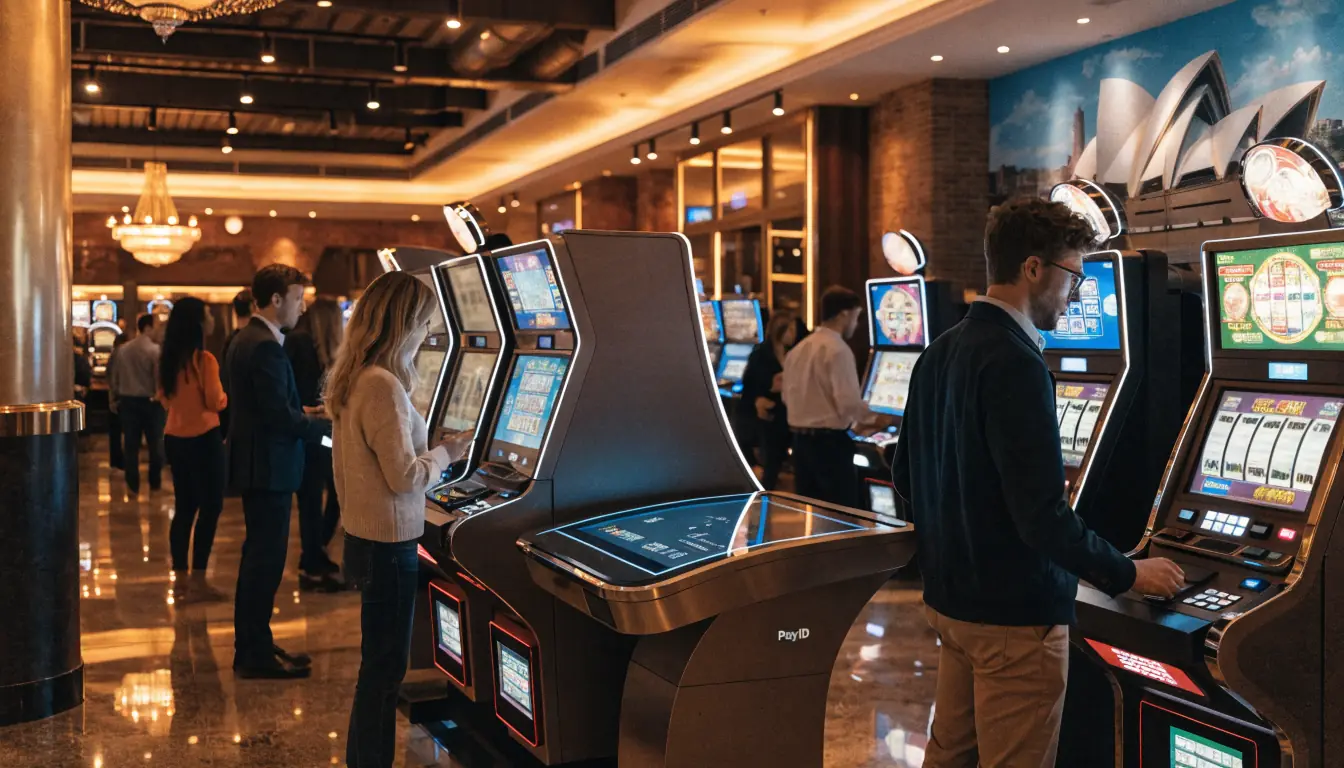
Table of Contents
Understanding Pokies (Electronic Gaming Machines) in Australia
Pokies — the Australian term for electronic gaming machines (EGMs) — sit in pubs, clubs, and casinos across the country in numbers that outweigh almost anywhere else on earth. Before asking what a new payid pokies Australia 2026 offer actually looks like, it’s worth setting out what the machines behind that offer represent: how much money moves through them, who regulates that movement, and where the money-laundering risk sits inside a cash-heavy, low-traceability product.
The scale of the market
The numbers involved are large enough that they’re worth stating plainly rather than rounding into vagueness. In FY 2020‑2021, Australians bet almost AUD$150 billion on electronic gaming machines. Player losses on that turnover came to AUD$12 billion — the gap between what goes in and what comes back out, which is the actual cost to players rather than the headline betting figure. Spread across the population, that loss worked out to AUD$608 per capita for the year, a figure that includes people who never touched a machine, which says something about how concentrated the losses are among those who do.
With new PayID pokies sites launching all the time in Australia, it helps to check licensing, deposit requirements, and welcome offers before deciding where to play in 2026.
License: Curacao eGaming OGL/2024/923/0383 (Antillephone N.V.) · Bonus: up to A$2,000 + 100 free spins across 2 deposits · Min. deposit: A$30 Licensed under Curacao eGaming via Antillephone N.V., this operator offers a two-deposit welcome package combining bonus cash and free spins, with a modest minimum deposit requirement.
License: Curacao Gaming Authority (Jumpman Gaming Ltd) · Bonus: up to A$6,600 + up to 250 free spins across 4 deposits Operated by Jumpman Gaming Ltd under a Curacao Gaming Authority license, it stands out for a sizeable four-deposit welcome bundle pairing bonus funds with a generous batch of free spins.
License: Curacao · Bonus: up to A$2,000 A Curacao-licensed casino offering a straightforward welcome bonus, suited to players who prefer a simple entry offer without added complexity.
License: Curacao eGaming (Hollycorn N.V., since 2017) · Bonus: 225% up to A$1,540 + 600 free spins across 4 deposits, 20x wagering · Min. deposit: A$20-30 (depends on the offer) Backed by Hollycorn N.V. and licensed since 2017 under Curacao eGaming, it provides an extended four-deposit bonus scheme with free spins and a clearly stated wagering requirement.
License: Curacao eGaming (Dama N.V.) · Bonus: up to A$10,000 + 180 free spins, 40x wagering Operated by Dama N.V. under a Curacao eGaming license, this casino offers one of the larger bonus ceilings on the list alongside free spins, subject to a defined wagering condition.
License: Tobique Gaming Commission · Bonus: up to A$8,000 + 400 free spins across 4 deposits · Payout speed: crypto ~10-15 minutes, fiat 1-5 days · Min. deposit: A$30 Licensed by the Tobique Gaming Commission, it offers a multi-deposit bonus with free spins and is notable for fast crypto payout processing alongside standard fiat withdrawal times.
License: Curacao, operated by Dama N.V. · Bonus: 325% up to 5.25 BTC + 250 free spins across 4 deposits Run by Dama N.V. under a Curacao license, this crypto-friendly casino features a high-value bonus denominated in BTC spread across multiple deposits, plus a solid free spins allowance.
License: Curacao (operating since 2017) · Bonus: 250% up to A$2,000 + 50 free spins on the first of six deposits · Min. deposit: A$20 Curacao-licensed and active since 2017, this casino spreads its welcome bonus across six deposits and pairs it with free spins on the first one, keeping the entry deposit low.
Bonus: 240% up to A$4,100 + 300 free spins This casino offers a substantial welcome bonus combined with a large batch of free spins, making it a straightforward option for bonus-focused players.
License: Curacao · Bonus: up to A$10,000 multi-stage + 500 free spins · Min. deposit: A$20 (POLi) Curacao-licensed with a multi-stage welcome bonus and a large free spins allocation, it also supports a low minimum deposit via POLi for easier entry.
Machine density explains part of why the loss figures run so high. Australia is home to 3% of the world’s pub and club poker machines, despite accounting for only 0.3% of the global population — a ratio of roughly ten to one between the country’s share of machines and its share of people. One source, complyadvantage.com, puts the country’s share of the world’s poker machines at around 18%, a figure worth flagging as a single data point rather than a settled industry benchmark, since estimates of global machine counts vary by source and by what’s counted as a "poker machine" versus a broader EGM category. What’s consistent across sources is the direction: Australia has far more machines per head than its population would predict.
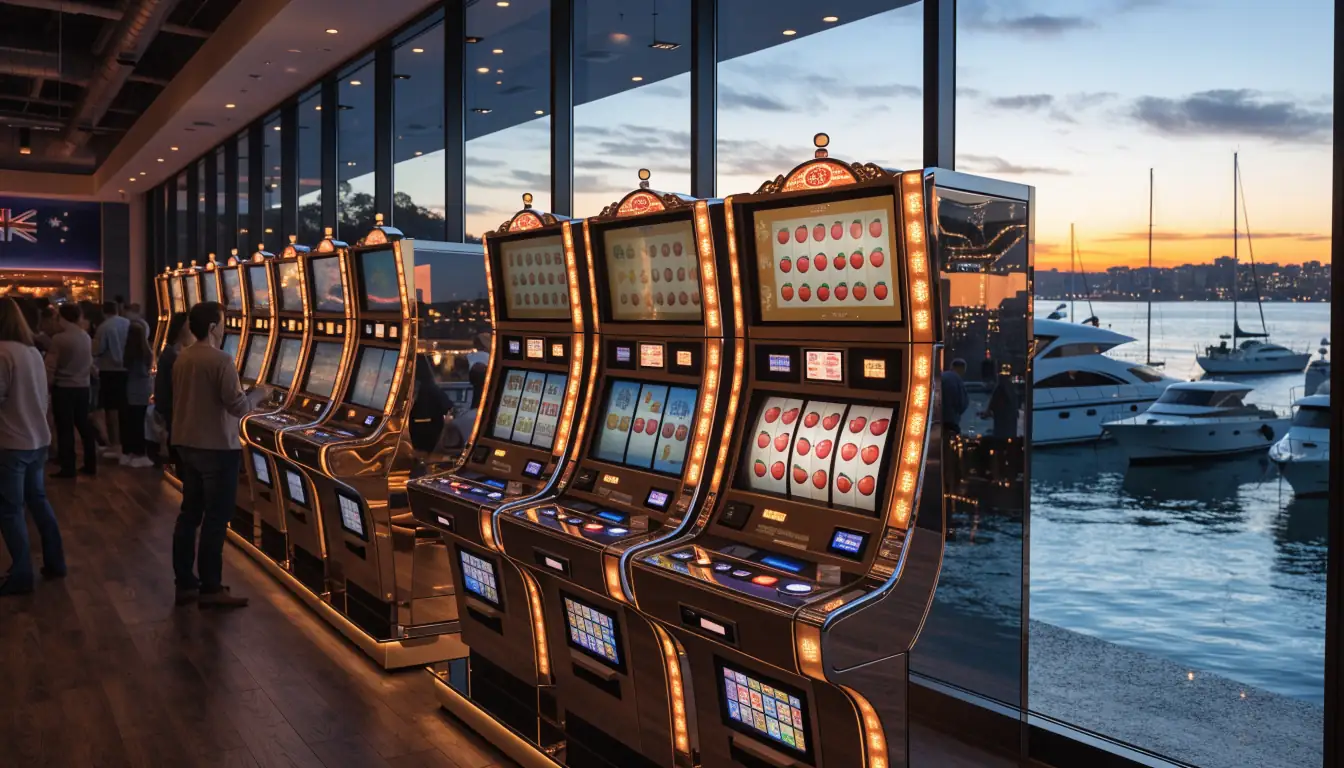
New South Wales carries a disproportionate share of that density. The state has approximately 95,800 pokies, more than any other Australian jurisdiction, spread through registered clubs and hotels rather than concentrated in casino floors. The financial return on that machine count is substantial at the venue level: NSW clubs earned $1.945 billion in net profit from pokies between December 2017 and May 2018, a five-month window that gives some sense of the ongoing cash generation these machines produce for venue operators, independent of what individual players win or lose on any given session.
At a national level, one source — again complyadvantage.com — reports that pokies generated $191.2 billion in Australian gambling turnover in 2023. That figure describes total amounts wagered and re-wagered through the machines, not net loss, and should be read as a single reported estimate rather than an official industry-wide statistic, since turnover figures depend heavily on methodology and the year measured.

An overview of pokies, slot types and deposit options covered across categories like minimum deposit…


Gambling’s contribution to public revenue gives context to why state governments have historically been slow to restrict machine numbers. In 2015‑16, gambling revenue accounted for 7.7% of state and territory taxation revenue — a meaningful share of the tax base that pokies, alongside other gambling products, helped generate. On the player side, there’s at least one point of relief in the ledger: gambling winnings are not taxed in Australia, so whatever a player takes off a machine is theirs in full, without a return trip to the tax office.
Where pokies sit in the regulatory landscape
The legal foundation for gambling regulation in Australia is the Interactive Gambling Act, passed on 28 June 2001. It governs interactive and online gambling at the Commonwealth level, while physical pokies in pubs and clubs are licensed and supervised separately, state by state and territory by territory. This split matters for anyone trying to work out what "new" actually means when a payid pokies product launches: land-based EGMs and online gambling products sit under different regulatory tracks, with different bodies overseeing each.
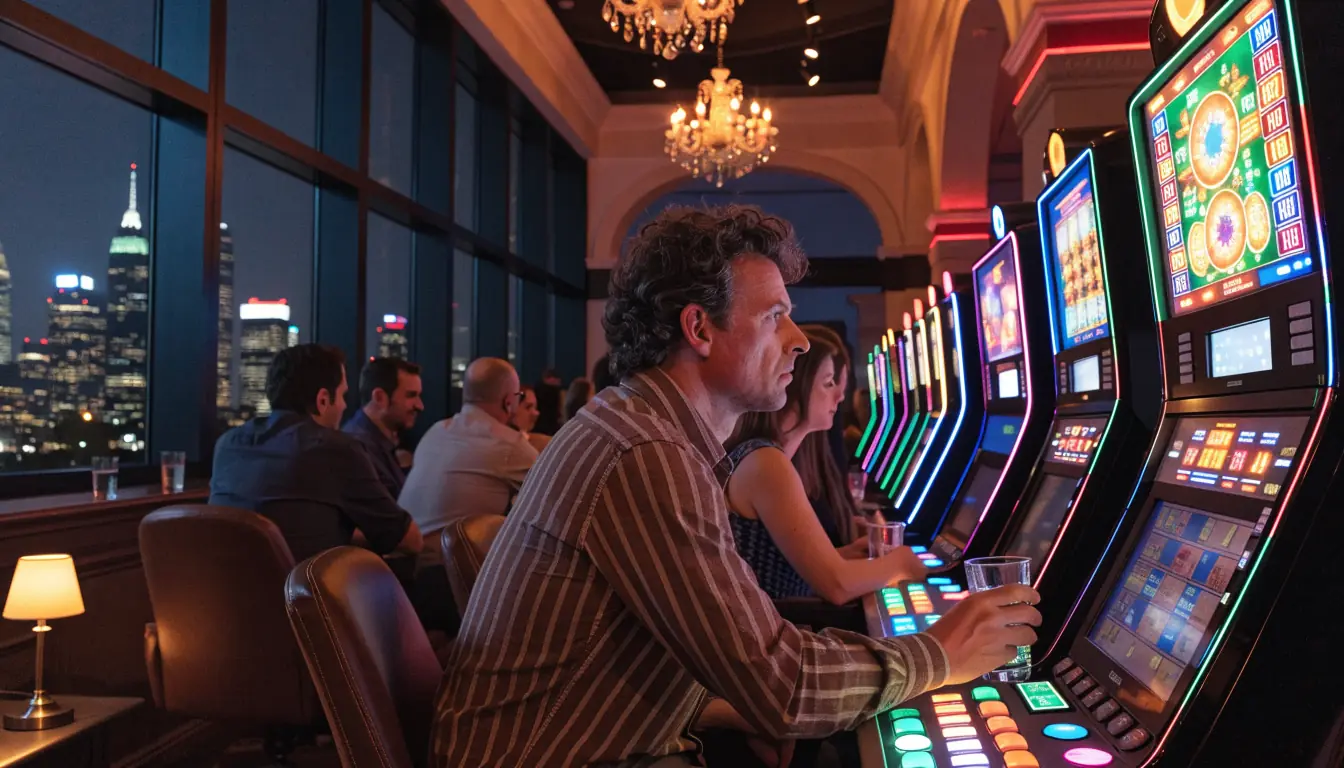
Poker machines carry a distinction worth stating without softening: they are recognised as the most harmful form of gambling in NSW, ahead of other gambling products regulators track in the same state. That’s not a comment on any specific machine or venue — it’s a statement about the category as a whole, and it’s the backdrop against which every other fact in this section should be read.
Illegal online gambling
Offering casino‑style online games to Australian residents breaches the Interactive Gambling Act 2001 and can lead to significant legal penalties.
Why pokies are a money-laundering risk
Pokies are structurally attractive to money laundering for a reason that has nothing to do with game design and everything to do with cash handling. High volumes of cash move through machines with limited traceability — a combination public inquiries and sector guidance repeatedly identify as a major anti-money-laundering (AML/CFT) risk area, distinct from the harm-minimisation concerns that dominate most public discussion of pokies.
The mechanics are straightforward enough to describe without technical language. A person — sometimes called a money mule when acting on behalf of someone else — places a large amount of cash into an EGM and withdraws it after little or no gameplay. The machine effectively becomes a conversion point: cash goes in, a ticket or cashless credit comes out, and the money has changed form without having been meaningfully wagered. Two other typologies recur in the same guidance:
- Purchasing winning tickets — buying a ticket that already represents a payout from someone else, so the buyer’s cash appears to originate from a legitimate win rather than an unexplained source.
- Structuring across venues — breaking a large sum into smaller transactions spread across multiple clubs or hotels, keeping each individual transaction below thresholds that might otherwise draw attention.
None of this works without gaps in oversight. Collusion between patrons and staff, or simply weak supervision at the venue level, is what allows illicit cash movement to continue past the point where a properly staffed venue would notice.
Red flags venues and regulators look for
Sector guidance sets out a consistent list of behavioural indicators that flag a transaction or a patron for closer attention. None of these are proof of wrongdoing on their own — they’re patterns that, taken together or repeated, warrant scrutiny:
- Large cash insertions followed by minimal play and an immediate cash-out
- Frequent small redemptions spread across multiple venues
- Multiple patrons appearing to coordinate movement of cash between machines or venues
- Customers refusing identification or using more than one player card
- Redemption patterns that don’t match the typical pattern for that venue
- Access to more cash than would be expected for that customer’s known profile
- Deposits of unusually high value or unusually large cash amounts
Each of these sits in the same category: individually explainable, but flagged because the pattern recurs often enough in known laundering cases to be worth checking.
Controls that address the risk
The response to these risks runs along two tracks — verifying who’s playing, and reducing how much of the transaction actually happens in cash.
Customer verification and patron profiling form the first line of defence. Establishing who a patron is, and building a profile of what "normal" activity looks like for that person, gives staff and compliance systems a baseline to measure unusual behaviour against. This is where AML/CFT obligations intersect directly with venue operations rather than sitting only at the regulatory level.
Cashless and account-based systems address the problem from the other direction, by reducing reliance on physical cash in the first place. Machines that operate on account-based credit rather than coin or note insertion — sometimes referred to as transparent pokies, reflecting the fact that transactions run through a traceable account rather than anonymous cash — leave a clearer record of deposits, play, and withdrawals. That traceability is precisely what’s missing in the cash-heavy model that makes traditional machines attractive for laundering in the first place.
Cashless and account‑based pokies create a clear audit trail, reducing the attractiveness of machines for money‑laundering.
How this connects to online payment methods
None of the above describes online casino games — slots, roulette, or live-dealer products offered over the internet — because no such products can be legally offered to Australian residents. The Interactive Gambling Act 2001 prohibits operators from providing online casino-style games to people in Australia, and there is no domestic licence that authorises an online casino to operate here. That prohibition targets operators, not players: an individual placing a bet with an offshore-licensed site isn’t breaking the law, but no operator can lawfully market or provide such a casino product to the Australian market, and no public licence register exists to check one against, because none is issued domestically for this category.
Sports betting and lotteries are a different matter — both are licensed at the state and territory level, and payment methods like PayID sit inside that lawful space when used for licensed betting or lottery products. The AML principles set out above — verification, traceability, red-flag monitoring — apply to those regulated products in much the same way they apply to land-based pokies, because the underlying concern is the same: cash or near-cash value moving through a gambling product with limited visibility into its origin.
Summary table: core figures at a glance
| Metric | Figure |
|---|---|
| National EGM betting turnover, FY 2020‑21 | AUD$150 billion (approx.) |
| National EGM player loss, FY 2020‑21 | AUD$12 billion |
| Per‑capita EGM loss, FY 2020‑21 | AUD$608 |
| Australia’s share of world’s pub/club poker machines | 3% (against 0.3% of world population) |
| NSW pokie count | ~95,800 machines |
| NSW clubs’ net profit from pokies, Dec 2017–May 2018 | $1.945 billion |
| Gambling revenue share of state/territory tax revenue, 2015‑16 | 7.7% |
| Interactive Gambling Act passed | 28 June 2001 |
| Tax on gambling winnings | None |
These figures don’t move quickly — machine counts and legislative dates are fixed points — but the AML risk they sit alongside is an active, ongoing concern rather than a historical footnote. Anyone assessing what a pokies product actually involves in 2026, whether land-based or connected to a licensed payment method, is assessing a product built on top of exactly this scale of cash flow, exactly this regulatory split between Commonwealth and state oversight, and exactly this set of laundering typologies that sector guidance keeps returning to.
What are the red flags for pokies-related money laundering?
Large cash insertions followed by minimal play and immediate cash-out, frequent small redemptions spread across venues, and customers refusing identification are key indicators. Multiple patrons working together to move cash or accessing more cash than expected for their profile also signal potential illicit activity.
Why are transparent pokies systems important for AML?
High volumes of cash with limited traceability make these machines a major anti-money-laundering risk. Cashless and account-based systems improve traceability, closing gaps in oversight that currently enable illicit cash movements.
How to recognise problem signs and where to get help?
The BetStop self-exclusion registry was launched in August 2023 and registered 18,000 users in its first six months, offering a practical utility for those needing to restrict their access.